Best Boat Trailer Winch Rope and Straps for Secure Towing
When choosing a boat trailer winch rope or strap, aim for durability, strength, and compatibility with your trailer’s winch. This guide highlights five reliable options suited to common trailer setups, from small personal watercraft to larger pontoons. Each entry explains who it’s best for, why it’s selected, and a practical caveat to consider before you buy. The top picks balance ease of use with sturdy construction to help ensure safe, confident retrieval and launch every time.
| Product | Best For | Key Benefit |
|---|---|---|
| Attwood 11739-2 Poly Winch Rope | Small to mid-size boats | Lightweight, durable poly rope with steel hook |
| OPISICEN Heavy Duty Winch Strap | Heavier towing needs | High breaking strength with rust-resistant hook |
| Sumpluct Boat Winch Strap | Versatile boat types | High load capacity with safety hook and sturdy hardware |
| KONON Trailer Winch Strap | Everyday heavy-duty use | 10,000 lb break strength, universal fit |
| Rhino USA Boat Winch Strap | Pontoon, jet ski, and wide-range boats | American-owned brand with corrosion protection |
Attwood 11739-2 Poly Winch Rope With Steel Hook

Best for lightweight setups, this 3/8-inch by 20-foot poly winch rope delivers reliable pulling when used with winches rated up to 1,200 pounds. The rope is sturdy and easy to handle, making it a practical choice for small boats and personal watercraft.
Who it’s best for: casual boat owners and small trailers needing a simple, dependable rope without excessive bulk. Why selected: combines proven strength with a lightweight profile for easier handling at the ramp.
Caution: Poly ropes can wear faster under sharp edges or abrasion; inspect frequently and replace if any fraying appears.
OPISICEN Heavy Duty Boat Trailer Winch Strap with Hook

Best for heavier towing demands, this 2″ x 20′ strap with a 10,816 lb breaking strength offers robust protection and a corrosion-resistant hook. It’s well suited for boats, pontoons, and jet skis that require more security during loading and travel.
Who it’s best for: owners needing a stronger strap to support larger or faster launches. Why selected: includes a coated hook and durable strap designed for frequent use.
Caution: Ensure proper reel and hook alignment to prevent accidental release; avoid overloading beyond rated capacity.
Sumpluct Boat Winch Strap With Hook 2″ x 20 Ft

Best for versatile boat types, this 2″ by 20′ strap features an upgraded steel buckle, chromosomal S hooks, and a 10,000 lb break capacity. It’s designed to work with a wide range of trailers, from bass boats to pontoon crafts.
Who it’s best for: boaters needing a flexible, high-capacity strap that fits many trailer setups. Why selected: strong and adaptable, with safety-oriented hardware.
Caution: Towing operations should be gradual; avoid sudden jerks that stress the strap and hook.
KONON Trailer Winch Strap 2″ x 20′ With Safety Snap Hook
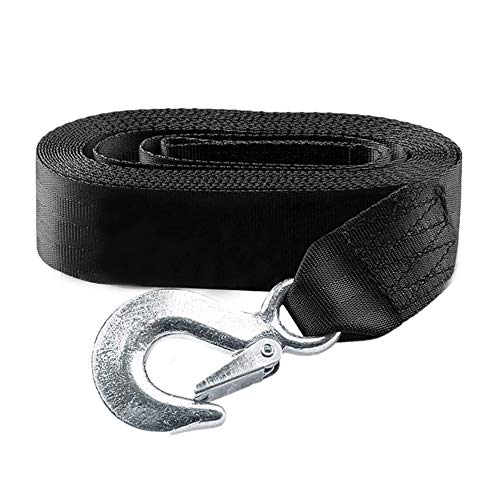
Best for universal, everyday heavy-duty use, this strap is rated for 3,300 pounds working load and 10,000 pounds breaking strength. It’s suitable for most cars, vans, and light trucks used to tow boats and jet skis.
Who it’s best for: generalists who need a reliable, widely compatible strap for regular use. Why selected: solid forged hardware and a robust rating provide dependable performance across various trailers.
Caution: Do not exceed vehicle and trailer load recommendations; verify compatibility with your winch and mounting hardware.
Rhino USA Boat Winch Strap With Hook

Best for pontoons, jet skis, and mixed fleets, this 2″ x 20′ strap offers a 5,016 lb break strength and corrosion protection. It’s backed by American-based support and a safety hook with a robust design for marine use.
Who it’s best for: buyers prioritizing American-owned brands with corrosion protection and a dependable customer-support stance. Why selected: strong, marine-grade construction suitable for frequent ramps and launches.
Caution: Check hook closure and strap wear before every use; rust protection helps but does not replace inspection.
Buying Guide: Key Considerations For Your Boat Trailer Winch Rope Or Strap
- Load rating: Match the breaker strength to your boat’s weight and trailer configuration. Exceeding the rated load risks failure.
- Material: Nylon/webbing straps are common for heavier duty; poly ropes offer lower stretch and easier handling for lighter setups. Consider abrasion resistance for sharp trailer edges.
- Hardware: Look for corrosion-resistant hooks and buckles, especially for saltwater use. Forged components extend life in marine conditions.
- Length and width: Ensure the strap width fits your winch spool and the length provides enough reach to secure the boat without strain.
- Safety features: Choose straps with safety hooks or clips to prevent accidental release, and inspect for signs of wear regularly.
- Compatibility: Confirm that the strap type (rope vs. strap) and the attachment hardware align with your trailer’s winch and mounting system.
- Maintenance: Clean after exposure to water, salt, or grit. Dry thoroughly to prevent corrosion and mold growth on straps.
Frequently Asked Questions
What’s the difference between a winch rope and a winch strap?
Winch rope is a braided or twisted synthetic line that’s lighter and easier to handle; straps are woven webbing that spread load more evenly and resist abrasion. Straps typically handle higher break strength for heavy boats.
How do I choose the right break strength?
Estimate the total weight of your boat plus trailer and add a safety margin. Avoid undersized straps that may fail during ramp operations.
Are stainless or zinc-coated hooks necessary?
Yes, for marine environments. Corrosion-resistant hooks extend life and reduce the risk of failure in saltwater use.
How often should I replace a winch strap or rope?
Replace if you see fraying, cuts, stretched fibers, chemical damage, or rust on hardware. Regular inspections before each use are recommended.
Can I use any strap with any winch?
Not always. Check the winch’s compatible strap width, load rating, and attachment method to ensure proper fit and safe operation.