Best Livewell Bilge Pumps for Boats and Ponds
Answering the needs of boaters, anglers, and DIY pond enthusiasts, this guide highlights the best livewell and bilge pumps chosen for reliability, compatibility, and ease of use. Each product section explains who benefits most and why it stands out. Use this list to compare flow, head, and installation features side-by-side before you buy.
| Product | Flow (GPH) | Voltage | Best For |
|---|---|---|---|
| MAXZONE Submersible 1100 GPH | 1100 | 12 VDC | Large livewells or hyraulic-fed systems |
| Shoreline Marine 600 GPH | 600 | 12 VDC | Compact spaces; automatic level control |
| SEAFLO 800 GPH Angled | 800 | 12 VDC | Angled fits; fresh and saltwater use |
| SEAFLO 750 GPH 01 Series | 750 | 12 VDC | Emergency drainage; reliable duty |
| YaeMarine 800 GPH Livewell | 800 | 12 VDC | Tight spaces; easy maintenance |
Note: All products listed here are submersible or designed for marine livewell and bilge use, with 12V operation and various head capacities. The choices emphasize reliability, ease of installation, and suitability for freshwater or saltwater environments.
MAXZONE Submersible 1100 GPH Bilge Pump
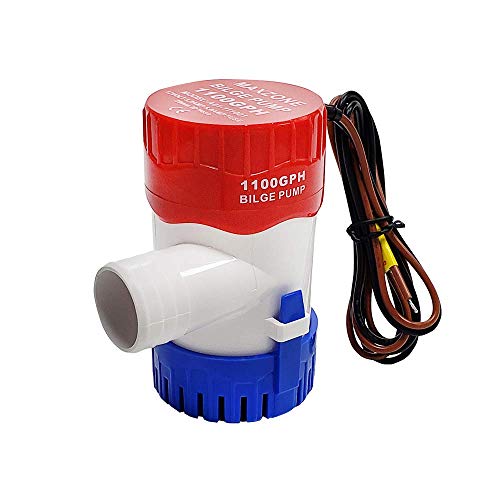
The MAXZONE pump provides a robust 1100 GPH flow, suitable for larger livewells or systems fed by gravity or pressure. Best for boats with bigger volumes where rapid water movement is needed to maintain oxygenation and cleanliness. The 13 ft (4 m) head helps manage higher installations, making it a strong choice for open hulls or deck-mounted wells. A caution: the unit is non-automatic, so manual operation is required to activate pumping.
Shoreline Marine Fully Submersible Bilge Pump 600 GPH

Best for compact spaces needing automatic control. This 600 GPH model features a self-contained automatic switch to maintain a safe water level, plus a durable plastic housing designed for harsh marine environments. It includes a universal mounting base for straightforward installation and cleaning. Choose this if you want a compact, automatic option that fits tight bilge or livewell spaces; limit: moderate flow compared to higher-GPH models.
SEAFLO 05 Series 800 GPH Angled Pump

Best for flexible mounting in tight spaces, thanks to the 90-degree angled design. The 800 GPH flow balances performance with power efficiency, supporting better oxygenation in livewells and baitwells. It includes a 4-year warranty and is suitable for both freshwater and saltwater. Caution: ensure compatible fittings since ¾ inch NPT is common but adapters may be needed for unique setups.
SEAFLO 01 Series 750 GPH Bilge Pump

Best for emergency drainage and routine maintenance with a strong 750 GPH output. This model is backed by a 4-year warranty and offers reliable performance for boats and marine applications. It is a solid middle-ground option for anglers who need steady pumping without excessive power draw. Limitation: mid-range head, so very tall or deep livewells might require higher-head pumps.
SEAFLO 04 Series 600 GPH Baitwell Pump

Best for baitwells and livewell systems needing a compact, durable unit with good head. The 600 GPH output supports healthy water circulation and consumption efficiency on longer fishing trips. It includes a 4-year warranty and corrosion-resistant housing. Caution: lighter flow may require running more time to achieve desired water turnover in larger wells.
YaeMarine 800 GPH Livewell Pump

Best for tight spaces and easy maintenance. This fully submersible unit features anti-airlock fins, tin-coated wiring, and stainless steel shafts suitable for fresh or salt water. Its compact design helps when space is constrained. Limitation: some users might prefer higher flow for larger livewells, but the 800 GPH is ample for many standard setups.
Retisee 12V 800GPH Livewell Pump Kit

Best for complete kits with strainers and easy maintenance. The package includes a 12V 800GPH livewell pump plus stainless steel mesh strainers, designed to simplify cleaning and replacement. It uses a submersible design with moisture-tight seals and a 90-degree threaded air inlet. Caution: ensure the strainers fit your specific livewell dimensions.
Buying Guide
What should you consider when choosing a livewell or bilge pump?
- Flow rate vs. head: Higher GPH is not always better. Match flow to your livewell size and required turnover rate. Head rating indicates how tall a height the pump can push water against.
- Installation space: Angled or compact designs can fit cramped hulls or small aquariums. Look for 90-degree fittings if space is restricted.
- Submersible vs. non-submersible: Submersible models are common for livewells but ensure proper sealing and corrosion resistance for saltwater use.
- Automatic vs. manual: Automatic switches help maintain safe water levels without constant monitoring. Consider a model with an automatic option if you prefer hands-off operation.
- Power and wiring: Standard 12V DC is typical for boats. Check current draw to ensure your battery setup can handle the pump, especially for larger vessels.
- Durability and warranty: A longer warranty signals durability in harsh marine conditions. Look for corrosion-resistant housings and stainless or tin-coated components.
- Maintenance needs: Easy-to-clean cartridges or strainers reduce downtime. Some kits include strainers for quick replacements.
Frequently Asked Questions
- What is a good GPH for a typical livewell?
Most standard livewells perform well with 600–800 GPH. Larger vessels or higher-turnover needs may require 1000 GPH or more.
- Do I need an automatic bilge pump for a livewell?
Automatic systems help maintain water levels without manual monitoring, which is convenient for longer trips.
- Can I use a bilge pump in saltwater livewells?
Yes, many pumps are designed for both freshwater and saltwater; look for corrosion-resistant housings and stainless components.
- What installation space is required for a 800 GPH pump?
Measure the livewell dimensions and ensure enough clearance for hoses and fittings; angled designs can save space in tight compartments.
- What maintenance is needed for livewell pumps?
Regularly clean strainers and check for airlocks. Replace worn seals and inspect wiring for corrosion or damage.
- Is there a significant difference between 600 GPH and 800 GPH pumps?
Higher GPH provides faster water turnover and better oxygenation but may consume more power and generate more heat.