Best Marine Engine Heat Exchangers for Efficient Cooling and Longevity
When selecting a marine engine heat exchanger, the top priority is reliable cooling under harsh saltwater conditions. This guide highlights five suitable options, detailing who they’re best for, why they stand out, and any notable limitations. Ideal buyers include DIY boat enthusiasts, professional boatyards performing routine engine maintenance, and anyone upgrading an aging cooling system for diesel engines. A quick summary table of the five picks follows to help with side-by-side comparisons.
| Product | Best For | Key Benefit |
|---|---|---|
| Marine Engine Water Cooler (Titanium Exchanger, Cast Iron Body) | Saltwater boats needing robust corrosion resistance | Titanium exchanger with durable cast iron shell for long life |
| Cozyel 135A Marine Oil Temperature Regulator | Diesel engines needing precise oil cooling | Lightweight, efficient cooling with reliable O-ring seal |
| AB Marine Water Heat Exchanger 1200kBtu | High-capacity pool/heating and engine cooling on saltwater vessels | High titanium purity, leak-proof welding |
| D300 Marine Engine Heat Exchanger Oil Cooler (2 pcs) | Flexible installation and dual-configuration cooling | Two installation forms, copper tubes, low-noise design |
| Oil Cooler MB170 For Marine Engine | Replacement for aging lubricating systems | Naked-tube design with strong corrosion resistance |
Marine Engine Water Cooler With Titanium Exchanger
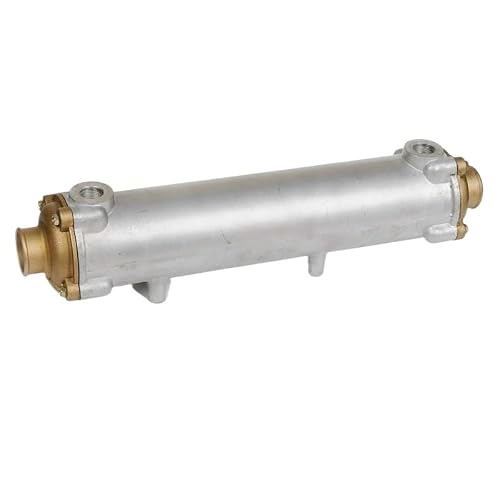
This water cooler uses a premium titanium heat exchanger paired with a heavy-duty cast iron housing. It is designed to deliver efficient, stable heat transfer, helping marine diesel engines maintain optimal temperatures even under demanding workloads. Best for saltwater boats needing strong corrosion resistance and long-term durability. A potential limitation is the combination of materials that may require careful mounting to avoid stress on connections in rough seas.
Cozyel 135A Marine Oil Temperature Regulator

Offered with a cast aluminum shell, die-cast copper end caps, and O-ring sealing, this regulator emphasizes corrosion resistance and durability. It is light enough for easier installation and features a rational internal layout to improve operational efficiency. It delivers precise oil temperature regulation and robust cooling to protect diesel engines from overheating. A caution: despite its advanced cooling, users should verify compatibility with their specific engine model and mounting space before purchase.
AB Marine Water Heat Exchanger 1200kBtu Titanium

This high-capacity titanium heat exchanger is designed for pool heating and marine engine cooling with saltwater compatibility. It supports substantial heat transfer, featuring fully titanium construction and precision welding for a leak-proof seal. Best for vessels that require powerful cooling capacity and long service life in chlorinated or seawater. Choose this if installation space permits and you need a robust, corrosion-resistant core. A limitation to note is the larger size typical of 1200kBtu units, which may require extra mounting space.
D300 Marine Engine Heat Exchanger Oil Cooler (2pcs)

This offering supports two installation forms, top or side exhaust, enabling flexible layout to fit different spaces. Copper pipes provide strong thermal conductivity and corrosion resistance, while the design emphasizes low noise operation. Best for installations where space or orientation varies, as you can tailor the setup. A caution: ensure the selected form matches your boat’s exhaust and cooling routing to maximize effectiveness.
Oil Cooler MB170 For Marine Engine

The MB170 oil cooler uses gravity casting for a solid shell and a naked-tube heat transfer design that offers a large cooling area and strong corrosion resistance. Brass tubing and finned radiators further enhance heat transfer and durability. Best for replacing aging oil cooling components where a robust, corrosion-resistant solution is required. Limitations include potential fitment considerations with older engine configurations and the need for compatible mounting provisions.
Buying Guide: Key Considerations For Marine Heat Exchangers
- Material compatibility: Titanium and copper/brass components provide high corrosion resistance in saltwater environments. Decide between titanium-heavy units for longevity or copper-based options for cost and ease of fabrication.
- Heat transfer capacity: Evaluate required BTU/hr based on engine power and cooling demands. Higher capacity units are appropriate for larger engines or high-load conditions but require more space.
- Installation flexibility: Dual-exhaust options and modular designs help fit a range of layouts. Confirm space, mounting points, and water inlet/outlet sizes before purchase.
- Maintenance and seals: O-ring seals and welded joints reduce leakage risk. Consider units with easily serviceable components and clear maintenance guidelines.
- Environmental resilience: Ensure the unit is designed to withstand saltwater, humidity, and vibrations typical of marine use. Look for corrosion resistance and robust construction.
- Durability vs. weight: Heavier cast-iron or solid-titanium builds offer durability, but weight distribution on small boats matters. Balance strength with vessel performance.
FAQ
- What is the primary purpose of a marine engine heat exchanger? Answer: To transfer heat away from the engine cooling system, preventing overheating and maintaining optimal operating temperatures in challenging marine environments.
- Which material is best for saltwater boats? Answer: Titanium heat exchangers provide excellent corrosion resistance in saltwater, often paired with sturdy housings for longevity.
- Do I need a high-capacity exchanger for my engine? Answer: Yes if your engine runs under high load or operates in hot climates; otherwise, a standard-capacity unit may suffice.
- Can I install a heat exchanger myself? Answer: Many units are designed for DIY installation, but verify compatibility with your engine model and follow manufacturer guidelines for mounting, connections, and seals.
- What maintenance is required? Answer: Regular inspection of seals, hoses, and mounting hardware; clean cooling passages as recommended by the manufacturer; and monitor for signs of leakage or corrosion.
- What installation space considerations matter most? Answer: Inlet/outlet port sizes, clearance for hoses, exhaust routing, and the ability to access components for maintenance.