Best Plastic Boat Trailer Bunks for Easy Launch and Long-Lasting Durability
Answering the common buyer question: which plastic bunk solutions provide low maintenance, long life, and easier loading for different boat types? The top picks below are designed for boat trailers that want to reduce rot, moisture issues, and loading resistance. Best for coastal or freshwater use, heavy-use trailers, fiberglass boats, or anyone seeking durable, rot-proof bunks. A quick summary table follows to compare core options at a glance.
| Product | Best For | Material Type | Key Benefit |
|---|---|---|---|
| (2) 8′ Black PermaBunk Boards | All-around durability | HDPE | No rot, mold, or moisture absorption |
| Caliber Bunk Wrap Kit 23056-BK | Carpet-free upgrades | 2×6-in bunk wrap | Reduced loading force, easier on boat and wench |
| yarlung Set of 10 Bunk Slides & Enders | Lightweight, easier loading | PE slides | Improved launching/loading with minimal effort |
| (2) 6′ Black PermaBunk Boards | Compact trailers or space constraints | HDPE | Rot-proof, moisture resistant |
| Caliber Bunk Wrap Kit 23054-BK | Carpet-free upgrade | 2×4-in bunk wrap | 300% reduction in loading force |
(2) 8′ Black PermaBunk Boards
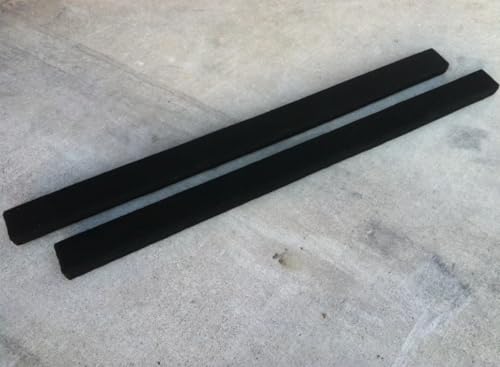
Product: (2) 8′ Black PermaBunk Boards. Brand: Marine Flooring Plus. Material: Recycled HDPE. Size: 2″x4″x 94″.
Best for: Marine trailers that need rot-proof, long-lasting bunks. Why selected: HDPE bunks never rot, resist mold and mildew, and are extremely hard-wearing and stain resistant. They also avoid moisture absorption that can harm wood or carpeted bunks.
Limitations: While very durable, they may be heavier than traditional wood bunks and require hardware compatible with HDPE mounting.
Caliber Bunk Wrap Kit 23056-BK, 24-ft Roll

Product: Caliber Bunk Wrap Kit 23056-BK, 24-ft Roll of 2×6-in Bunk Wrap with Endcaps. Brand: Caliber. Material: Bunk wrap (2×6-in).
Best for: Upgrading carpeted bunks to a durable, low-friction surface. Why selected: A permanent carpet-free solution with endcaps and hardware reduces loading effort and wear on boat, trailer, and wench.
Limitations: Higher upfront cost than carpeted bunks; ensure compatibility with existing trailer frame and mounting hardware.
yarlung Set of 10 Boat Trailer Bunk Slides & Enders

Product: yarlung Set of 10 Boat Trailer Bunk Slide Pads and Glide Bunk Enders. Brand: yarlung. Size: 3″x10″ slides; includes 8 slides and 2 enders.
Best for: Trailers that need easier loading and launching with fiberglass boats up to 1500 lbs and metal boats up to 4000 lbs. Why selected: The combination of slide pads and enders reduces friction and improves maneuverability during loading and launching.
Limitations: Ensure your bunk dimensions match the slide pads; heavy boats may require additional support or multiple packing options to distribute weight.
(2) 6′ Black PermaBunk Boards
Product: (2) 6′ Black PermaBunk Boards. Brand: Marine Flooring Plus. Material: Recycled HDPE. Size: 2″x4″x 72″.
Best for: Smaller trailers or spaces where longer bunks are not practical. Why selected: Similar rot-proof durability as the 8′ version, with a compact footprint for tighter trailer configurations.
Limitations: Shorter length means fewer contact points per bunk; plan bunk alignment to maintain boat support along the keel.
Caliber Bunk Wrap Kit 23054-BK, 24-ft Roll

Product: Caliber Bunk Wrap Kit 23054-BK, 24-ft Roll of 2×4-in Bunk Wrap with Endcaps. Brand: Caliber. Material: 2×4-in bunk wrap.
Best for: Carpet-free upgrade on boat trailers requiring a durable, low-friction loading surface. Why selected: Similar benefits to 23056-BK with endcaps included; reduces loading force and wear.
Limitations: Ensure the 24-ft length fits your bunk spacing and trailer width; measure before purchasing to avoid incomplete coverage.
Buying Guide
What materials should I look for in bunk covers?
HDPE and PE bunk covers are popular for rot resistance and low moisture absorption. They provide a longer life than carpet and resist mold, mildew, and wear from launching and retrieval.
Is carpet-free better for every trailer?
Carpet-free bunk wraps reduce water absorption and rot risk, especially in harsh marine environments. They also offer lower friction during loading, which can protect hull finish and winch mechanisms. However, ensure the wrap is compatible with your bunk dimensions and mounting hardware.
How long should bunk wraps last?
Durability depends on environment, usage frequency, and maintenance. High-quality HDPE and PE wraps typically last multiple seasons with proper installation and periodic inspections for wear or endcap integrity.
What about installation considerations?
Most kits include endcaps and hardware. Verify that your trailer bunks match the kit dimensions (2×4 or 2×6, length, and width). Use appropriate stainless steel screws and proper sealing to prevent water intrusion at mounting points.
What boat types are best suited for these options?
Fiberglass and light-metal boats benefit from smoother loading with low-friction wraps. Heavier boats require attention to bunk support spacing and strength, especially on longer runs. For pontoons or wide hulls, consider wider wraps or multiple bunk sections to distribute weight evenly.
Comparison tips for quick decisions
- Best for minimal maintenance: HDPE PermaBunk boards (all sizes).
- Best for carpet-free upgrades: Caliber bunk wrap kits (23056-BK, 23054-BK).
- Best for smoother loading: yarlung bunk slides and enders.
Frequently Asked Questions
- Q: Do these bunk wraps fit all trailers?
- A: They fit many standard 2×4 or 2×6 bunk configurations; confirm bunk dimensions before purchase.
- Q: Are endcaps required?
- A: Endcaps help seal the wrap edges and improve finish; many kits include them.
- Q: Will HDPE bunk boards scratch my hull?
- A: Bunk surfaces are designed to be low-friction; choose appropriate pad thickness and alignment to minimize hull contact issues.
- Q: Can I mix different brands together?
- A: Mixing is possible if mounting hardware and dimensions align; ensure uniform load distribution.
- Q: Do these require professional installation?
- A: Most DIY setups are straightforward with included hardware; follow manufacturer instructions for best results.