Best Stable Inflatable Kayaks for Calm Lakes and Gentle Rivers
Answering the search for stability, these inflatable kayaks emphasize dependable tracking, a lower center of gravity, and robust construction. They’re suited for beginners seeking confidence on the water, families needing extra steadiness, and anglers who want a steady platform for gear. Below, five top options are analyzed for stability, setup ease, and safety, with practical purchase considerations to help you choose.
| Product | Best For | Key Stability Point |
|---|---|---|
| INTEX Challenger K1 | Solo paddlers on lakes and mild rivers | Low-profile hull and rigid floor boost balance |
| Intex Explorer K2 | Two paddlers seeking steady tandem | Low-profile deck, I-beam floor, high-buoyancy chambers |
| INTEX Excursion Pro K2 | Two adults wanting extra rigidity | High-pressure inflation and optional dual skegs |
| WETURE Inflatable Kayak 2 Person | Budget-friendly tandem with visibility | Versatile components and high buoyancy seats |
| Goplus Inflatable Kayak 2 Person | Relaxed touring with gear | Reinforced PVC and 3-chamber design |
Whether you paddle lakes, slow rivers, or coastal lagoons, stability is built with hull shape, air chambers, and material strength. The following sections detail each product’s design choices, who should buy them, and practical limitations to consider.
INTEX Challenger K1 Inflatable Kayak
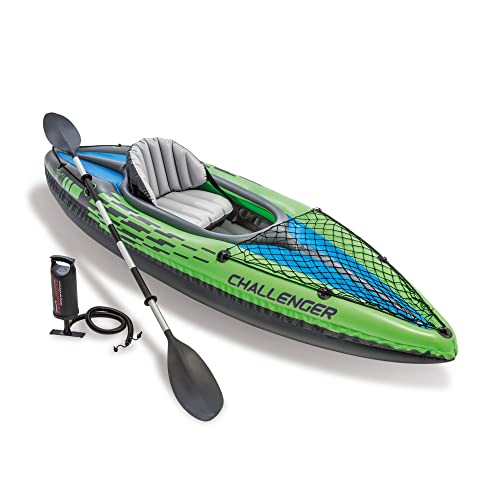
The Challenger K1 uses a low-profile hull and a removable backrest seat for comfort during longer trips. Its construction relies on a reinforced PVC fabric to resist punctures and abrasion—key for stability on varying water conditions. With a cockpit-style seating area, paddlers benefit from a roomy leg position that helps balance when paddling in choppy water. Best for solo paddlers who want a compact, stable platform for lakes and mild rivers. A potential limitation is that lighter riders may experience less inertia in rough water compared with wider tandem models.
Intex Explorer K2 Inflatable Kayak
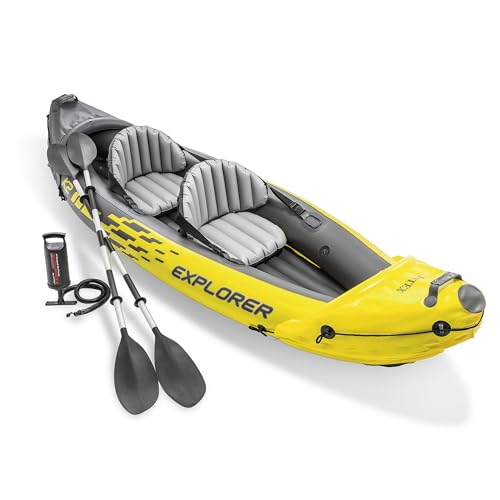
The Explorer K2 is a tandem design featuring a rugged vinyl build, an I-beam floor, and two removable skegs, all contributing to directional stability and tracking. Its high-buoyancy side chambers help prevent tipping and improve balance when sharing the cockpit with a partner. Best for couples or friends who want a stable, visible craft for lakes and calm rivers. A consideration is that tandem setups can be wider and heavier to transport than solo models, requiring careful loading and storage.
INTEX Excursion Pro K2 Inflatable Kayak

Excursion Pro K2 emphasizes rigidity through high-pressure inflation and a 3-ply construction, enhancing stability across diverse water conditions. It includes dual removable skegs to tailor tracking in deep vs. shallow water, making it a solid choice for paddlers who want a stable platform with adaptable handling. Best for two paddlers who value extra stiffness and maneuverability. A limitation is that higher inflation pressure may require more effort and a reliable pump to maintain performance on longer trips.
WETURE Inflatable Kayak 2 Person

This WETURE model uses high-visibility luminous strips for daytime visibility and nighttime safety. It includes two adjustable seats with backrests and a complete accessory kit, promoting a stable, comfortable ride with ample storage. Best for anglers and casual paddlers who value safety features and packable gear. It’s a budget-conscious option that may trade raw stiffness for cost efficiency, which can affect stability in rough water compared to premium builds.
Goplus Inflatable Kayak 2 Person

The Goplus tandem kayak uses reinforced heavy-duty PVC and a three-chamber design, contributing to stable buoyancy and safer inflation. Its two included inflatable seats help balance weight distribution between paddlers and gear. Best for casual touring with a focus on stability and ease of setup. A caution is that the overall weight capacity and stiffness depend on proper inflation; under-inflating can reduce stability significantly.
Buying Guide: How To Choose The Most Stable Inflatable Kayak
What hull shape most improves stability?
Low-profile hulls with wide beam and a stable floor design reduce tipping risk. Look for inflatable kayaks that advertise a stable I-beam floor or multiple air chambers that keep a flat, rigid base when inflated.
How important are air chambers and durability?
More air chambers can act as safety redundancies, while durable fabrics (like multi-ply PVC) resist punctures and maintain hull rigidity under load. For stability, ensure the floor stays flat and the sides remain upright when weight shifts.
What seating and weight distribution help balance?
Removable, adjustable seats with back support encourage proper seating posture, while properly distributing weight between the bow and stern reduces sway. Tandem models benefit from seats positioned to keep the center of gravity centered between paddlers.
When should you consider dual skegs or fins?
Removable skegs improve straight-line tracking in various water conditions. They are a practical stabilizing feature for beginners who want predictable handling on lakes and calm rivers.
What about setup effort and maintenance?
Higher-pressure models deliver more rigidity but require a reliable pump and time to inflate. Choose a model that matches your typical trip length and how quickly you want to be on the water. Regularly inspect seams and valves for leaks.
Frequently Asked Questions
- Which inflatable kayak is best for stability in calm waters? – Models with low-profile hulls and rigid floors, such as the Challenger K1 or Explorer K2, offer strong stability on lakes and mild rivers.
- Do tandem inflatable kayaks stay stable when paddling with two people? – Yes, when weight is balanced and the floor remains properly inflated; look for high-buoyancy side chambers and a wide beam.
- Are dual skegs necessary for beginners? – They help with tracking in straight lines, which can improve perceived stability for new paddlers.
- Should I prefer 3-ply PVC over Standard PVC for stability? – Yes, 3-ply or reinforced PVC generally provides better rigidity and durability, contributing to steadier handling.
- Is inflation level critical to stability? – Absolutely. Under-inflation reduces stiffness and stability; over-inflation can stress seams. Follow manufacturer guidelines.
- Can I use any pump with these kayaks? – Most use a standard high-output hand or electric pump; check valve compatibility and recommended pressure guidelines.