Best Boat Water Pumps for Reliable Bilge and Fresh Water Handling
When choosing a water pump for a boat, select a unit that matches your boat size, typical bilge depth, and whether you want manual, automatic, or submersible operation. The top picks below cover manual, automatic, and submersible options to suit small boats, kayaks, and larger vessels. Best for quick bilge dries, dependable automatic cycling, or portable use on lakes and marinas. This guide helps buyers identify who each pump is best for and why it’s a solid choice.
Buyer-friendly quick-reference table (top picks):
| Product | Best For | Key Benefit |
|---|---|---|
| Better Boat Manual Bilge Pump | Small boats, kayaks, dinghies | High flow per stroke; long hose directs water away |
| SEAFLO 06 Series Automatic Bilge Pump | Automatic bilge protection | Integrated float switch; 4-year warranty |
| SeaSense Hand Bilge Pump | Manual emergency draining | Ergonomic grip; easy storage |
| MAXZONE 12V 1100GPH Submersible Bilge Pump | Mid-to-large boats needing robust bilge removal | High flow; submersible and durable |
| Subtoy 12V Automatic Bilge Pump Kit | Auto operation with hoses included | Built-in float; compact kit |
Manual Bilge Pump for Boats With 39″ Hose — Better Boat
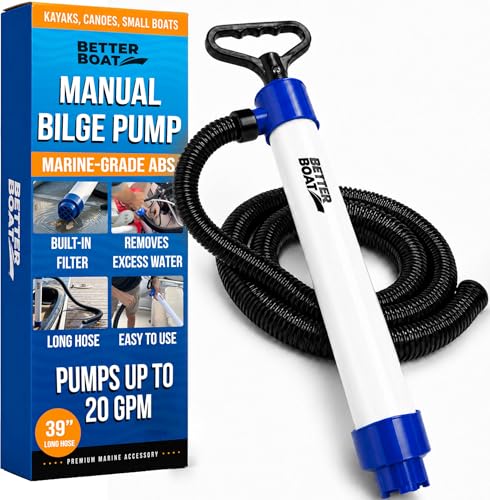
- Best for fast water removal in small boats, kayaks, canoes, and dinghies. Delivers about 20 gallons per minute with each full stroke.
- Includes a 39-inch discharge hose to direct water away from your boat, reducing splashback.
- Has a built-in intake filter and suction spacers to minimize clogging and keep prime even with debris.
Who this is for: solo paddlers, small skiffs, or anyone needing a portable, human-powered bilge solution. Choose this if you want immediate control over where water exits and you don’t rely on electricity.
Caution: Manual pumps depend on user effort. In rough conditions, prime consistency may vary and you’ll need to maintain a steady pumping rhythm.
SEAFLO 06 Series Automatic Submersible Bilge Pump

- Best for automatic bilge protection on mid-sized boats. This submersible pump comes with a built-in float switch and a 4-year warranty.
- Flow rate up to 750 GPH with a compact 3/4″ outlet.
- Automatic operation activates around 1.6–2 inches of water and shuts off as levels drop, saving power.
Who this is for: boaters seeking automatic, turn-key bilge management without manual intervention. Best when you want steady, unattended drainage for everyday use.
Caution: The warranty is strong, but ensure correct electrical connections and proper mounting to avoid false activations in rough seas.
SeaSense Hand Bilge Pump
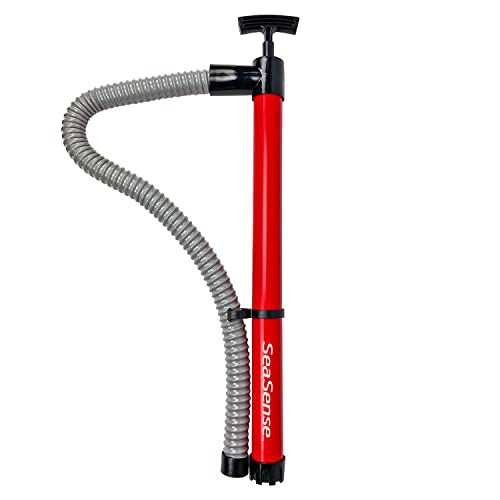
- Best for compact boats and emergency water removal when no power is available. Self-priming hand pump with an 18″ x 20″ hose length.
- Ergonomic grip and high-impact handle designed for repeated use in tight bilges.
- Removable hose makes storage easier and quick deployment simple.
Who this is for: skiffs, canoes, and kayaks where manual operation is feasible and you want a lightweight backup pump. Choose this if you prefer a simple, dependable manual option.
Caution: Hand operation can be slower than electric pumps; plan for the volume of water you typically encounter.
MAXZONE Submersible Boat Bilge Pump 12V 1100GPH
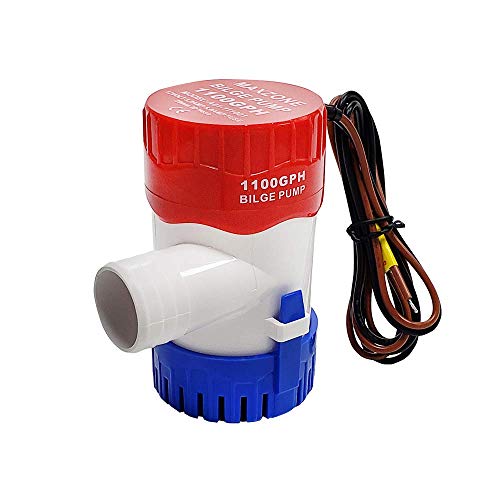
- Best for large small craft that require higher water removal capability. 1100 GPH flow rate with a 1-1/8″ outlet.
- Fully submersible design suited for rougher bilge environments and saltwater use.
- Includes standard wiring and compact footprint for easy installation in tight bilges.
Who this is for: boaters needing robust automatic-capable submersible performance for steady bilge removal. Choose this if you value high flow and a compact form factor.
Caution: Ensure proper wiring and a secure mount; high flow requires stable mounting to avoid movement in rough seas.
Subtoy 12V Automatic Bilge Pump Kit
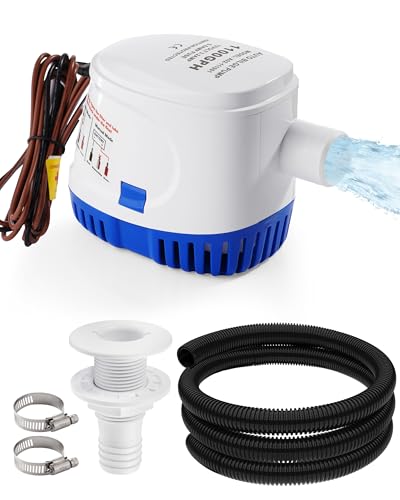
- Best for boaters who want an automatic kit with an included hose and through-hull fitting. 1100 GPH capacity.
- Built-in float switch enables auto on/off as water rises and falls.
- Fully submersible and designed for reliable long-term use on fishing boats, runabouts, and yachts.
Who this is for: boaters preferring an all-in-one automatic solution with components included for a straightforward install. Choose this if you want a ready-to-install kit with reliable auto control.
Caution: Ensure compatibility with your hull and fittings; verify the through-hull and hose dimensions before purchase.
Buying Guide: Key Considerations For Boat Water Pumps
What type of pump matches your boat?
Manual bilge pumps are ideal for small boats, kayaks, and as backups where power is unavailable. Automatic submersible pumps suit mid-to-large vessels with reliable electrical access, offering hands-off operation. Non-automatic electric pumps are good for controlled drainage or when you want to choose operation manually.
Flow rate and head height
Higher flow rates (GPH) remove water quickly but may require more power and larger wiring. Consider the typical bilge depth and the distance water must travel to exit the hull to determine head height and hose length needs.
Power source and installation
12V DC systems work well for most boats with onboard batteries. 110V diaphragm or AC-powered pumps are useful on larger craft or shore-powered setups but require wiring to a shore supply or inverter. Submersible pumps reduce exposure to bilge water and hull vibrations but need proper sealing and mounting.
Automatic vs. manual operation
Automatic pumps let the bilge manage itself via a float switch, conserving battery life. Manual pumps demand user action but can operate when power is off or during battery failures. Consider redundancy by pairing a manual pump with an automatic unit for critical reliability.
Durability and materials
Look for corrosion-resistant housings and stainless or reinforced components suitable for saltwater. A pump with a robust float switch reduces nuisance activations and extends service life in variable water levels.
Maintenance and accessories
Check if hoses, clamps, and strainers are included or require separate purchase. A built-in debris screen and suction spacers help maintain prime when pumping dirty bilge water.
Installation considerations
Ensure the pump size fits your bilge cavity and check for available wiring space. Verify that the outlet orientation and hose routing won’t obstruct movement or electrical components during boating.
FAQ
- What is the difference between automatic and manual bilge pumps?
Automatic pumps turn on and off by water level using a float switch, while manual pumps require user action to operate. - Can these pumps handle dirty bilge water?
Many models include an intake filter or debris shield, but performance declines with heavy sediment. Use a filter and clean regularly to maintain prime. - What hose size should I look for?
Most bilge pumps use 3/4″ to 1-1/8″ outlets. Match hose to your pump outlet and ensure a proper seal to prevent leaks. - Is submersible always the best choice?
Submersible pumps are ideal for tight bilges and limited air exposure. Non-submersible pumps can be easier to service but may expose components to water. - What maintenance is recommended for bilge pumps?
Inspect hoses, clamps, and seals; test automatic pumps regularly; clean filters; and replace worn components as needed.