Best Pressure Washer Options for Boat Cleaning
Answer: For boat cleaning, look for lightweight, portable units with at least 1800 PSI and a versatile nozzle set, plus soap or foam capability for decks and hulls. The top picks below are chosen for boats, dinghies, and marine trailers, prioritizing gentle surface care, rust-prevention prep, and easy handling on wet docks. Each product suits different buyers—from weekend boaters needing portability to mariners requiring sustained power.
| Product | Best For | Key Benefit |
|---|---|---|
| Westinghouse WPX3000e | Medium to large boats and frequent cleaners | High 3000 Max PSI with onboard soap tank |
| Westinghouse ePX3500 | Versatile deck and hull cleaning | Anti-tipping, 2500 max PSI, extended wand |
| Westinghouse ePX3050 | Budget-friendly boat maintenance | Foam cannon included, 2100 max PSI |
| Greenworks 1600 PSI | Light-duty boats and pontoons | Low maintenance, integrated GFCI |
| CRAFTSMAN CMEPW1700 | Compact color-coded cleaning | 1700 PSI with built-in soap option |
Westinghouse WPX3000e Electric Pressure Washer
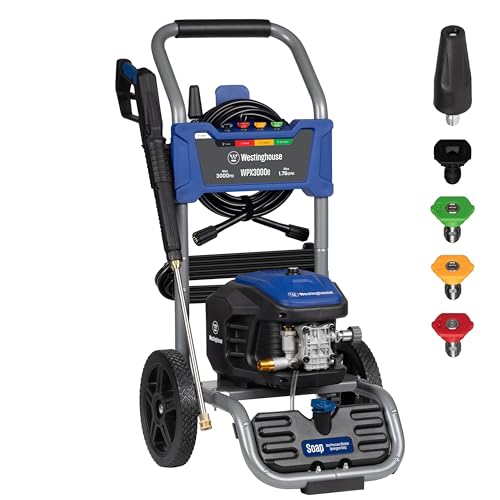
Powerful performance with 3000 max PSI and 1.76 max GPM (2600 PSI at peak use), designed for decks, sidewalks, and hull cleaning. It uses a heavy-duty axial pump and includes a 25′ hose with a 5-nozzle wand for versatile cleaning. Best for boat owners who need strong debris removal and the ability to tackle barnacle residues on larger surfaces.
boaters needing higher PSI for hulls and mooring-cleats without complexity. Caution: Higher PSI requires careful nozzle use to avoid surface wear on delicate gel coats.
Westinghouse ePX3500 Electric Pressure Washer

Offers 2500 max PSI with 1.76 max GPM and anti-tipping wheels for stability on wet docks. Includes a 20-ounce onboard soap tank and a pro-style wand with quick-connect nozzles, plus a foam/soap option. Best for boaters who clean large surfaces and want easier maneuverability near water.
frequent hull and deck scrubbing. Caution: Heavier than some compact models; ensure storage space is sufficient on a boat lift or dock locker.
Westinghouse ePX3050 Electric Pressure Washer
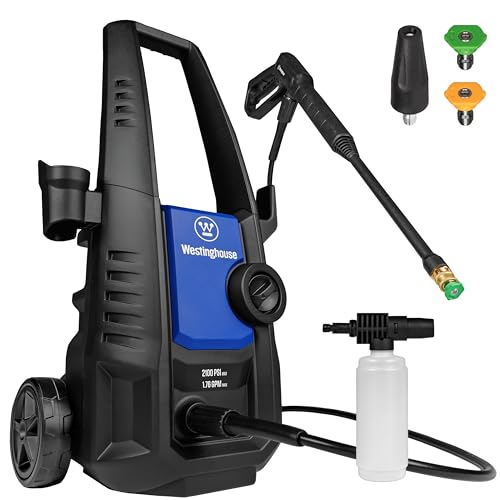
Efficient with 2100 max PSI and 1.76 max GPM, plus a foam cannon and turbo nozzle for tough grime. It has a compact profile, low center of gravity, and 35’ GFCI cord, making it practical for boat maintenance in tight spaces. Best for boat owners who need a balance of power and portability.
decks, rails, and small hull areas. Caution: Might be less effective on stubborn barnacle buildup compared to higher-PSI units.
MZK 2026 Lightweight Pressure Washer

Portable with up to 2.0 GPM and a 21 ft hose plus a 17 ft cord. It features a four-gear nozzle with adjustable spray ranges and a foam cannon. Best for boaters who want a light, mobile unit for quick hull rinses and deck cleaning without heavy lifting.
light to moderate cleaning on boats and trailers. Caution: Lower maximum PSI means it won’t replace heavy-duty scrubbing on large vessels.
CRAFTSMAN CMEPW1700 Electric Pressure Washer

Compact, with 1700 max PSI and 1.2 GPM, and includes a soap applicator bottle. This is suitable for light-duty boat cleaning, such as small pontoon surfaces and removable accessories. Best for occasional, quick cleanups around small boats or docks.
light boat maintenance. Caution: Not ideal for heavy grime or stubborn salt buildup on larger hulls.
LEOTER Cordless Pressure Washer

A battery-powered unit with two 21V batteries, delivering up to 1250 PSI and 70–110 minutes runtime. Best for boat owners who need a truly portable option for quick rinses on muddy or salt-stained surfaces away from power outlets.
remote cleaning away from shore power. Caution: Lower PSI means longer cleaning times for tough surfaces.
Buying Guide: Pressure Washers For Boats
What PSI And GPM Do I Need?
Boats typically require 1800–3000 PSI for effective dirt removal without harming finishes. GPM affects how fast dirt is removed; higher GPM speeds up cleaning on larger hull areas but can use water more quickly. For delicate gel coats, select lower PSI with a gentler nozzle or a foam cannon.
Portability And Storage On A Boat
Compact dimensions, light weight, and a built-in hose reel or carry handle make a unit easier to store on docks or hardtop storage compartments. Consider anti-tipping designs and wheel-driven models for better stability near wet surfaces.
Detergent And Foam Capabilities
A built-in soap tank or compatibility with foam cannons helps apply detergents to decks and hulls, reducing scrubbing time. Ensure compatibility with your cleaning solutions and boat finishes.
Corded Vs Cordless
Corded models often deliver consistent power but require access to power outlets. Cordless units offer portability for remote cleaning but have shorter runtimes and lower PSI. Choose based on docking setup and cleaning frequency.
Durability And Maintenance
Look for axial pumps, corrosion-resistant housings, and maintenance-friendly designs. Axial pumps are common in electric models and support long-term use with minimal downtime.
Safety And Accessories
Inspect cord length, GFCI protection, and nozzle sets. A turbo nozzle, 0° and 15° options help tailor power to the surface. Always follow boat manufacturer guidance to avoid damaged finishes.
Frequently Asked Questions
- What should I consider when cleaning a boat hull with a pressure washer? Use a low to moderate PSI, a wide-angle nozzle, and a foam cannon to apply cleaning solutions first, then rinse with a gentler nozzle to avoid damage.
- Is a cordless model suitable for boats? Yes, for quick, remote cleanups away from power outlets. Expect shorter runtimes and lower PSI compared to corded models.
- Can I use soap with all pressure washers? Most models include a detergent option or a foam cannon; ensure the soap is compatible with marine finishes and the unit’s reservoir or external feeder if required.
- What maintenance is required for marine cleaning? Rinse thoroughly after use to remove salt and brackish water, and inspect hoses and fittings for wear on a regular basis.
- Which is best for stubborn marine grime? Units with higher max PSI (around 2500–3000) and a turbo or rotating nozzle work well on decks and hulls, but use caution on delicate finishes.
- Do I need anti-tipping features? Anti-tipping designs help on slippery docks and ramp areas, reducing the risk of tipping during operation.