Best Fuel Water Separator for Boat: Top Picks for Clean, Reliable Fuel Delivery
Choosing the right fuel water separator is essential for maintaining engine performance on a boat. The right unit removes water and contaminants from fuel, helps prevent injector damage, and supports smoother, more reliable starts and runs. Below are five highly compatible, widely used options preferred by many marine operators, covering common engines from Mercury to Yamaha and beyond. Each product includes a quick snapshot of features to help you compare at a glance.
| Product | Brand | Key Feature |
|---|---|---|
| Arbriaty S3213 Marine Fuel Water Separator | Arbriaty | 10-micron filtration; compatible with various outboard engines |
| CARMOCAR Replacement Filter for Marine Outboard | CARMOCAR | 3/8 in NPT ports; replaces multiple Mercury/Yamaha part numbers |
| RARAYC S3213 3/8 Barb 1/4 NPT Separator | RARAYC | Comprehensive OE replacement with listed cross-refs |
| attwood Universal 10-Micron Separator | attwood | Universal 3/8 in ports; trusted brand for marine engines |
| Sierra 18-7982-1 Marine Fuel Water Separator Kit | Sierra | High flow; removes >99.8% emulsified water |
Arbriaty S3213 Fuel Water Separator

The Arbriaty S3213 unit is designed for marine fuel systems using 3/8 inch barb and 1/4 inch NPT fittings. It targets a broad range of universal fuel applications, including Yamaha, Mercury, Racor, Sierra, and Suzuki outboards. It features a high-performance 10-micron filter to strip dirt, rust, and particulates while maintaining a balanced filtration-to-flow ratio. A clear nylon collection bowl allows quick visual checks for water and sediment, with a self-spraying drain and stopper for easy maintenance. This model is a common replacement option for several OEM part numbers, simplifying sourcing for boat owners.
Key considerations for Arbriaty include compatibility breadth, filtration efficiency, and ease of maintenance. The 10-micron rating is effective for catching small particles and some emulsified water, though in severe moisture environments, owners may opt for a finer micron rating if their fuel quality demands it. Installation typically requires standard 3/8 in barb and 1/4 in NPT connections, with attention to seal integrity during assembly.
CARMOCAR Fuel Filter Water Separator (Mercury Compatible)

CARMOCAR’s replacement filter is marketed as a universal marine diesel and gasoline fuel separator, compatible with Mercury outboards and other brands. It lists multiple OEM cross-refs including S3213, 35-60494-1, and 18-7932-1, and uses 3/8 inch NPT ports for lower pressure drop. The kit-like presentation emphasizes emulsion and contaminant removal, with a 10-micron filtration target noted. The product is positioned as a straightforward OE replacement, aiming to simplify repairs when replacing multiple known part numbers.
Considerations include ensuring the correct port sizing for your setup, understanding the replacement schedule relative to fuel quality, and confirming compatibility with your engine model. The product highlights ease of cross-refs, which can be helpful for parts inventory management on a boat with multiple engines or older equipment.
RARAYC S3213 Replacement Fuel Filter

The RARAYC model provides a full replacement for several Mercury/Yamaha part numbers with a 3/8 barb and 1/4 NPT brass fittings. It emphasizes a cross-reference listing to OE parts (including 35-60494-1 and S3213) and notes compatibility with a range of Mercury and Yamaha marine applications. The kit often includes fittings and hardware, and it stresses the importance of proper threading with Teflon tape or sealant to prevent leaks. Its straightforward cross-refs can simplify maintenance planning for fleets or multi-engine boats.
In evaluating this option, buyers should check that the included fittings match their existing hoses, confirm the warranty terms, and assess the quality of brass fittings for long-term corrosion resistance in a saltwater environment. The emphasis on cross-refs helps buyers align with OEM specs without needing separate part searches.
attwood Universal 10-Micron Separator
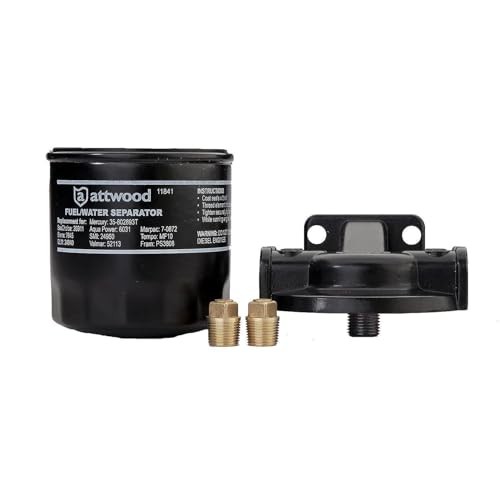
Attwood’s 10-micron universal fuel/water separator is designed for both 2-cycle and 4-cycle engines, offering universal 3/8 inch ports for broad compatibility. The unit features a double seal for enhanced performance and includes two brass plugs for secure connections. It is marketed as a replacement for Mercury 35-60494A4, aligning with common OEM references. The package typically emphasizes the efficiency of 10-micron filtration and smooth fuel flow, aiming to reduce water and particulate-related fuel delivery issues in a wide range of marine engines.
When considering this option, owners should evaluate the universal port compatibility with their fuel line fittings, inspect the build quality of seals and plugs, and weigh the cost against OEM-replacement units. The 10-micron rating is suitable for typical marina fuel conditions, though harsher environments may warrant finer filtration or pre-filtering strategies.
Sierra 18-7982-1 Marine Fuel Water Separator Kit
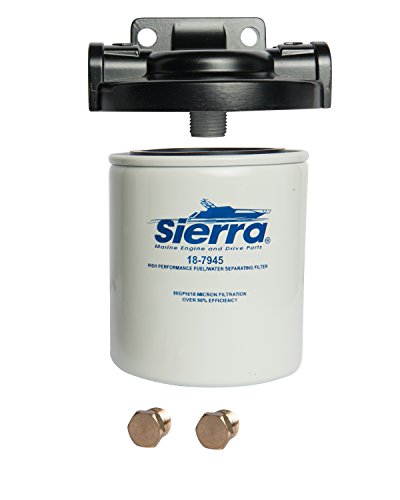
Sierra’s 18-7982-1 kit targets higher flow needs with a claim that all filters in the line deliver around 90 GPH, intended to support even larger or hungrier motors. Sierra emphasizes protecting sensitive inboard, sterndrive, and outboard fuel injection systems by removing emulsified water from gasoline—an essential feature for engines sensitive to moisture and particulates. The kit branding suggests a complete solution that aligns with Sierra’s broader line of marine fuel filters, with emphasis on performance and reliability in marine environments.
Key purchasing considerations for Sierra include confirming the exact flow rate for your engine and ensuring the vehicle’s fuel system can accommodate the anticipated GPH. The emphasis on emulsified water removal is valuable for deeper water contamination scenarios, and the Sierra brand is known for marine-focused filtration solutions that fit many common marine fuel systems.
Buying Guide: Key Purchase Considerations And Comparisons
What to consider when selecting a fuel water separator for boats:
- Micron rating: A 10-micron filter catches most particulates and some emulsified water, but very dirty fuel may require finer filtration or staged filtration (pre-filter followed by a finer stage).
- Port size and fittings: Ensure 3/8 inch barb and 1/4 inch NPT (or your boat’s standard) to avoid adapter fittings and leaks. Check if seals and gaskets are included or if you need additional hardware.
- Compatibility: Look for products marketed as universal or specifically listed for Yamaha, Mercury, Racor, Sierra, Suzuki, or other engines in your boat’s lineup. OEM cross-refs simplify replacements for older models.
- Maintenance and accessibility: A clear bowl helps you monitor water presence. Self-draining features or straightforward bowl removal reduce maintenance time on deck.
- Material quality: Brass fittings and durable bowls can resist saltwater corrosion. Consider kits that include reinforcement parts like O-rings and gaskets.
- Replacement part availability: Choose models with widely available cross-refs and compatible replacement parts to minimize downtime when servicing.
- Flow capacity: Higher flow rates support larger engines or boats with high fuel demand. Ensure the unit’s capacity aligns with your engine’s fuel requirements.
- Warranty and compatibility with fuel type: Confirm whether the unit is designed for gasoline or diesel use and review warranty terms for marine installations.
Compared with OEM-specific units, universal or cross-referenced separators may offer more flexible sourcing and easier maintenance across multiple engines. For boats with multiple outboard engines or hybrid fleets, selecting a model with broad compatibility reduces stocking needs. If fuel quality is consistently poor or water intrusion is frequent, consider pairing a primary separator with a secondary filtration stage for enhanced protection.