Best Push Poles for Kayak Fishing: Stable Shallow Water Anchors
Find the right push pole for a kayak to prevent drifting in shallow water. This guide highlights five top options suitable for different paddlers, from casual weekend anglers to active kayakers. Each product includes who it’s best for, why it’s chosen, and a practical caveat to consider. Use the quick reference table below to compare key points and then dive into detailed sections for each model.
| Product | Length | Material | Best For |
|---|---|---|---|
| EDSRDPLT 7.75′ Anchor & Push Pole | 7.75 ft | fiberglass, nylon, aluminum | general paddlers needing buoyant, dual-purpose tool |
| itayak 8.63′ Shallow Water Pole | 8.63 ft | glass fiber reinforced PA66 | long reach in shallow water |
| SFNSM 8.45ft Pole | 8.45 ft | fiberglass | anglers seeking easy stowability |
| Pelican Push Pole | 8 ft | fiberglass | compact, ergonomic handle |
| itayak 8.63′ with T-Handle | 8.63 ft | PA66-GF with carbon fiber | lightweight, sturdy two-piece design |
EDSRDPLT 7.75′ Anchor and Push Pole

The EDSRDPLT model combines buoyancy with a two-piece design that floats and stores compactly. The T-handle serves as a push pole and includes an integrated compass to aid basic navigation. The grip is cushioned with EVA foam for comfort, and the tip uses 316 stainless steel for durability. It is built from reinforced nylon, fiberglass, and aviation-grade aluminum for corrosion resistance. Best for paddlers who want a multifunction tool that doubles as a navigation aid while fishing in shallow water.
Who it’s best for: Kayakers who want a buoyant, all-in-one push pole with a built-in compass and comfortable grip.
Limitation: Two-piece design may require occasional re-tightening in rough use; verify fit with your paddle holder setup.
itayak 8.63′ Shallow Water Anchor Pole

Itayak’s 8.63-foot shallow water pole uses fiberglass reinforced PA66 with carbon fiber connectors for strength and lightness. The two-piece design is screw-locked to minimize detachment risk. The tip is 316 stainless steel, and the nylon T-handle offers a comfortable grip. Gloves are recommended due to potential fiberglass splinters when cut. This pole is well-suited for anglers who need a long reach and stable footing in soft bottoms.
Who it’s best for: Kayakers needing a long, strong, lightweight pole for easy anchoring in shallow, sandy or muddy bottoms.
Limitation: Handling may involve fiberglass fibers; protective gloves are advised during handling and cutting.
itayak 8.39′ Shallow Water Pole, Hook-Handle

This model emphasizes a hook-enabled nylon handle and a two-piece screw-lock connection. The fiberglass-reinforced nylon shaft is paired with carbon fiber connectors to balance strength and weight. The stainless steel tip ensures reliable penetration in sand or clay. It’s a practical pick for small boats and kayaks that require a sturdy push pole with a handy retrieval feature.
Who it’s best for: Paddlers who value a versatile hook-enabled handle for retrieving gear and a reliable push pole in skinny water.
Limitation: Surface cutting may release glass fibers; wear gloves during handling and assembly.
Marine Boat Shallow Water Anchor Pole 126in
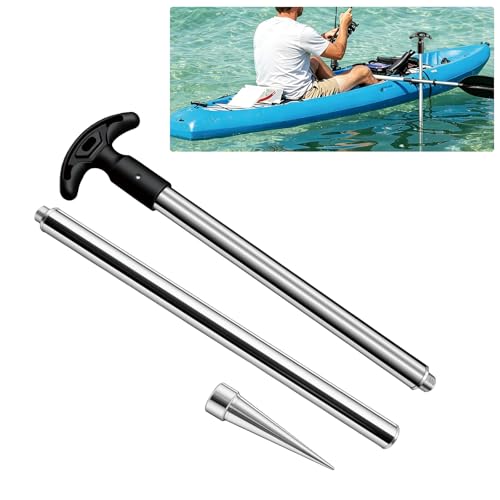
Medonala’s 126-inch (about 10.5 feet) stainless steel T-handle push pole is designed for heavy-duty shallow water use. The shaft is solid and provides strong holding against wind and current, suitable for flats fishing. The design prioritizes a rugged feel and reliable anchoring across saltwater and freshwater scenarios. Ergonomic grip and rust resistance are emphasized in its construction.
Who it’s best for: Paddlers seeking a longer, more robust push pole for steady positioning in shallow flats and coastal waters.
Limitation: The long shaft may be less convenient to store in compact setups; consider your vehicle or kayak storage space before purchase.
Buying Guide
What matters most when choosing a kayak push pole? Consider length, material, two-piece versus single-piece design, and handle type. Longer poles offer better reach in deeper shallow water, while shorter poles are easier to transport. Materials like fiberglass, PA66-GF, and aluminum affect weight, stiffness, and durability. A two-piece design improves storage but may require effort to reassemble securely. For comfort, prioritize a T-handle with a foam or nylon grip. For rough environments, stainless steel tips provide solid penetration into hard sand or clay.
Who should pick which style?
- Buoyant, multi-purpose poles with navigational aids are ideal for casual paddlers who want versatility on open lakes.
- Longer fiberglass or PA66-GF poles suit anglers working in shallow bays or marshy areas where reach matters.
- Two-piece designs are best for kayaks with limited storage space or frequent transport.
- Poles with smooth, ergonomic handles benefit newcomers and occasional users seeking comfort over long sessions.
- Stainless steel tips are essential for stable anchoring in sandy bottoms and mud.
Maintenance matters too. Rinse poles after exposure to saltwater, dry thoroughly, and check for cracks at joints. Replace any damaged tips promptly to maintain stability. When choosing among the options above, match length and weight to your typical paddling environment and storage constraints.
FAQ
- What length should my kayak push pole be? Choose length based on typical water depth and leg room. Longer poles reach deeper channels, while compact models are easier to store.
- Are two-piece poles better than one-piece? Two-piece poles offer easier storage and transport, but ensure the joint locks securely during use.
- What material is best for saltwater usage? Poles with stainless steel tips and corrosion-resistant materials (such as fiberglass or PA66-GF with aluminum components) perform well in saltwater.
- Do I need a pole with an integrated compass? It helps quick navigation in unfamiliar waters but is optional if you rely on a separate map and GPS.
- Can I use a push pole for propulsion? Some models support light push-off use in shallow water, but their primary function is stabilization and anchoring, not propulsion.
- What safety precautions are recommended? Wear gloves when handling fiberglass and protect eyes from splinters. Inspect joints for tightness before each trip.