Best Automatic Fire Extinguishers for Boat Engine Compartments and Small Enclosures
Answer: Automatic fire extinguishers designed for small, enclosed spaces offer fast, hands-off protection in boat engine compartments, electrical boxes, and other high-risk areas. These compact devices activate without electricity and are easy to install, making them ideal for boat owners, mariners in tight engine rooms, and anyone seeking maintenance-free safety in confined spaces.
Top buyers for this topic include boat owners who want worry-free protection in engine rooms, electronic and battery storage areas, and small workshops aboard vessels. They are also suitable for homeowners with compact electrical closets or portable vehicles with limited space. The following table summarizes five relevant options chosen for automatic operation, ease of installation, and space coverage.
| Product | Best For | Key Benefit |
|---|---|---|
| Ferosticker F03 (2 Pack) | Small enclosed spaces like electric panels | Automatic 170°C activation; no power or wiring |
| Ferosticker F01 | Very small compartments (0.1 m³) | Compact size; straightforward stick-and-go installation |
| Ferosticker F09 | Ships, large electric panels, engine rooms | Broader enclosure protection up to 0.9 m³ |
| ibasenice Automatic Aerosol Fire Extinguisher | Vehicle engines, garages, small spaces | Automatic aerosol technology for multipurpose fires |
| Kidde Boat Fire Extinguisher (5BC) | Boats and marine electrical fires | Marine-grade corrosion resistance; all-metal construction |
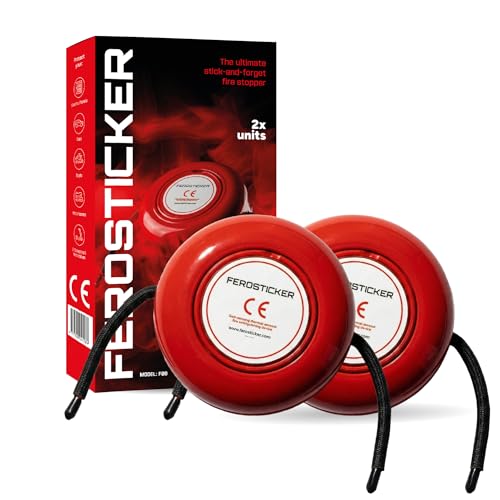
Ferosticker F03 2 Pack — Automatic Fire Extinguisher

Best for: Small enclosed spaces such as electric panels, lithium battery storage, and ship cabins. This two-pack provides coverage for multiple critical spots aboard a vessel.
- Automatic activation at 170°C ±10°C (356°F) to quickly suppress ignition by disrupting combustion.
- No electricity, pressure, or wiring required; maintenance-free operation.
- Suitable for A, B, C, E, and F fire classes; designed for quick, tool-free mounting.
Why selected: It combines compact form with automatic action, making it a reliable, low-maintenance option for space-constrained engine rooms and electrical closets on boats. Best for owners who prefer battery-free, self-activating protection that can be placed in multiple locations.
Caution: The device is designed for enclosed volumes up to 0.3 m³ (10.6 ft³); ensure appropriate space allotment and avoid obstructing vents or access panels.
Ferosticker F01 — Very Small Automatic Extinguisher

Best for: Ultra-small compartments like tight electronic boxes or compact fuse boxes on vessels.
- Automatic suppression at 170°C ±10°C (356°F) with a 0.1 m³ (3.5 ft³) protected volume.
- No power, pressure, or wiring needed; easy stick-on installation.
- Broad fire class coverage (A, B, C, E, F) for versatile use.
Why selected: Ideal for very small spaces where space is premium, offering simple placement without tools. It complements other larger devices to create a layered approach to on-board fire safety.
Caution: Best used in dedicated small compartments; verify that the protected volume matches the actual space to avoid under-protection.
Ferosticker F09 — Medium to Large Space Extinguisher
Best for: Engine rooms, large electric panels, ships, and industrial machinery where a bigger enclosed space must be protected.
- Automatic activation at 170°C ±10°C (356°F) with an effectiveness footprint up to 0.9 m³ (31.8 ft³).
- No batteries, refills, or ongoing maintenance required.
- Fast, tool-free installation with broad A–F fire coverage.
Why selected: It offers extended coverage for larger compartments aboard boats and industrial equipment spaces that still require quick, automatic suppression without manual intervention.
Caution: Ensure installation locations do not obstruct access or block ventilation that could dilute aerosol performance in larger spaces.
ibasenice Automatic Aerosol Fire Extinguisher For Vehicle Engine

Best for: Vehicle engine compartments, garages, and small spaces in boats where automatic aerosol suppression is preferred for quick response to electrical and automotive fires.
- Automatic fire suppression; activates on fire detection without manual action.
- Compact design fits in tight engine bays and small spaces.
- Uses aerosol technology to suppress electrical, chemical, and common automotive fires.
Why selected: This device adds a high-value automatic solution for engines and garages where space is limited and quick, autonomous action is desirable. It complements other space-specific units on a vessel.
Limitation: The product relies on aerosol delivery within enclosed spaces; ensure there is adequate enclosure and clearance for aerosol dispersion.
Kidde Fire Extinguisher For Boats, Single-Use 5BC
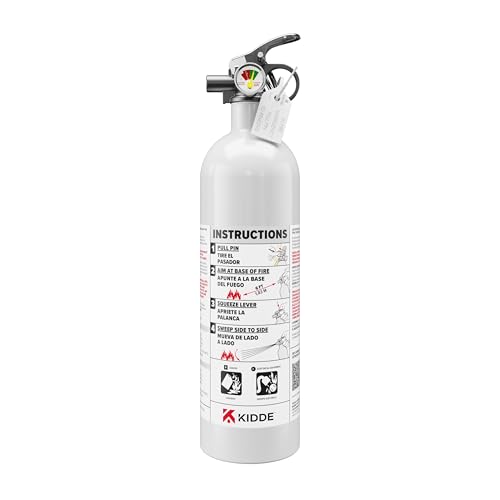
Best for: Boats and marine environments where a reliable, marine-grade extinguisher is preferred for Class B and C fires.
- Designed to stop fires from flammable liquids, gases, and electrical sources on boats.
- All-metal construction with corrosion-resistant components for marine use.
- Single-use design; straightforward replacement when needed.
Why selected: A practical marine-grade option that targets typical boat fire risks, including electrical equipment and flammable liquids. It provides a dedicated marine-focused option alongside automatic devices for broader coverage.
Caution: Not an automatic device; plan to use in combination with automatic extinguishers for layered protection in high-risk engine compartments.
Onaweno Household Automatic Fire Extinguisher

Best for: Home and small office power cabinets, battery compartments, and small electric vehicles where automatic suppression is desired.
- In-structure, automatic triggering in engine compartments or battery compartments within small spaces.
- Useful for preventing fires in HVAC or power distribution cabinets and similar equipment.
- Self-triggering fire extinguishing device with broad applicability for small equipment.
Why selected: Complements marine-use devices by providing an in-vehicle or small-space option that can be deployed in land-based or coastal settings where engine compartments or storage areas are compact.
Caution: Not marine-specific; ensure environmental suitability for salt exposure if used near boats or in coastal installations.
Buying Guide: Key Purchase Considerations
What space size will the device protect? Choose devices with a protected volume that matches or slightly exceeds the space you intend to shield. For very small spaces, smaller units (0.1 m³) are ideal; for larger engine rooms, look to devices rated up to 0.9 m³.
Do you need automatic activation? For hands-off safety in busy or hard-to-reach compartments, automatic models that trigger at a set temperature are preferred. If a manual backup is needed, pair automatic devices with a traditional extinguisher.
Is installation tool-free feasible? Most listed Ferosticker units are peel-and-stick and tool-free, which is ideal for quick deployment in boats where drilling or wiring is undesirable.
What fire classes are covered? Look for broad coverage across A, B, C, E, and F classes to protect against common boat risks, including electrical fires and fuel-related fires.
Are there marine-specific considerations? For boats, corrosion resistance, compact form factors, and reliability in humid environments are important. Some options are designed specifically for marine use or ship cabins, while others are general-purpose for engines and garages.
FAQ
- What is the main advantage of automatic fire extinguishers for boat engine compartments?
They provide rapid, autonomous fire suppression without manual action, reducing response time in tight engine rooms. - Can I install these devices myself?
Yes. Most Ferosticker models use a peel-and-stick installation with no tools required. - Are aerosol extinguishers safe in enclosed spaces aboard boats?
Yes, they are designed for enclosed volumes and typically specified for specific protected volumes; follow manufacturer guidelines for placement. - Should I use more than one device for my boat?
Using multiple units can increase coverage in multiple compartments, especially in larger vessels or spaces with limited airflow. - Do these devices require maintenance?
Most listed automatic units are maintenance-free with no batteries or refills required; verify with the supplier for each model. - Is a non-automatic extinguisher necessary on board?
Having a traditional extinguisher in addition to automatic units can provide a quick manual option in case of initial ignition.