Best Boat Safety Equipment Kit You Should Have Onboard
When building a boat safety kit, prioritize devices that cover visual signals, audible alerts, first aid, and basic emergency tools. This selection focuses on practical, US Coast Guard–aligned solutions and compact, all-in-one systems for different boaters. The top picks are ideal for recreational kayaks, small powerboats, sailboats, and family outings. Each product section explains who benefits most and why it was chosen, plus practical limitations to consider. This guide helps you assemble a complete safety kit that’s easy to use, portable, and reliable in emergencies.
| Product | Best For | Why It Was Chosen |
|---|---|---|
| SIRIUS SIGNAL SB-3L Boating Safety and Emergency SOS Dry Bag Kit | Casual paddlers and small boats | All-in-one emergency kit with USCG spec SOS, infrared signal, and waterproof flashlight |
| Sirius Signal MK-1001 Boating Safety and Emergency SOS Kit | Family boats and mixed-use vessels | Comprehensive distress signaling, first aid, lighting, and tools |
| TEKTITE SOSeFLARE 5 | Any boat needing electronic distress with long battery life | USCG/SOLAS compliant electronic distress signal with audible signal |
| Sea-Doo New OEM Safety Kit | Jet boats and watercraft | Includes buoyant line, bailer, whistle, and watertight flashlight |
| 250 PCS Waterproof First Aid Kit | Every boat crew needing medical supplies | Large, organized 250-piece kit in waterproof dry bag |
SIRIUS SIGNAL SB-3L Boating Safety Kit

The SB-3L is an all-in-one emergency kit designed for kayaks, boats, and paddle craft. It includes a USCG spec SOS electronic signal, an infrared signal, and a waterproof flashlight that floats with a long-lasting battery. Best for paddlers and light-boat crews who need simple, one-stop access to signaling tools during emergencies. A potential limitation is the reliance on electronic signaling; ensure the battery remains fresh for peak performance.
Sirius Signal MK-1001 Boating SOS Kit

This kit provides an all-in-one safety solution with visual and audible distress signals plus first aid, lighting, and essential tools. It includes a USCG authorized SOS signal and an orange daytime distress flag, alongside a high-decibel horn and whistle. It’s well suited for family boats or weekend sailors who want a broad, certified signaling package. A limitation is that it may require familiarity with multiple components to deploy effectively in high-stress situations.
TEKTITE SOSeFLARE 5
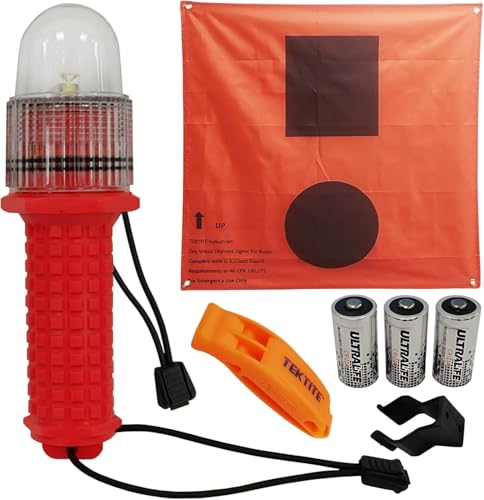
This electronic distress signal kit is USCG and SOLAS compliant and serves as a modern alternative to traditional flares. It provides S-O-S signaling, an audible whistle, and a day/night visibility flag. Best for boats needing a durable, battery-powered locator with long life and easy maintenance. It may require occasional battery replacement; plan for routine checks to stay ready.
Sea-Doo New OEM Safety Kit

Sea-Doo’s OEM safety kit includes essential items like a buoyant heaving line, a bailer, a whistle, and a watertight flashlight. It’s designed for small watercraft to enhance on-water safety with handy, ready-to-use components. Choose this for jet skis or boats where compact, integrated signaling and light sources are prioritized. A potential limitation is that it focuses on core essentials and may lack some advanced signaling options found in larger kits.
250 PCS Waterproof First Aid Kit

This kit packs 250 professional-grade medical items in a double-dry-bag system, making it well-suited for boating, camping, fishing, and kayaking. It includes Mylar blankets, a poncho, a multi-tool, duct tape, paracord, and more. Best for crews who want a comprehensive medical supply set in a waterproof container. A limitation is that it is broad-focused on first aid rather than signaling or fire safety; pair it with signaling tools for full coverage.
Buying Guide
What size and type of boat or craft is this kit best for?
Choose kits that match your vessel type. Paddlers and small boats benefit from compact, all-in-one signaling kits. Larger cabins or multi-crew boats may require extended first aid supplies and more robust signaling gear.
Which signaling methods are required by law in your area?
USCG compliance is a strong indicator of reliability. Verify whether electronic signals, visual devices, or audible alerts are needed for your boating category and operating waters.
Is battery life or maintenance a concern?
Electronic distress devices require periodic battery checks. Look for devices with long battery life, rechargeable options, and clear maintenance guidance to stay prepared.
Do you need waterproof storage and organization?
Waterproof bags and labeled pockets help quick access under stress. Double-bag designs or sealed containers protect medical items and smaller tools from moisture.
Should you prioritize all-in-one kits or modular components?
All-in-one kits simplify readiness, while modular setups let you tailor items to your voyage. For beginners, an integrated system often reduces setup time and confusion during an emergency.
What are practical limitations to consider?
Electronic devices depend on batteries; signs of wear or exposure can reduce effectiveness. Traditional flares rely on visibility and weather. Balance modern signaling with reliable backups.
How should you store and maintain the kit?
Store in a dry, accessible location with easy rotation of consumables. Establish a routine check every 3–6 months to replace expired or depleted items and test signaling devices when possible.
What about children or non-swimmers on board?
Opt for kid-friendly items like visual signals and simple-to-use extinguishers. Ensure all crew members understand how to deploy each item safely.
What additional items are worth adding?
Consider adding a spare flashlight, extra batteries, a compact CPR-friendly guide, a coarse towel for water removal, and a compact multitool for quick on-water fixes.
FAQ
Q: What is the most essential item in a boat safety kit?
A: At minimum, a certified distress signaling device and a watertight first-aid kit are essential for immediate emergencies on the water.
Q: Do electronic distress signals require maintenance?
A: Yes. They rely on batteries; check and replace batteries as needed to ensure readiness.
Q: Should I carry both visual and audible distress signals?
A: Yes. Visual signals are effective in daylight and fog, while audible signals help in noisy conditions or when line-of-sight is limited.
Q: How should I store the kit for quick access?
A: Keep it in a dry, clearly marked location near the exit or at a central helm, with items organized for fast retrieval.
Q: Can I customize a kit for family members with different needs?
A: Yes. Tailor items for age, medical needs, and experience level, while keeping core signaling and safety tools within easy reach.
By selecting these five kits and following the buying guide, you’ll assemble a practical, compliant, and accessible boat safety equipment kit tailored to various watercraft and user needs. This approach helps ensure swift, effective response in emergencies while supporting ongoing safety on the water.