Best Rock Deflectors for Boat Trailers That Shield Your Rig
Answering the question: which rock deflectors for boat trailers offer the best protection and value? This guide highlights five top options and explains who each is best for, based on design, materials, and installation needs. Ideal buyers include frequent trailer users who want debris deflection, protect paint, and keep maintenance low. The selections range from heavy-duty vinyl and PVC mesh to rigid deflectors and wind-deflection shields, allowing you to choose based on trailer type, hauling conditions, and maintenance preferences.
Summary table of selected products:
| Product | Best For | Key Benefit |
|---|---|---|
| Demco 5950 Sentry Rock Deflector | Lightweight trailers needing flexible protection | 30-degree deflection reduces debris striking paint |
| Oceansouth Stone Guards Type A 60” | Rigid hulls and heavier trailer setups | Heavy-duty PVC mesh with adjustable framework |
| Trailer Boat Gravel Rock Guard (Vinyl) | Do-it-yourself installs and smooth finishes | Peel-n-stick vinyl for easy adhesion |
| Smart Solutions Rock Solid Ultra Guard | Vehicle backs and towed vehicles needing full shielding | Rubber blend with reinforcing fabric and ribs |
| ICON AeroShield WD600 | Minimal installation with fuel efficiency gains | No drilling; improves mpg |
Demco 5950 Sentry Rock Deflector

Demco’s Sentry deflector uses a unique position and a 30-degree angle to deflect debris down and away from the vehicle. This design minimizes messy cleanup and paint chip repair, which is especially valuable for trailers that frequently navigate gravel or dirt roads. The high-density polyethylene material keeps its shape under impact, offering durable protection while remaining lightweight. Best for: light-to-moderate trailer setups where ease of installation and flexible deflection are priorities. Limitation: may offer less coverage for very large debris compared to rigid, heavy-duty options.
Oceansouth Stone Guards Type A 60”

These stone guards use heavy-duty PVC mesh with a surrounding 10# zipper, enabling easy hull access while the trailer is in place. The adjustable Ø1″ stainless steel framework fits a wide range of trailers, and securing with 8 stainless steel U-bolts adds reliability. Best for: trailers carrying hulls or boats where hull access and sturdy protection are needed. Caution: installation requires compatible trailer framing to maximize utility.
Trailer Boat Camper Rock Guard (Vinyl)

The 9″ wide by 72″ long embossed vinyl rock guard uses a peel-n-stick adhesive back for a smooth, durable barrier against rock chips. The 0.016 inch (16 mil) vinyl adheres to smooth metal finishes such as aluminum, steel, or stainless steel. Best for: DIY installations on trailers with smooth metal surfaces where a quick, adhesive-based solution is desirable. Limitation: long-term adhesive performance may vary with weather exposure.
Smart Solutions Rock Solid Ultra Guard

This guard provides tough shielding for the back of the coach and the towing vehicle from rocks, diesel oil, gravel, tar, and debris. It uses a special rubber blend with reinforcing fabric and ribs to reduce wind sail and improve durability. Best for: trailers and tow setups that endure higher debris exposure and wind load. Caution: one-piece installation requires attaching to a structural frame or angle iron, which may need additional hardware not included.
ICON AeroShield WD600
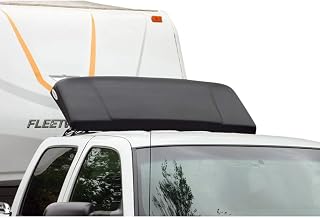
ICON’s AeroShield WD600 emphasizes ease of installation with no drilling required. It fits most vehicles, and the design claims up to 3 mpg better fuel mileage. Best for: buyers seeking a low-effort, reversible installation that can provide modest fuel savings along with rock protection. Limitation: verification with the application guide is essential to ensure compatibility with your vehicle model.
Buying Guide: Rock Deflectors for Boat Trailers
- Material and Durability — Choose based on expected debris load. Rigid PVC mesh and heavy vinyl offer strong protection; lightweight plastics are easier to install but may wear sooner in rough conditions.
- Installation Ease — Some deflectors require drilling or frame mounting; others are peel-n-stick or clip-on. Assess your trailer’s surface and frame before purchase.
- Coverage Area — Larger guards protect more of the trailer rear and fender area but add bulk. Consider a balance between protection and aesthetic integration with your trailer.
- Aerodynamics and Fuel Economy — Wind deflection devices may add slight drag, but some models claim mpg improvements. Compare installation footprint and expected effects on towing dynamics.
- Maintenance — Materials like polyethylene are durable and retain shape; vinyl guards may require reapplication if adhesive weakens over time.
- Best For By Use Case — For paint protection on frequent gravel roads, prioritize deflection angles and rigidity. For easy, temporary setups, peel-n-stick vinyl or simple shields may be preferable.
FAQ
- What is the primary purpose of a rock deflector on a boat trailer? They deflect rocks, gravel, and debris away from the trailer and tow vehicle to reduce paint chips and maintenance.
- Do all rock guards require drilling? No; some models are designed for no-drill installation, using adhesives or existing frame mounting.
- Which material lasts longest? Heavy-duty PVC mesh and high-density polyethylene tend to resist impact and weathering well when properly installed.
- Can rock guards improve fuel efficiency? Some deflectors claim mpg gains, particularly wind-deflection shields, though results vary by setup and driving conditions.
- How do I choose the right size? Match the deflector width to your trailer’s rear dimensions and consider the hull or fender coverage you want to protect.
- Are these universal for all trailers? Applicability varies; check the application guide and trailer compatibility to avoid fit issues.