Best Self-Contained Marine AC Units for Boats in 2026
Answering the question: these self-contained marine air conditioners are designed to cool or heat boats with compact, integrated systems. They’re best for boaters who want a straightforward installation, reliable cooling, and minimal space use. The top picks below suit different boat sizes and operating conditions—from small cabin yachts to larger sailboats and live-aboard vessels. The following selections emphasize quiet operation, corrosion resistance, energy efficiency, and durable components to withstand marine environments. A quick reference is included after the intro to help you compare key features at a glance.
| Product | Best For | Key Benefit |
|---|---|---|
| 6,000 Btu/h Self Contained Marine AC Unit (MarinAire) | Compact boats, tight spaces | Rotatable blower and sound shield for quiet, efficient cooling |
| 11,000 Btu/h Self Contained Marine AC Unit (MarinAire) | Small to mid-size cabins | Corrosion-resistant titanium coil for harsh marine conditions |
| 16,000 Btu/h Self Contained Marine AC Unit (MarinAire) | Larger cabins, blue-water boats | High efficiency with quiet operation |
| Dometic ECD Self-Contained Air Conditioner | RVs, boats with high cooling demand | High capacity, compact design with digital control |
| Dometic Marine 9108732762 Retrofit Kit ECD6/2-1171-410A | Existing marine systems upgrading | Environmentally friendly refrigerant and flexible installation |
MarinAire 6,000 Btu/h Self Contained Marine AC Unit

Best for compact boats or tight-engine-room spaces where a small footprint matters. The MarinAire 6,000 Btu/h unit features a rotatable blower and a dedicated sound shield to reduce operating noise, making it suitable for small cabins, pilothouses, or cabins under gale-prone decks. The compact size helps with installation in limited overheads or narrow engine rooms, while the high-efficiency design minimizes power draw on battery-based or shore-powered systems. Use this model if your vessel has limited space but requires dependable cooling on moderate summer days.
Who it’s for: boaters with small interiors, single-berth or compact cabins, or boats where space constraints are critical. Best for weekenders or coastal cruising where the load isn’t excessive. Limitation: 6,000 Btu/h may be insufficient for very hot climates or larger cabins unless supplemented by another cooling source.
MarinAire 16,000 Btu/h Self Contained Marine AC Unit

Best for larger cabins or mid-size yachts needing robust cooling. This 16,000 Btu/h self-contained unit emphasizes quieter operation thanks to a sound cover that reduces noise by about 60%. The titanium coil provides corrosion resistance, which is crucial in saltwater environments, and the lightweight Integra design paired with R410A refrigerant contributes to energy efficiency. Choose this if you need strong cooling on hot days without excessive power consumption, and your boat’s interior footprint accommodates a higher-capacity unit.
Who it’s for: boats with larger saloons or forward cabins that demand steady cooling. Limitation: installation typically requires more space and proper bonding to sacrificial anode for corrosion protection.
MarinAire 11,000 Btu/h Self Contained Marine AC Unit

Best for mid-sized interiors that need a balance of cooling capacity and space efficiency. The 11,000 Btu/h unit mirrors the 16k model’s emphasis on quiet operation and durable titanium coil. It advertises a 60% noise reduction with its sound cover, which is beneficial for saloons, cabins, and staterooms where comfort matters. The corrosion-resistant coil is designed for adverse marine conditions, with bonding to a sacrificial anode recommended. This model is a good compromise between capacity and footprint.
Who it’s for: boaters with moderate air-demand requirements who still want a compact, quiet system. Limitation: not as high-capacity as 16k for very large spaces, so may underperform in extreme heat or very large cabins.
Dometic ECD Self-Contained Air Conditioner (16,000 BTU)
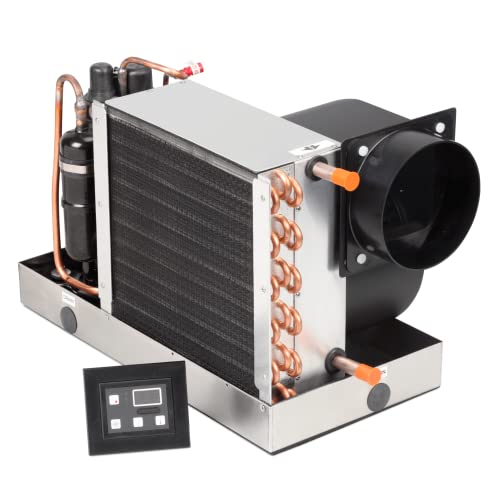
Best for boats requiring high cooling capacity in a compact footprint. The Dometic ECD system delivers 16,000 BTUs and uses R410A refrigerant, aiming for energy efficiency and lower environmental impact. It has a compact design ideal for tighter engine rooms or cabins, and a digital control/display for straightforward operation. Consider this unit if your vessel needs robust cooling and a modern control interface, especially in warmer climates or larger interiors.
Who it’s for: larger small- to mid-sized boats, or RVs approaching boat-like layouts, that require dependable cooling with a simple digital interface. Limitation: installation may be more involved due to space and mounting considerations.
Dometic Marine 9108732762 Retrofit Kit ECD6/2-1171-410A

Best for upgrading existing marine cooling systems to an environmentally friendly refrigerant. This retrofit kit uses R410A refrigerant and comes with a diverter/blower arrangement that can be rotated to suit duct connections, increasing installation flexibility. It also includes a compact digital control and display for user-friendly operation. Choose this if you are modernizing an older self-contained system and want to reduce environmental impact while improving installation options.
Who it’s for: boat owners upgrading legacy setups or integrating more efficient refrigerant and flexible ducting. Limitation: installation requires compatibility checks with your current unit and may involve professional servicing.
Buying Guide
What size should you choose? Determine your boat’s interior square footage and the number of zones you want cooled. Higher BTU units (like 16,000 BTU) suit larger cabins but may demand more space and electrical capacity. For compact boats, 6,000–11,000 BTU units provide adequate cooling with a smaller footprint.
What installation considerations matter? Self-contained marine units require a secure mounting location, proper venting, and corrosion protection. Look for models with titanium coils, corrosion-resistant housings, and bonding recommendations to sacrificial anodes. Check that the electrical system on your vessel can support the unit’s voltage and amperage requirements.
Whisper-quiet operation: Marine environments favor low noise. Units featuring sound shields or designed for quiet operation improve comfort, especially in cabins where conversations and rest occur. If noise is a priority, prioritize models with documented decibel reductions or sound-dampening features.
Energy efficiency and refrigerant: Modern marine ACs use environmentally friendlier refrigerants like R410A or R32. Efficiency translates to lower power draw, which is crucial on vessels relying on battery power or limited shore power. Consider the long-term operating costs as well as upfront installation costs.
Material durability: Saltwater exposure demands corrosion resistance. Titanium coils and robust enclosures extend unit life. Confirm bonding instructions and maintenance requirements, including anode connections, to maximize lifespan in marine settings.
Compatibility with existing systems: If upgrading, a retrofit kit or modular components can ease the process. Ensure new units or retrofit kits match your boat’s ducting layout, roof placement, and electrical system. Professional installation may reduce the risk of leaks or improper venting.
Frequently Asked Questions
- What is the typical cooling capacity I should look for on a marine boat? Look for units in the 6,000–16,000 BTU range depending on cabin size; larger interiors require higher capacity for effective cooling.
- Are self-contained marine AC units easy to install? Many are designed for relative ease but may still require professional installation for proper venting, wiring, and corrosion protection.
- What refrigerants are common in marine units? R410A and R32 are common due to lower environmental impact and efficiency advantages.
- What maintenance is needed for corrosion resistance? Regular inspection of coils, housings, and sacrificial anode bonding is recommended to prevent corrosion damage in salt air.
- Is noise a major concern with marine AC units? Yes, especially in cabins; prefer models with sound dampening features or noise reduction ratings.
- Can I upgrade an old marine AC system with a retrofit kit? Retrofit kits are available to modernize refrigerants and improve efficiency, but verify compatibility with your current system.