Best Speed Boat Bottom Paint for Antifouling Protection
If you’re choosing a bottom paint for a speed boat, select an antifouling product that reduces drag, resists fouling, and matches your water type. The top options here are designed for fiberglass, wood, and steel hulls, and they suit boats that spend time in salt, brackish, or mixed waters. This guide highlights what each product does best and who should buy it. A quick comparison table follows to help you decide at a glance.
| Product | Best For | Coating Type | Water Type | Key Benefit |
|---|---|---|---|---|
| TotalBoat Underdog Marine Antifouling Bottom Paint (Blue, Gallon) | Sailboats and work boats needing single-season protection | Ablative/biocide | Saltwater | Economical protection with easy annual reapply |
| TotalBoat JD Select Ablative Antifouling Bottom Paint (Black, Quart) | Fiberglass, wood, steel boats; marinas with environmental rules | Ablative, low-VOC | Salt & Freshwater | Self-polishing finish minimizes buildup and sanding |
| TotalBoat JD Select Ablative Antifouling Bottom Paint (Black, Gallon) | Season-long protection for active boaters | Ablative, low-VOC | Salt & Freshwater | Durable burnishable finish for smoothness and speed |
| Rust-Oleum 396967 Marine Bottom Antifouling Paint (Quart, Black) | Fiberglass, wood, steel with general antifouling needs | Copper-release antifouling | Saltwater | Simple recoat and launch timeline |
| TotalBoat Spartan Boat Bottom Paint (Quart, Black) | High fouling conditions; sail and power boats | Ablative with copper | Fresh, Salt, Brackish | Multi-season protection with potential burnish finish |
TotalBoat Underdog Marine Antifouling Bottom Paint (Blue, Gallon)
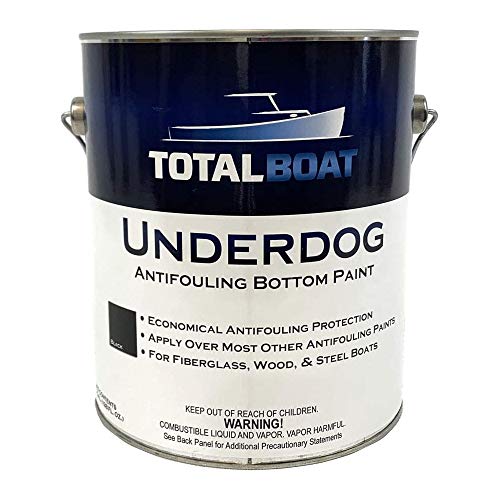
Best For: Boats used frequently in saltwater, including sailboats and work boats. This economical antifouling coating provides single-season protection and releases fresh biocide as water moves under the hull. It’s suitable for properly prepared fiberglass, wood, steel, and iron bottoms, with reduced paint buildup between seasons.
- Coating Type: Ablative with copper biocide
- Limitations: Ablative wear means annual reapplication is expected; performance depends on water movement under the hull.
TotalBoat JD Select Ablative Antifouling Bottom Paint (Black, Quart)

Best For: Boats needing a low-VOC, easy cleanup option in marinas with environmental restrictions. The self-polishing, ablative formula minimizes buildup and can be burnished for a smoother, faster finish.
- Coating Type: Ablative, low-VOC
- Limitations: Requires reapplication seasonally; performance depends on water movement.
TotalBoat JD Select Ablative Antifouling Bottom Paint (Black, Gallon)

Best For: Active boats in mixed water conditions that need reliable antifouling with simpler cleanup. The low-VOC, self-polishing film reduces buildup and supports smoother launches next season.
- Coating Type: Ablative, low-VOC
- Limitations: Requires careful surface prep for best adhesion; performance varies with water movement.
Rust-Oleum 396967 Marine Bottom Antifouling Paint (Quart, Black)

Best For: General antifouling needs on fiberglass, wood, or steel with straightforward recoat and launch timing. It slowly releases copper to deter fouling and covers up to 110 sq ft per quart.
- Coating Type: Copper-release antifouling
- Limitations: Performance depends on ambient water movement and surface prep quality.
TotalBoat Inflatable Boat Bottom Paint (1 Quart)

Best For: Hypalon, PVC, and rubber inflatable boats that require a flexible, water-based antifouling coating. It remains durable when the boat is deflated and rolled, offering 25% copper protection in both fresh and salt water.
- Coating Type: Water-based ablative antifouling
- Limitations: Primarily designed for inflatable boats; may not match heavy metal hulls for long-term durability.
TotalBoat Spartan Boat Bottom Paint (Quart, Black)

Best For: Sailboats and power boats facing high fouling conditions with multi-season protection. A high copper content formula supports robust antifouling, and the copolymer ablative mix helps maintain speed and reduces buildup when hauled and relaunched.
- Coating Type: Ablative with high copper content
- Limitations: Higher copper content can affect compatibility with certain hull materials and marinas’ rules.
Buying Guide
What should you consider when choosing speed boat bottom paint? Focus on water type, hull material, application ease, and how long you want protection each season. Ablative paints wear away with use, reducing buildup but requiring reapplication. Non-ablative options stay on longer but may demand more maintenance and sanding between seasons.
- Water type: Saltwater, freshwater, or mixed. Some formulas work best in saltwater; others handle both well.
- Hull material: Fiberglass, wood, steel, or inflatable. Ensure compatibility listed by the manufacturer.
- Application schedule: Do you prefer single-season protection or multi-season protection?
- Environmental concerns: Look for low-VOC or water-based options when required by marina rules.
- Recoat and launch timing: Check dry times and cure windows relevant to your marina or yard constraints.
FAQ
- Q: What is the difference between ablative and non-ablative bottom paints? A: Ablative paints wear away as the boat moves, reducing buildup. Non-ablative paints stay put longer but may require more sanding between seasons.
- Q: Can I use these paints on fiberglass and steel? A: Most listed products are formulated for fiberglass, wood, and steel if the surface is properly prepped.
- Q: Are these paints safe for marinas with low-VOC rules? A: Yes, several options are low-VOC or water-based and designed for restricted environmental conditions.
- Q: How often should I recoat? A: Recoat frequency depends on use, water type, and paint type; ablative paints typically require annual refresh.
- Q: Do these paints affect hull speed? A: Properly applied antifouling coatings can reduce drag from fouling, potentially improving speed and fuel efficiency.
- Q: Is copper-based paint safe for marine life? A: Copper-based paints release biocides under water; follow label directions and marina guidelines for safe use.