Best Fresh Water Pumps for Boats: Reliable Picks for RV, Marine and Off-Grid Use
Whether you’re outfitting a sailboat, motor yacht, or a compact RV, a dependable fresh water pump is essential for consistent water pressure and reliable delivery. This guide highlights five top choices that balance performance, safety features, and ease of use. Best picks are categorized by need: 110V AC options for shore-power boats, compact 12V DC pumps for off-grid travel, and high-flow pumps for larger systems.
At-a-glance comparison of selected pumps
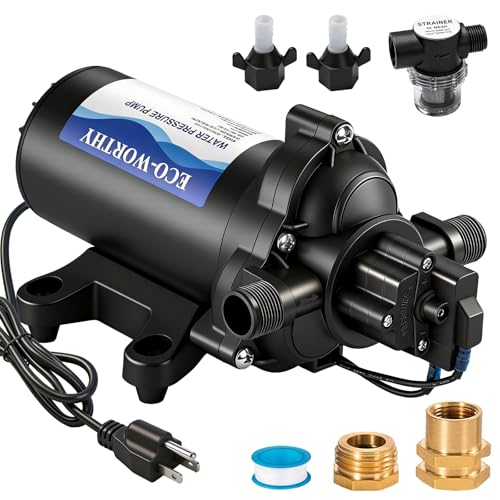
| Product | Type | Flow | Shut-Off | Best For |
|---|---|---|---|---|
| ECO-WORTHY 33-Series | 110V Diaphragm | 4.0 GPM | 50 PSI | Stations with shore power, bigger boats |
| Gidrox 12V 5.0 GPM | 12V Diaphragm | 5.0 GPM | 55 PSI | Off-grid RVs and small boats |
| SEAFLO 55 Series | 12V Diaphragm | 5.5 GPM | 60 PSI | Consistent on-demand pressure |
| Gidrox 12V 4.0 GPM | 12V Diaphragm | 4.0 GPM | 45 PSI | Compact systems, quiet operation |
| Kohree 2026 Upgraded | 12V Diaphragm | 7.5 GPM | 70 PSI | High-demand setups, yachts |
Note: All selections emphasize reliability, safety features, and practical installation in boats, RVs, or similar off-grid environments. See individual product sections for suitability notes and limitations.
ECO-WORTHY 33-Series 110V Diaphragm Pump
The ECO-WORTHY 33-Series is a 110V AC diaphragm pump designed for marine and RV water systems. It provides 4.0 GPM at a 50 PSI cut-off, with a smart pressure switch that starts and stops based on faucet use. It can self-prime up to 9.8 feet and delivers lift up to 131 feet. A thermal overload protector helps prevent motor damage. Best for: boats and RVs connected to shore power that want easy, auto-demand pressure control. Caution: uses AC power—requires proper electrical safety and installation with a dedicated circuit.
Gidrox 12V RV Water Pump, 5.0 GPM

This 12V DC diaphragm pump delivers up to 5.0 GPM at 55 PSI with self-priming capability. It’s built for off-grid use in RVs, boats, and other lightweight systems, and includes safeguards like overheating protection and a noise-reduction design. Best for: off-grid travelers who need steady water pressure from battery power. Limitation: louder models may still be audible in quiet cabins; consider mounting and isolation to minimize vibration.
Wassermann 12V Self-Priming Pump (4.0 GPM)

The Wassermann kit includes multiple adapters and debris protection for reliable 4.0 GPM performance at 45 PSI. It’s a practical option for RVs and small boats seeking a compact, ready-to-install system. Best for: users who want a complete kit with fittings included. Caution: verify compatibility with existing fittings and battery setup in tight engine rooms.
Gidrox 12V RV Water Pump, 4.0 GPM

This 4.0 GPM, 100 ft head pressure pump comes with a rugged build and noise-reducing features. It’s designed for off-grid operability with 10 ft self-prime capability and a focus on steady output. Best for: compact marine installations where space is limited. Limitation: lower flow than higher-capacity models; choose this if space and quiet operation matter most.
Kohree 2026 Upgraded RV Fresh Water Pump

The Kohree 2026 model raises the bar with 7.5 GPM at up to 70 PSI, a five-chamber diaphragm, and an advanced pressure switch. It features dry-run protection and thermal overload safeguards for longer life in demanding setups. Best for: larger boats or yachts where high flow is required for showers, galley, and plumbing fixtures. Caution: higher pressure may require check valves and line sizing adjustments in some systems.
Buying Guide: Key Considerations For Fresh Water Pumps
- Power source: Choose 110V models for shore-powered vessels or 12V units for off-grid use. Some boats use both; ensure the pump you pick matches your system’s voltage and wiring.
- Flow rate and head pressure: Higher GPM supports simultaneous fixtures; head pressure matters for vertical lift and long hose runs. Match to your boat’s size and plumbing layout.
- Self-priming capability: Pumps that self-prime to a practical lift (feet) reduce installation complexity and improve reliability after pump dry runs.
- Pressure switch and shut-off: Smart or built-in pressure switches provide automatic on/off control and protect plumbing from over-pressurization.
- Noise and vibration: Vibration-damping bases and multi-chamber diaphragms reduce noise, especially in living spaces or cabins.
- Safety and compliance: Look for motors with thermal protection and units designed for potable water if water quality is a concern.
- Kit contents: Some models ship with fittings, hoses, and debris filters, which simplifies installation but verify compatibility with your current hardware.
- Durability and materials: Corrosion-resistant components and diaphragms designed for potable water enhance longevity in marine environments.
FAQ
- What is the difference between 12V and 110V boat pumps?
Answer: 12V pumps run on marine batteries for off-grid use; 110V pumps operate on shore power or marine shore cords and are common on larger vessels with electrical systems. - Should I choose a higher GPM pump for my boat?
Answer: Higher GPM is useful when multiple fixtures require water at once. For small setups, 3–4 GPM may be enough to maintain adequate pressure. - What does “self-priming” mean and why is it important?
Answer: Self-priming means the pump can draw water from a vertical lift or tank without manual priming, improving reliability in irregular water sources. - Are there pumps designed for potable water?
Answer: Yes, some models meet NSF/ANSI/CAN standards for potable water and are suitable for drinking-water systems on boats. - Can I mix pumps from different brands in one system?
Answer: It’s possible but may require adapters or regulators to ensure compatible pressure and electrical loads across the system. - What maintenance helps longevity?
Answer: Regular inspection of hoses, fittings, strainers, and diaphragms; check electrical connections; and avoid running the pump dry for extended periods.