Best Outboard External Gas Tank Options for Safe, Easy Fuel Transfers
Looking for an outboard external gas tank for your boat? This guide highlights five reliable options that balance capacity, durability, and compatibility. Each choice targets common boaters: anglers needing extra fuel, day-trippers with limited deck space, and larger vessel owners seeking safer, spill-resistant designs. Below, you’ll find concise why-to-choose notes, best-use scenarios, and practical cautions to help you pick the right fuel tank for your outboard motor.
Summary table of chosen products:
| Product | Capacity | Key Benefit | Best For |
|---|---|---|---|
| VEVOR Boat Fuel Tank, 3.17 Gal | 3.17 gal / 12 L | 9.8 ft hose, durable HDPE body | Compact boats, deck seating with storage under-seat |
| AloneGoer 3 Gal Portable Tank | 3 gal / ~12 L | Multi-layer barrier technology, UV and corrosion resistant | Salt spray/humid environments, Yamaha connectors |
| Scepter 6 Gallon Portable Marine Can | 6 gal / ~22.7 L | Built-in gauge, vented cap, under-seat friendly | Longer runs, versatile fuels |
| PeakPursuit Portable Boat Tank 3 Gal | 3 gal | Long hose, dual venting for smooth flow | Under-seat storage, easy handling |
| VEVOR Marine Tank, 6.34 Gal | 6.34 gal / ~24 L | Gauge sight, 9.8 ft hose, spill-free design | Medium-capacity needs, general transport |
VEVOR Boat Fuel Tank, 3.17-Gallon/12-L

Best for compact vessels and deck boats that require a portable fuel transfer solution. This model uses a high-density polyethylene body for durability and features a long 9.8 ft/3 m hose that matches Yamaha connectors, making it a strong match for common outboard setups. The 3.17-gallon capacity is ideal for short trips or as a reserve on smaller boats. A molded top handle aids transport, and the design holds its shape under use.
Best-for clarity: ideal for anglers or day cruisers who need a lightweight, space-saving tank that still offers reliable fuel transfer. The main limitation is its smaller capacity, which may require more frequent refills on longer outings.
AloneGoer 3 Gallon Portable Boat Fuel Gas Tank
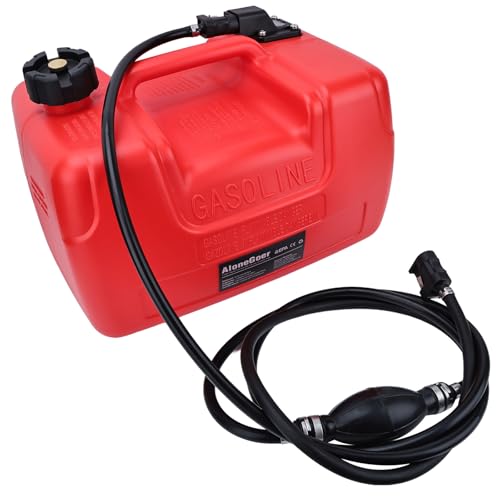
Choose this if you need a compact, 3-gallon unit built with multi-layer barrier technology to minimize fuel permeation and evaporation. The tank uses HDPE-EVOH-HDPE co-extrusion, offering strong resistance to UV exposure and salt spray. It’s designed for Yamaha outboards and inflatables, and the corrosion resistance makes it suitable for saltwater use. The data suggests longevity in challenging marine environments, making it a sensible choice for frequent coastal trips.
Best-for: sailors and boaters who want a durable, corrosion-resistant option with low fuel loss. Limitation: smaller capacity may require more frequent refills on longer trips or bigger engines.
Scepter 6 Gallon Portable Marine Can

Best for longer outings and boats needing a balance of capacity and portability. The 6-gallon design provides more fuel without a large footprint and includes a built-in gauge for quick checks without lifting the container. A two-way vented cap supports safer refueling and vapor release, while compatibility with diesel and ethanol blends broadens fuel options. The option is well-suited for boats where under-seat storage is a priority and a mid-range capacity is desired.
Caution: ensure the vented cap is properly engaged during storage to prevent vapor buildup. This model relies on a separate fuel line for complete fueling setups.
PeakPursuit Portable Boat Tank 3 Gal

Best for users who value a long hose and flexible mounting options. This 3-gallon tank includes a 9.8 ft hose and a dual venting system that lets you choose sealed or vented operation, aiding a smooth, controlled fuel flow. The HDPE construction resists aging and corrosion, making it suitable for frequent trips on yachts or deck boats. The main caveat is that the larger, integrated features may add minor bulk compared with ultra-lightweight options.
Use-case: choose this if you want a balance of portability, long hose reach, and venting versatility for flexible fueling on boats with varied layouts.
VEVOR Marine Tank, 6.34 Gal

This tank is best for medium-capacity needs with a solid gauge and 9.8 ft hose. The separate inlet and outlet help prevent spills and keep the fuel path clean. Its 6.34-gallon capacity hits a middle ground between compact and large tanks, and HDPE construction supports aging and impact resistance. Note that prolonged sun exposure can age the plastic and cause expansion, so proper storage is advised.
Best-for: boaters who want a larger capacity than a 3-gallon tank without stepping up to a full 10+ gallon can. Limitation: avoid prolonged exposure to direct sunlight to prevent aging and expansion.]
Buying Guide: Key Considerations for Outboard External Gas Tanks
- Capacity vs. voyage length: Choose 3–6 gallons for short trips; 6–9 gallons for longer days or higher-fuel-use engines. Align capacity with your typical cruising time and back-up fuel needs.
- Compatibility: Check hose length and connector types to match your outboard and motor boat models. Longer hoses improve reach but require secure mounting.
- Material and durability: HDPE tanks resist impact and corrosion, while multi-layer barriers reduce evaporation. UV resistance helps longevity in sunlit environments.
- Venting and safety: Vented caps prevent pressure buildup but require proper sealing when stored. Dual venting and built-in gauges aid safe, easy fueling and monitoring.
- Portability and storage: Under-seat or compact profiles save deck space. Look for molded handles and slim shapes to maximize cabin or seating area.
- Maintenance and fuel integrity: Tanks with sight gauges or clear indicators reduce the risk of overfilling and spills. Ensure compatible with your fuel type if you use ethanol blends.
- Price vs. value: Higher capacity and advanced features (gauge, vented caps, barrier technology) add cost but improve reliability and safety over time.
Frequently Asked Questions
- Do these tanks work with all outboard motors? Most are designed for common Yamaha connectors and marine fittings, but always verify hose size and inlet/outlet compatibility with your engine and fittings.
- Is a built-in gauge important? A built-in gauge helps monitor fuel levels at a glance, reducing spill risk and avoiding unexpected engine stops due to empty tanks.
- What is the advantage of a vented cap? Venting prevents pressure buildup and helps airflow during refueling, which reduces vapor risk and improves flow control.
- Can I use diesel or ethanol-blended fuels in these tanks? Some models are listed as compatible with diesel and ethanol blends; check product specs to confirm compatibility for your fuel type.
- How should I store the tank when not in use? Store away from direct sunlight, in a cool, dry place, and ensure the cap is secure or vented according to the model’s design to prevent aging and leakage.
- Do these tanks require any special maintenance? Rinse with clean water after use in saltwater, inspect seals and caps for wear, and replace hoses if they show signs of cracking or swelling.