Best GPS Locator for Boats: Reliable Personal Beacons for Marine Safety
Answer: The best GPS locators for boats are buoyant, satellite-based beacons that transmit distress signals with precise GPS coordinates to rescue authorities, with no ongoing subscription in many models. These devices are ideal for boaters who need fast location data in emergencies, offshore sailors, and anglers who want reliable offshore safety. The top picks below show strong global coverage, buoyant designs, and features like Return Link Service (RLS), AIS integration, and quick test messaging for contacts. The buyer types most served include recreational boaters, offshore mariners, and fishing crews seeking dependable emergency signaling.
Summary of chosen products
| Product | Brand | Key Feature | Best For |
|---|---|---|---|
| ACR ResQLink View – PLB 425 | ACR | GPS, 406 MHz distress with 121.5 MHz homing; buoyant; multisport wearability | Boat owners needing buoyant, rugged PLB with direct SOS and GPS |
| ACR ResQLink 400 | ACR | No subscription, 406 MHz distress, LED strobe | Casual boaters and anglers seeking subscription-free rescue signaling |
| ACR ResQLink View RLS | ACR | Digital display, Return Link Service, GPS | Mariners who want SOS confirmation and GPS with test messaging |
| ACR ResQLink 410 RLS | ACR | RLS, GPS, Galileo/MEOSAR compatibility | Global-capable emergency signaling with return confirmation |
| ACR RESQLINK AIS PLB-450 | ACR | AIS alerts, NFC access, Return Link Service | Vessel operators relying on AIS-based, local-rescue signaling |
ACR ResQLink View – Buoyant PLB 425
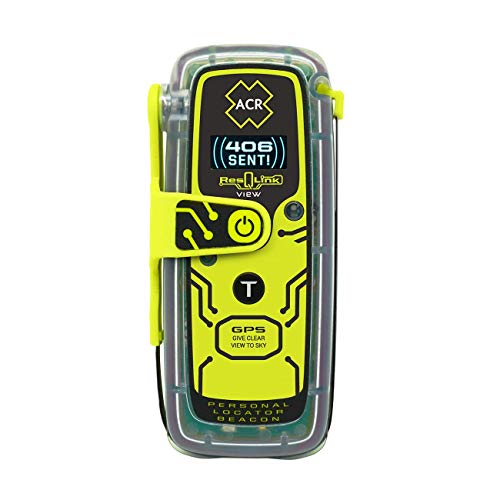
- GPS position transmitted with 406 MHz distress signal; 121.5 MHz homing signal included
- Buoyant, small, rugged design with belt clip, oral inflation tube clip, straps, and lanyards
- Allows pre-canned non-emergency self-test and GPS test messages via optional 406Link
Best for: Boat owners and outdoor enthusiasts who need a buoyant, all-terrain PLB with GPS and self-test messaging without ongoing fees.
Limitation: Requires careful activation for distress mode and relies on satellite coverage for updates.
ACR ResQLink 400

- No subscription required; reliable, subscription-free coverage
- 406 MHz distress and homing signals for fast rescues
- LED strobe and infrared strobe increase visibility in low-light conditions
Best for: Hikers, boaters, and outdoor lovers who want ongoing rescue readiness without fees after purchase.
Caution: Visibility aids rely on rescuers locating GPS coordinates promptly, and performance varies by environment.
ACR ResQLink View RLS

- RLS confirms rescue acknowledgment; GPS visibility and digital display
- No subscription required; 5-year battery life; 28+ hours operational life
- Infrared strobe aids locate-ability in darkness
Best for: Mariners who value SOS verification and progress tracking of distress signals during emergencies.
Limitation: Longer battery life comes with larger unit footprint; weigh for storage considerations on small boats.
ACR ResQLink 410 RLS

- RLS with GPS, Galileo GNSS, and MEOSAR compatibility
- No subscription; 5-year battery life; 24+ hours of operation
- Global coverage for reliable positioning in any outdoor emergency
Best for: Global mariners needing broad satellite compatibility and confirmed distress signal receipt.
Limitation: Advanced GNSS features may require compatibility checks with local SAR infrastructure.
ACR RESQLINK AIS PLB-450

- AIS distress alerts with nearby vessels; Return Link Service confirms SAR receipt
- NFC enables quick data access via mobile, including battery and GNSS test data
- Vessel-based, local AIS signaling complements satellite distress
Best for: Boat crews who rely on AIS-aware signaling and quick data access to verify beacon status during emergencies.
Caution: AIS signaling effectiveness depends on nearby AIS-equipped vessels; may not replace satellite coverage in open oceans.
Buying Guide: Key Considerations For GPS Boat Beacons
- Global coverage and satellite network compatibility: Look for 406 MHz with 121.5 MHz homing, and consider GPS/Galileo/MEOSAR support for global reach.
- Return Link Service (RLS): RLS provides confirmation that rescue services received the distress signal, a crucial安心 factor for responders and families.
- Additional signaling options: LED strobes, infrared strobes, and strobe lighting aid visibility in low light; NFC or SMS test messaging can improve pre-planning and contact notifications.
- AIS integration: AIS-based alerts can help nearby vessels detect your distress; ideal for crowded waters or busy shipping lanes.
- Battery life and durability: Long battery life is essential for extended outings; buoyant, rugged construction is important for marine environments.
- Subscription and costs: Some devices offer subscription-free operation; others may rely on optional services. Consider total cost of ownership beyond purchase price.
- Ease of use and testing: Devices should support quick self-tests, GPS tests, and user-friendly activation instructions for emergencies.
- Compatibility with vessels and storage: Consider size, mounting, and how the beacon fits within your boat’s safety equipment plan.
FAQ: Quick Answers For Buyers
- What is a PLB and why do I need one on a boat?
A personal locator beacon (PLB) transmits a distress signal with GPS data to rescue authorities, helping responders locate you quickly in emergencies at sea. - Do these devices require ongoing fees?
Many models offer subscription-free operation for distress signaling, though some services may add optional features. - What does Return Link Service (RLS) do?
RLS confirms that Search and Rescue has received your distress signal, giving you confidence that authorities are aware of the situation. - Is AIS integration important for boats?
AIS alerts can notify nearby vessels and plotters, improving chances of assistance in busy waters, but satellite signaling remains essential for offshore rescue. - How long does a beacon’s battery last?
Battery life varies by model; many offer multi-year shelf life with hours of operation after activation, but always check the specifications for your planned voyage lengths. - Can I test these beacons safely?
Yes; most models support non-emergency self-tests and GPS tests using the manufacturer’s app or built-in features without activating distress.