Best Outboard Motor Battery Cables for Reliable Marine Power
Answering what to buy for outboard motor battery cables helps boat owners choose durable, corrosion-resistant connections that withstand marine environments. This guide spotlights five top options tailored for outboard engines, solar setups, RVs, boats, and other marine electricals. Each product is evaluated for best use cases, potential limitations, and why it stands out. Whether you need heavy gauge for high current or flexible, easy-to-handle cables, you’ll find practical details to inform a confident purchase.
| Product | Best For |
|---|---|
| 6 AWG Battery Cables 6 Gauge (TUELETFU) | Marine and automotive high-current connections |
| Marine Battery Cable 2M (Aramox) | Outboard engine battery connections with long reach |
| Leapiture Outboard Motor Cables 2m | Outboard trolling and replacement cables |
| A ABIGAIL 2 AWG Battery Cables 5FT | General purpose marine and solar setups |
| A ABIGAIL 4 AWG Battery Cable 4FT | Medium-duty marine and automotive wiring |
6 AWG Battery Cables 6 Gauge Power Inverter Cable

Overview: This 6 AWG pair is designed for automotive, solar, marine, boat, RV, car, and motorcycle applications. Each cable end holds a 5/16 inch tinned copper lug, and the set includes two cables. The tinned copper helps resist corrosion and makes soldering easier, which is valuable in damp environments.
Best for: Boat owners and RV users needing a robust, corrosion-resistant connection with ready-to-use lugs. The kit is convenient for quick replacement and reduces the need for extra hardware.
Why selected: The dual-end lugs and tinned copper construction support longevity in salt air and humidity, which is common in marine settings. The 6 AWG size balances current capacity with flexibility for tight engine compartments.
Caution: Check battery disconnects and switches compatibility; the 5/16 inch terminals must fit your hardware. Overly long runs can introduce voltage drop if not adequately sized for current demand.
Marine Battery Cable 2M (78.7 Inches) By Aramox
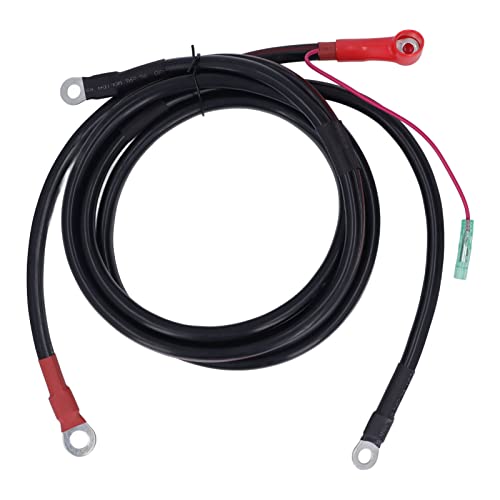
Overview: 2M long pure copper conductor with rubber and PVC insulation. Designed for marine environments, it provides high conductivity with flame-retardant insulation capable of withstanding extreme conditions.
Best for: Outboard engine battery connections where a longer reach and seawater-resistant insulation are beneficial. Suitable for direct engine connections and power transfer to marine electronics.
Why selected: Pure copper offers reliable conductivity, while the insulation protects against moisture and heat. The longer length helps reach distant battery compartments on boats.
Caution: Ensure terminal compatibility with your engine and disconnects; some outboards require specific terminal sizes that may differ from standard lugs.
GEARit 8 Gauge Wiring Kit (3-in-1)

Overview: An all-in-one ground wiring kit with 25 ft red and black 8 AWG copper-clad aluminum wires, including 15 grounding lugs and 20 heat shrink tubes. It features a soft jacket for easier handling and color-coded red/black polarity.
Best for: Users needing a complete grounding solution for auto, electrical, and marine projects where a flexible, color-coded kit simplifies installations.
Why selected: The kit’s polarity separation helps prevent miswiring, and the heat shrink components improve durability in harsh environments.
Caution: 8 AWG copper-clad aluminum is lighter and less conductive than pure copper; for high-current marine inverter setups, confirm current requirements before selection.
Leapiture Outboard Motor Cables 2m
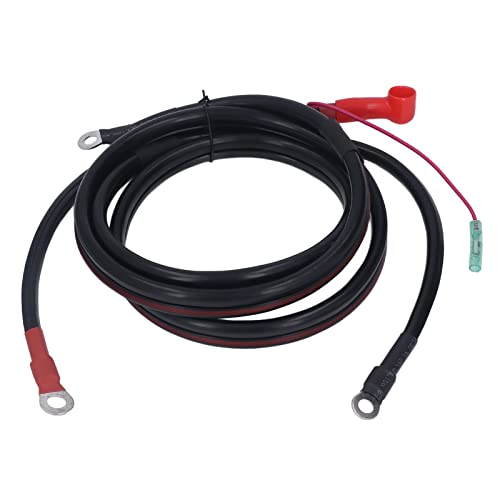
Overview: Replacement cables designed for Parsun outboard engines (15‑85HP), featuring pure copper conductors with clearly marked red and black connectors to avoid wrong connections. The 2M length supports a flexible setup with stable performance.
Best for: Boat owners replacing outboard battery connections where clear polarity labeling reduces installation errors and provides reliable current transfer.
Why selected: The dedicated fit for Parsun models provides a practical option when compatibility is confirmed, and the copper conductor supports good conductivity.
Caution: Verify engine compatibility before purchasing to ensure a correct fit with your battery terminals and mounts.
A ABIGAIL 2 AWG Battery Cables 5FT

Overview: Pure copper with tinned lugs for corrosion resistance. The PVC insulation is designed to resist abrasion and moisture, with ends sealed by heat shrink tubing for insulation and durability.
Best for: Marine, automotive, solar, RV, and general inverter battery connections where corrosion resistance and insulation are priorities.
Why selected: Tinned copper lugs extend life in saltwater environments, and the heat shrink seals reduce moisture ingress at the terminations.
Caution: Check lug size compatibility with your battery posts; ensure your application’s current demand aligns with 2 AWG capacity.
4 AWG Battery Cable 4FT (ABIGAIL)

Overview: 4 gauge battery cables with 3/8 inch lugs on both ends. Each kit includes red and black cables, ends sealed with heat shrink tubing for thermal insulation. Suitable for automotive, marine, and solar power systems.
Best for: Those needing higher current transfer with a standard automotive/marine-sized lug and a 4-foot length to reach components in a compact engine bay or boat bow area.
Why selected: The 3/8 inch lugs provide compatibility with common battery terminals, while heat-shrink insulation protects the joints from moisture and abrasion.
Caution: Ensure the 4 AWG gauge matches your current requirements to avoid voltage drop in longer runs or high-demand cycles.
Buying Guide: Key Considerations For Outboard Battery Cables
- Gauge and current: Higher gauge (lower AWG number) carries more current with lower resistance. Match cable gauge to your engine’s draw and distance between battery and starter or inverter.
- Conductor material: Pure copper offers the best conductivity. Copper-clad aluminum is lighter and cheaper but may have higher resistance; choose based on budget and performance needs.
- Lug size and terminals: Verify lug diameter (e.g., 5/16 inch, 3/8 inch) fits your battery posts and switches. Tinned lugs resist corrosion in salt air.
- Insulation and protection: Look for flame retardant, moisture-resistant PVC insulation and heat-shrink-sealed ends to withstand marine conditions.
- Length and routing: Ensure cables are long enough to reach without tight bends. Excess length increases resistance and clutter; use appropriate routing to minimize exposure to heat and gear.
- Durability and flexibility: Soft jackets and flexible insulation are easier to install around tight corners in engine bays and are less prone to cracking over time.
- Compatibility: Confirm the cables suit your specific outboard model, inverter, solar setup, RV battery bank, or marine electrical system.
Frequently Asked Questions
- What gauge is best for a typical outboard battery connection? A: For most outboards, 6 AWG to 4 AWG cables provide solid performance, balancing current capacity and installation flexibility.
- Do I need tinned copper lugs? A: Tinned lugs offer better corrosion resistance in saltwater or high-humidity environments, extending lug life.
- Should I choose pure copper or copper-clad aluminum? A: Pure copper offers lower resistance and better conductivity, ideal for high current; copper-clad aluminum is lighter and cheaper, suitable for moderate loads.
- Is length important for outboard cables? A: Yes. Longer runs increase resistance and voltage drop; select the shortest workable length that reaches the connection points.
- Can I reuse existing battery terminals with new cables? A: Ensure terminals match the new lug size and that the insulation and terminations are in good condition before reuse.
- What safety features should I look for? A: Heat shrink insulation, flame-retardant materials, moisture-resistant jackets, and clear polarity labeling help reduce installation errors and enhance safety.