Best Hard Antifouling Bottom Paint for Boats
Hard antifouling bottom paints provide durable protection against barnacles, algae, and other marine growth. This guide spotlights five top options, explaining who each product suits best, and why it was chosen. Ideal buyers include frequent sail and power boat users, marinas with environmental restrictions, and skippers seeking long-lasting coatings with predictable reapplication intervals.
Summary of chosen products
| Product | Best For | Coating Type | Notes |
|---|---|---|---|
| TotalBoat Underdog Marine Antifouling Bottom Paint | Frequent boaters in saltwater | Abrasive/Non-Copper biocide | Economical, simple annual recoat |
| TotalBoat JD Select Ablative (Blue) | Boats in mixed water | Ablative | Low odor, easy cleanup |
| Interlux Fiberglass Bottomkote NT | Marina-use with restrictions | Non-copper, standard biocide | Best in class option for fiberglass |
| TotalBoat Krypton Copper Free | Aluminum boats and outdrives | Copper-free | Bright color, aluminum-safe |
| TotalBoat Spartan Antifouling | High-fouling waters | High copper content | Maximum protection, abrasion resistant |
TotalBoat Underdog Marine Antifouling Bottom Paint
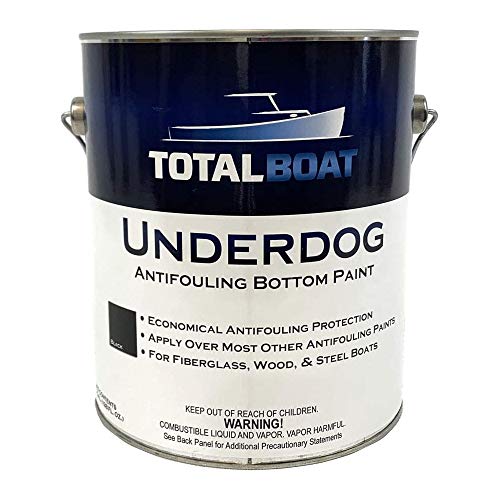
Best for frequent-use boats in saltwater. This economical antifouling paint provides single-season protection with a copper biocide to deter barnacles and mussels. It adheres to properly prepared fiberglass, wood, steel, and iron hulls. The ablative-style coating wears away during the season to minimize buildup, simplifying next-year preparation. Use on boats that frequently launch and re-enter water to maintain effective protection.
Who it’s best for: sailboats, powerboats, and workboats that see regular use in harsh marine environments. Caution: traditional copper-based biocides can limit color options and require careful marina compliance in sensitive areas.
TotalBoat JD Select Ablative Antifouling (Blue)

Best for boats in mixed water; this ablative coating self-polishes as the boat moves, reducing paint buildup and easing next-season prep. Suitable for fiberglass, wood, and steel in salt and freshwater. It features low odor and low VOCs with soap-and-water cleanup, making it friendly for marinas with strict environmental rules. No maximum dry time before launch is a practical advantage for tight schedules.
Who it’s best for: owners seeking easier cleanup and minimized sanding, especially in marinas with VOC restrictions. Consider this if you want smoother performance through the season and faster re-launch readiness.
Rust-Oleum 396967 Marine Antifouling Paint (Quart, Black)

Best for versatile hull materials, including fiberglass, wood, and steel. It gradually releases copper to prevent fouling and can be recoated within four hours, with launch possible after roughly 16 hours. Covers up to 110 square feet, offering a practical option for mid-sized vessels. A straightforward choice when copper content and simple recoat timing matter.
Who it’s best for: boaters needing a reliable, easy-to-apply coating with a predictable recoat window. Limitation: copper-based formulations may require attention to environmental guidelines and color availability.
TotalBoat JD Select Ablative Antifouling Bottom Paint (Green)

Best for boats in mixed waters needing an easy-to-clean ablative finish. The low-VOC, water-based formula reduces environmental impact and cleans up with soap and water. It wears away gradually, which minimizes future paint buildup and reduces sanding. No maximum dry time before launch, making it practical for time-constrained schedules.
Who it’s best for: marinas and boatyards with environmental restrictions; owners who value easy cleanup and minimal sanding at season end. Limitation: copper-free options may deliver different color brightness compared with copper-based paints.
TotalBoat Krypton Copper Free Antifouling (Quart, Black)

Best for aluminum boats, outdrives, and trim tabs due to its copper-free formulation, which minimizes galvanic corrosion risks. It provides high-performance antifouling across fresh, salt, and brackish waters while keeping colors brighter than copper-containing paints. Use below the waterline on fiberglass, wood, steel, iron, and aluminum boats. Haul and relaunch does not reduce efficacy.
Who it’s best for: aluminum hulls and outdrives where copper-based paints would cause corrosion concerns. Caution: copper-free products may require closer attention to protection during long-term storage in water.
Buying Guide
- What vessel type and water conditions matter? Choose ablative paints for regular reboarding and reduced buildup in mixed waters. Copper-based options excel in high-fouling environments, while copper-free formulas suit aluminum hulls and corrosion-sensitive components.
- What is ease of use and environmental impact? Low-VOC, low-odor formulas are preferable in marinas with restrictions. Water-based preparations simplify cleanup and reduce hazardous fumes.
- How long should protection last between relaunches? Ablative paints wear away as you move, limiting buildup. Copper-based paints often provide longer single-season protection in heavy fouling zones, but require more sanding later.
- What maintenance is required after initial coating? Some products require light scuffing to reactivate antifouling properties. Others may offer burnishable finishes for a smoother, faster hull.
- Which coatings are best for your marina and launch frequency? In marinas with strict environmental rules, opt for low-VOC, water-based formulas. If you haul and relaunch infrequently, consider longer-lasting copper-based options unless aluminum components constrain copper use.
FAQ
- What does ablative mean in bottom paint? Ablative coatings wear away gradually as the boat moves, exposing fresh biocide and reducing long-term buildup.
- Is copper-free paint suitable for all boats? Copper-free formulations are ideal for aluminum hulls and components to minimize galvanic corrosion, but performance can vary by water type and usage.
- Can I recoat over existing bottom paint? In many cases you can, but follow product-specific prep instructions to ensure adhesion and performance.
- How long before launching after painting? Many products specify a minimum dry time; some allow immediate or same-day launching, others require 16 hours or more. Check the label for your product.
- Do marinas restrict certain bottom paints? Yes. Favor low-VOC, low-odor products if your marina enforces environmental rules and air quality standards.
- Which option is best for high-fouling waters? Higher copper content provides robust protection, but copper-free alternatives can still perform well in mixed conditions with proper care.