Best Gel Coat Solutions for Boats: Top Picks for DIY Repairs and Finishes
Finding the right gel coat for a boat repair or build project is essential for a durable, showroom-worthy finish. This guide highlights five top gel coat products designed for marine use, cosmetic repairs, and polyurethane or polyester-based coatings. It explains who each product is best for, how they perform, and practical considerations to help you choose. Suitable buyers include DIY boaters, marine repair pros, and fabricators working on fiberglass hulls, decks, or accents.
| Product | Main Use | |
|---|---|---|
| TotalBoat Marine Gelcoat (White, Quart with Wax) | Cosmetic repairs, hull coatings, composite parts | Durable marine-grade formula with wide tinting options |
| Iso/Npg Gel Coat White with Wax (1 Quart) | Professional-grade repairs, color-tuning | Six tint pigments for color matching; clear hard cure |
| Owatrol Marine Polytrol Gelcoat Restorer (17 oz) | Restoring faded gelcoat and marine surfaces | Deep-penetrating formula; non-peeling; UV protection |
| Globalcom Fiberglass Repair Kit | Repairing chips, cracks, holes in boats | Color-matching pastes for seamless repairs |
| TotalBoat Marine Gelcoat (White, Quart No Wax) | Cosmetic repairs and exterior coatings | High-durability, easy tinting, showroom finish |
TotalBoat Marine Gelcoat for Boat Building, Repair and Composite Coatings (White, Quart with Wax)

Best for: DIY boaters and professional shops seeking a durable, easy-to-apply white gelcoat with wax for hard-wearing hull coatings and cosmetic repairs. The wax-containing formula aids tack-free drying and long-term finish quality. It is well suited for repairs on boats, motorcycles, RVs, and other gel-coated surfaces.
Why it’s selected: This premium marine-grade gelcoat offers strong coverage, non-sagging viscosity, and simple tinting with standard resin or gelcoat colorants. It tolerates brush, roller, or spray applications and cures to a high-gloss surface that sands, buffs, and polishes to showroom quality. Pot life at 77°F is 8–12 minutes, which balances work time with efficiency.
Caution: Working with polyester gelcoat requires proper ventilation and protective gear. Tinting should occur before MEKP catalyst addition to ensure consistent cure. Over-thinning or improper mixing can affect cure and finish.
Iso/Npg Gel Coat White with Wax with MEKP Catalyst (1 Quart)

Best for: Professionals and serious DIYers who need precise color matching using included tinting pigments and a robust white base for repairs on boats, fiberglass, and marine hardware.
Why it’s selected: The kit includes six tint pigments (White, Black, Yellow, Blue, Red, Brown) to fine-tune color before adding catalyst. It uses a wax-containing formula to aid a tack-free finish and provides a hard cure with an included MEKP catalyst for strong durability and shine.
Caution: Color matching requires careful proportioning to avoid uneven cures. Follow pigment and catalyst guidelines to prevent mis-timed curing that can affect finish hardness.
Owatrol Marine Polytrol 17 Oz Gelcoat Restorer

Best for: Boat owners and mariners looking to revive dull gelcoat, plastic, and metal surfaces without a full coating or repaint. This restorer is suitable for UV-exposed areas where color renewal and surface protection are priorities.
Why it’s selected: Polytrol penetrates to re-wet pigments, delivering a refreshed color without forming a surface film. It provides lasting protection against future fading and corrosion while preserving the original texture and gloss. It is especially helpful for restoring faded gelcoat and hardware.
Caution: It is a restorer, not a full polymer sealant. For heavily oxidized surfaces, multiple applications may be necessary to achieve optimal brightness.
Globalcom Fiberglass Boat Repair Kit
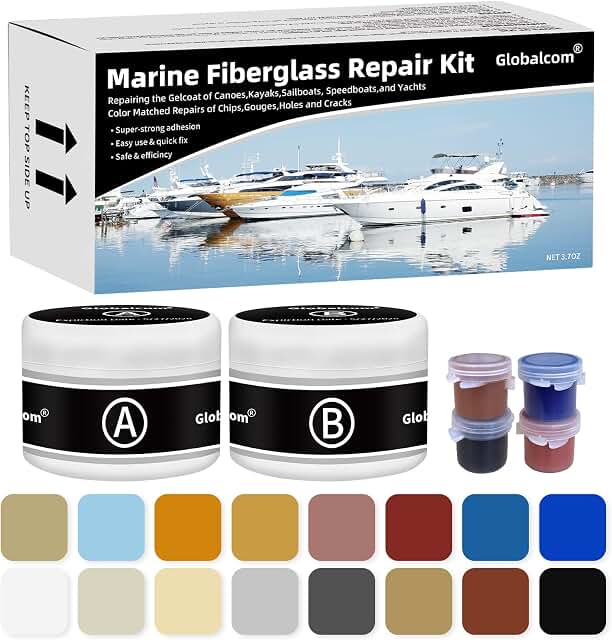
Best for: Boat owners and craftspeople performing on-deck repairs, chips, cracks, pits, and gouges. Color-matching pastes help blend repairs with the original gel coat.
Why it’s selected: The kit includes a white base and color pastes (blue, brown, maroon, black) to achieve a close color match. It offers strong adhesion and UV resistance for durable fiberglass repairs, useful in both small projects and larger maintenance tasks.
Caution: Color matching can be tricky, so test on a small area first. The kit’s performance depends on proper mixing ratios and curing conditions to avoid mismatches or weak bonds.
TotalBoat Marine Gelcoat for Boat Building, Repair and Composite Coatings (White, Quart No Wax)

Best for: DIYers who prefer no-wax gelcoat for coatings requiring extra durability and color versatility. This option is a solid choice for cosmetic repairs and exterior coatings on varied surfaces.
Why it’s selected: It mirrors the premium marine-grade properties of the wax-containing variant, with easy tinting and a non-sagging, high-viscosity formula. It yields a showroom finish after sanding, buffing, and polishing and carries a 77°F pot life of 8–12 minutes for efficient work flow.
Caution: No-wax formulations can slightly affect release or curing dynamics if not mixed and applied under appropriate temperature and ventilation conditions. Ensure correct colorant addition before catalyst.
Buying Guide: Gel Coat Choices For Boats
What finish do you want?
- High-gloss cosmetic finish: Choose wax-containing gelcoats. They cure to a smooth, glossy surface suitable for decks and hull accents.
- Color-matching repairs: Use gelcoats with tinting pigments or color-match kits to seamlessly blend repairs with existing surfaces.
- Restoration and longevity: For faded surfaces, consider a restorer that penetrates pigments without forming a film, reducing future peeling risks.
What application method fits your shop?
- Brush or roller: Ideal for small repairs or touch-ups with better control.
- Spray: Best for large panels and even coats; requires proper equipment and ventilation.
What are the practical limits?
- Pot life: Most marine gelcoats cure faster in warmer environments; plan work time accordingly.
- Curative chemistry: Some products require MEKP catalysts; follow typical safety and mixing guidelines to ensure full curing.
- Finish care: After curing, sanding, buffing, and polishing steps are often needed to reach showroom gloss.
FAQ
- Q: Can I tint white gelcoat to match a specific color? A: Yes, many options include tinting pigments or color-match kits to create pastel or bold hues before adding a catalyst.
- Q: What surfaces can gelcoat repair kits be used on? A: Primarily fiberglass boats, but many products work on related gel-coated surfaces like decks, hulls, and some marine hardware.
- Q: Is wax in gelcoat important? A: Wax helps achieve a quicker tack-free finish and can influence cure characteristics; follow product-specific guidance.
- Q: Do I need specialized equipment to apply gelcoat? A: A brush, roller, or spray gun can be used; the choice depends on project size, desired finish, and equipment availability.
- Q: How should I store gelcoat products? A: Store in a cool, dry place away from direct sunlight, and follow the manufacturer’s shelf-life guidance.
- Q: Is there a risk of gelcoat running or sagging? A: Non-sagging formulas reduce this risk, but temperature and application technique still matter for best results.