Best Gas Treatment for Boats: Top Products for Clean Fuel Systems and Stable Storage
Answering the question “which gas treatment is best for boats?” this guide highlights highly effective marine fuel treatments designed to prevent ethanol problems, reduce varnish and gum buildup, and stabilize fuel. The picks are suited for boat owners, anglers, and weekend sailors who want smoother starts, cleaner engines, and better fuel economy. The following table compares the five selected products and helps you pick the right option for your vessel.
| Product | Best For | Key Benefit |
|---|---|---|
| STAR BRITE Star Tron Enzyme Fuel Treatment – Concentrated | Boats with ethanol-fuel concerns | Enzyme technology for cleaner fuel and easier starts |
| STA-BIL 360 Marine Ethanol Treatment & Fuel Stabilizer | Long-term storage and seasonal boats | Prevents corrosion and protects fuel system |
| STA-BIL 360 Marine Fuel System Treatment | Active boats needing fuel system cleaning | Removes water and varnish for better performance |
| Sea Foam Motor Treatment | Gasoline and diesel engines needing overall cleaning | Deep cleaning of fuel system and oil passages |
| Star Tron Enzyme Fuel Treatment – Small Engine Formula | Small engines and idle-sensitive equipment | Prevents ethanol issues and sustains fuel economy |
STAR BRITE Star Tron Enzyme Fuel Treatment — Concentrated Formula

Product overview: This concentrated formula uses enzyme technology to help engines start more reliably and run cleaner, even after periods of inactivity. It addresses ethanol-related problems by preventing and curing symptoms such as poor performance and rough idling. It also aims to maximize fuel economy by reducing gum, carbon deposits, and varnish buildup in the fuel system.
Best for: Boat owners dealing with ethanol blends or irregular usage. It’s suitable for outboards and inboard engines where fuel stability and clean delivery are priorities.
Why selected: It provides enzyme-based cleaning that supports smoother operation after storage and improved combustion efficiency, making it a practical all-around option for boats with ethanol-containing fuels.
Caution: As with any fuel additive, follow directions for dosage and storage to avoid overuse or unintended effects on specific engine warranties.
STA-BIL 360 Marine Ethanol Treatment and Fuel Stabilizer

Product overview: Cleans the fuel system with PEA additives, removing water, gum, and varnish to protect fuel system parts and prevent corrosion. It also serves as a corrosion protection agent designed for in-season cleaning.
Best for: Boats stored for seasons or frequently exposed to ethanol-blended fuels that risk corrosion and gum buildup.
Why selected: Its emphasis on water removal and rust prevention makes it a strong choice for keeping marine fuel systems durable during storage and active seasons.
Caution: Real-world benefits depend on regular use; it’s not a substitute for a full fuel system overhaul when severe varnish is present.
STA-BIL 360 Marine Fuel System Treatment
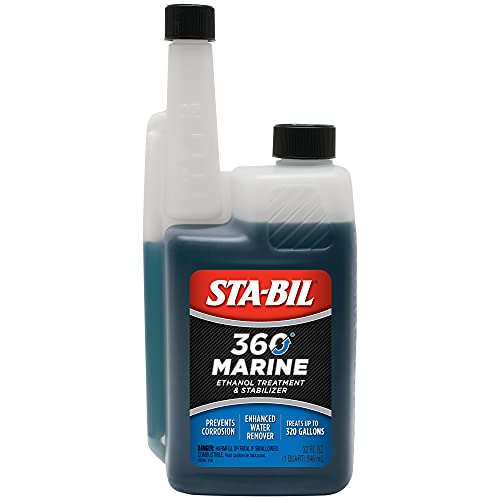
Product overview: This formula cleans the entire fuel system using PEA additives. It targets fuel injectors, lines, and pumps, removing water, gum, and varnish to support efficient combustion and extended engine life. It also delivers corrosion protection.
Best for: Boats facing fuel system deposits or those needing in-season maintenance for improved mileage and power.
Why selected: The comprehensive cleaning focus helps maintain clean injectors and lines, which can translate to steadier performance during high-demand days on the water.
Caution: For severely fouled systems, consider a dedicated mechanical cleaning in addition to treatment.
Sea Foam Motor Treatment

Product overview: Sea Foam is a fuel system cleaner and stabilizer that also acts as an oil treatment. It cleans fuel injectors, carburetors, and intake areas, while helping remove water and varnish from fuels. It’s suitable for gasoline and diesel engines in cars, boats, and other equipment.
Best for: Boats needing a broad-cleaning solution across the fuel system and engine oil system, especially in mixed fuel environments.
Why selected: Its multi-function approach—fuel system cleaning plus oil cleaning—offers a practical, one-product solution for older engines with idle issues and reduced MPG.
Caution: For diesel applications, verify compatibility with your engine model and oil specification before use.
Star Tron Enzyme Fuel Treatment – Small Engine Formula

Product overview: This small engine formula uses enzyme technology to ensure engines start easily and run smoothly, even after inactivity. It helps prevent and cure ethanol-related issues and supports improved fuel economy by removing gum, carbon deposits, and varnish.
Best for: Small boats, tinker-friendly engines, or auxiliary motors where space and simple dosing matter most.
Why selected: It tailors Star Tron technology to smaller engines, offering a compact option with similar cleansing and stabilization benefits as the larger formula.
Caution: Use per instructions for small engines to avoid over-application or unintended effects on engine seals or fuel lines.
Buying Guide: Key Considerations For Boat Fuel Treatments
What should you consider when choosing a gas treatment for boats?
- Fuel type and ethanol exposure: If your boat runs on ethanol-blended fuel, prioritize products that address ethanol-related problems and moisture management.
- Storage and seasonality: For boats stored seasonally, select stabilizers that prevent corrosion and keep fuel fresh over long periods.
- Fuel system cleaning needs: If your system has varnish or gum buildup, look for cleaners that target injectors, lines, and pumps.
- Engine type and size: Choose a formula aligned with your engine type (outboard, inboard, or small engines) to optimize dosing and expected outcomes.
- Usage frequency: Regular use of a fuel system cleaner can prevent deposits; occasional use may still benefit from stabilizers before long storage.
- Compatibility and warranty: Check your engine manufacturer’s recommendations and ensure the product does not void warranties.
- Storage environment: If your boat sits in humid or salty conditions, corrosion protection becomes more important.
Frequently Asked Questions
- Q: Do fuel stabilizers extend boat engine life?
A: Stabilizers can prevent fuel degradation and corrosion, which helps maintain fuel system parts and smoother operation over time. - Q: Can enzyme-based treatments replace mechanical cleaning?
A: Enzyme treatments help reduce buildup but may not substitute for professional cleaning in severely fouled systems. - Q: How often should I use fuel system cleaners on a cruising boat?
A: Use according to product directions, typically when preparing for a season or after storage, and periodically during heavy usage. - Q: Are these products safe for all marine engines?
A: Most are designed for common marine engines, but confirm compatibility with your specific model and fuel type. - Q: Is it better to use a single product or multiple treatments?
A: For comprehensive protection, a combination approach—stabilizing storage and periodic cleaning—often yields the best results. - Q: Can fuel treatments improve fuel economy?
A: Some products claim increased efficiency by keeping the fuel system cleaner and reducing deposits, which can improve performance.