Best Galvanic Isolators for Boats: Protect Your Hull and Systems
Galvanic isolators protect boats from electrolytic corrosion by limiting stray electrical currents from shore power. This guide highlights five top options and explains who each is best for, so you can choose the right device for your vessel and cruising plans. Ideal buyers include sailors, motor yachts, and weekend boaters seeking reliable corrosion protection and easy installation.
| Product | Brand | Best For | Why It Stands Out |
|---|---|---|---|
| ProMariner 22034 ProSafe 30 Amp | ProMariner | Smaller boats with 30A shore power | Compact, popular model with basic FailSafe-like protection features. |
| Victron Energy Galvanic Isolator VDI-32 | Victron Energy | Mid-size boats needing robust isolation | Two anti-parallel diodes provide controlled conduction above threshold (~1.4 Vdc). |
| ProMariner Galvanic Isolator, Prosafe 50/60 | ProMariner | Mid to larger boats with higher shore power needs | FailSafe design to interrupt galvanic currents between boats at marina. |
| Victron Energy Galvanic Isolator VDI-16 | Victron Energy | Smaller to mid-size vessels seeking compact protection | Similar diode-based protection with 1.4 Vdc conduction threshold. |
| Newmar GI60FS Fail Safe | Newmar | Cruisers, sailboats, and yachts needing dependable safety | Commonly installed on larger boats, maintains safe environment. |
ProMariner 22034 ProSafe 30 Amp Galvanic Isolator

The ProMariner 22034 ProSafe 30 Amp galvanic isolator is a compact option for boats with 30-amp shore power. It is designed to reduce galvanic currents that cause electrolytic corrosion on underwater metals such as hulls and propellers. Best for smaller to mid-size boats where space and simple installation matter. Consider this when you need a straightforward, reliable isolator without heavy configuration. A potential limitation is that the data provided focuses on general protection features rather than detailed electrical specifications.
Victron Energy Galvanic Isolator VDI-32 Amp

The Victron Energy VDI-32 Galvanic Isolator helps prevent electrolytic corrosion by blocking low voltage DC currents entering via the shore power earth wire. It uses two diodes connected in anti-parallel, allowing current in both directions only above a threshold of about 1.4 Vdc. This design makes it suitable for mid-sized boats where preventing corrosion during marina stays is a priority. Best for boat owners who value a proven brand with diode-based protection; a limitation is that detailed performance specs beyond the conduction threshold are not provided here.
ProMariner Galvanic Isolator, Prosafe 50/60 Amp
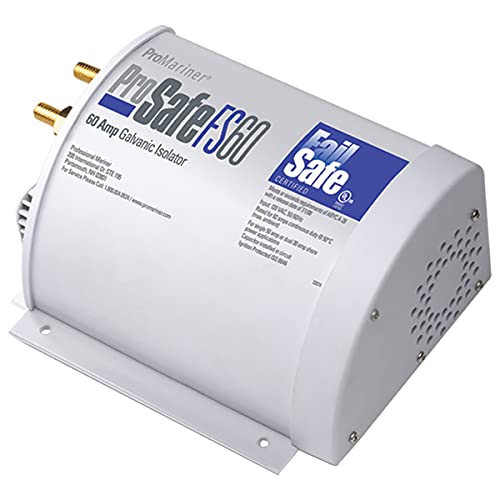
The ProMariner Prosafe 50/60 Amp galvanic isolator targets larger boats with higher shore power. It features FailSafe technology designed to interrupt galvanic current flow with other boats at a marina while connected to AC shore power. It maintains on-board ground continuity and is UL Certified to ABYC A-28 parameters, simplifying compliance and installation. Choose this if you operate a larger vessel and want additional protection that aligns with marine safety standards; the larger unit may require more space and a slightly more complex installation compared to smaller models.
Newmar GI60FS 60A Fail Safe Galvanic Isolator

The Newmar GI60FS is a 60-amp Fail Safe galvanic isolator commonly installed on cruisers, sailboats, and yachts. It aims to protect against corrosion while maintaining a safe electrical environment aboard. This model suits larger vessels needing robust protection and compliance with safety practices. Potential limitation includes higher installation footprint and power requirements compared to smaller units; ensure compatibility with your boat’s shore power system.
Buying Guide: Key Considerations For Galvanic Isolators
- Shore Power Compatibility: Match the isolator’s amperage rating to your boat’s shore power (e.g., 30A, 32A, 50/60A, or 60A). Higher amperage units suit larger vessels and marinas with strong shore power feeds.
- Protection Method: Most isolators use diode-based conduction to limit galvanic currents. Know whether you need a simple protection model or a Fail Safe system that interrupts currents during marina interactions.
- Safety Certification: Look for units that meet marine safety standards (e.g., UL/ABYC). Certification can simplify installation and warranty considerations.
- Size and Installation Space: Larger boats may require more space for a 50/60A or 60A unit. Check mounting options and service access.
- Brand Reputation: Choose established brands with a track record in marine electrical systems, as this can influence reliability and service support.
- Maintenance and Indicators: Some models include status indicators or require minimal monitoring. Understand maintenance needs and whether a monitor is included or required.
Frequently Asked Questions
- What does a galvanic isolator do on a boat? It reduces galvanic currents from shore power that cause electrolytic corrosion of underwater metals.
- Do galvanic isolators require professional installation? Many are designed for straightforward installation, but proper wiring and adherence to marine electrical codes are important.
- What amperage should I choose? Match the unit to your shore power rating and boat size; larger vessels and marinas with higher power needs often benefit from 50/60A or 60A models.
- What is a Fail Safe galvanic isolator? It is designed to interrupt galvanic current flow in the event of a fault, maintaining ground safety while powering your boat’s systems.
- Are Victron products reliable for galvanic isolation? Victron offers diode-based isolators that block low voltage currents above a threshold, suitable for many vessels.
- Will galvanic isolators protect my hull from all corrosion? They reduce a major source of electrolytic corrosion but should be used as part of a broader corrosion protection plan, including proper bonding and maintenance.