Best Marine Bottom Paint Removal Guide for Your Hull
Looking to remove old bottom coatings efficiently and safely? This guide assembles five top products that help with marine bottom paint removal and preparation. It highlights who each product is best for, why it’s chosen, and potential limitations to consider before you start. Ideal for boat owners tackling hull refinish, from DIY hobbyists to small commercial operators.
Selected products at a glance
| Product | Best For | Why It Stands Out | Notes |
|---|---|---|---|
| Dumond Smart Strip Marine PRO Paint Remover | Hulls with multiple paint layers | Water-based, gel-safe removal of polyurethane and acrylic coatings | Test first; may require Laminated Paper |
| STAR BRITE Heavy Duty Boat Bottom Cleaner | Stains and deposits on various hulls | Multi-surface cleaner for quick deposits | Not a paint remover; best for cleanup after removal |
| TotalBoat Underdog Marine Antifouling Bottom Paint | Single-season antifouling prep | Economic option with ablative chemistry | Best when re-painting with compatible products |
| Rust-Oleum Marine Flat Boat Bottom Antifouling Paint | Fiberglass, wood, steel hull bottoms | Low odor, broad surface compatibility | Requires proper surface prep for adhesion |
| TotalBoat JD Select Ablative Antifouling Bottom Paint | Fiberglass, wood, steel boats | Able to burnish for smooth finish and performance | Low VOC; needs proper annual reapplication |
Dumond Smart Strip Marine PRO Paint Remover
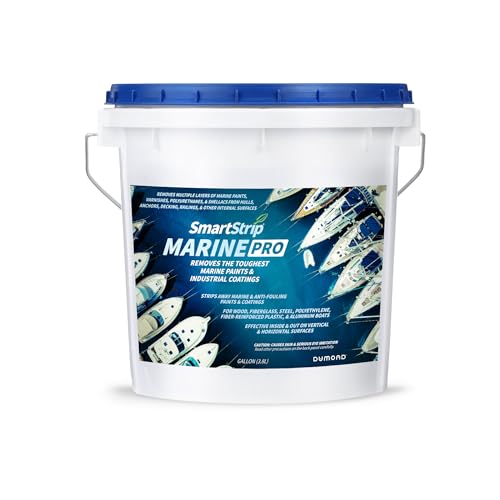
Dumond Smart Strip Marine PRO removes multiple layers of marine paints and coatings from hulls, anchors, rails, decking, and other marine surfaces. It is designed to lift polyurethane and acrylic coatings down to the gel base coat without aggressive solvents. This product is best for boat owners facing heavy coating buildup that want a safer, water-based option. It is suitable for both professional use and DIY projects with proper test patches first. A caution is to perform a small test area and follow with Dumond Laminated Paper for best results.
- Best for boats with thick, multi-layer coatings.
- Better for vertical surfaces like hulls and anchors.
- Avoid using on coatings not compatible with water-based solvents without testing.
STAR BRITE Heavy Duty Boat Bottom Cleaner

STAR BRITE Heavy Duty Boat Bottom Cleaner is a versatile cleaner designed to dissolve stubborn marine deposits on fiberglass, wood, iron, and painted surfaces. It’s particularly useful after removal work to prep the hull for refinishing. The formula is highly concentrated, delivering professional-grade results with minimal product use. Limitations include that it is a cleaner rather than a dedicated paint remover, so it’s best used as a follow-up step after coatings are lifted or for maintenance cleaning.
- Best for quick cleanup of stubborn residues after stripping.
- Better across multiple hull materials without changing coatings.
- Avoid relying on it as the sole means to remove cured bottom paints.
TotalBoat Underdog Marine Antifouling Bottom Paint
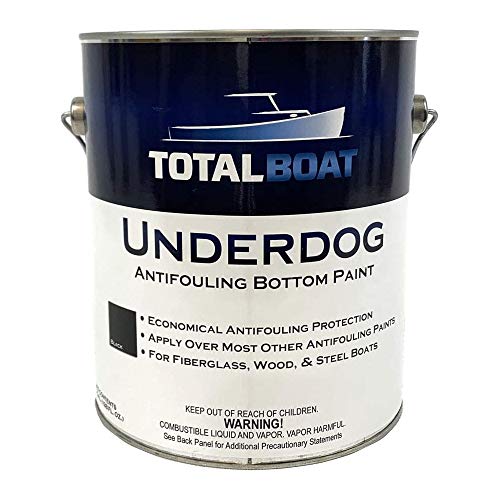
TotalBoat Underdog Underwater Antifouling Paint provides economical single-season protection with copper biocide to deter barnacles and mussels. It’s designed for fiberglass, wood, and steel hulls and is suitable for boats used in saltwater and mixed conditions. The coating wears away over time, reducing buildup next season. Choose this if you want a cost-conscious option for frequent haul-and-relauch cycles, with easier maintenance between seasons.
- Best for boats that are hauled and relaunched within a season.
- Better for traditional hulls where annual repainting is normal.
- Avoid applying over improperly prepped surfaces to ensure adhesion.
Rust-Oleum Marine Flat Boat Bottom Antifouling Paint

Rust-Oleum Marine Flat Boat Bottom Antifouling Paint is formulated for fiberglass, wood, or steel surfaces to prevent fouling below the waterline. It slowly releases copper to deter organisms and can be recoated after a short window. The product is best for hulls that need a straightforward antifouling layer with predictable recoat timing. A limitation is that coverage and recoat times depend on surface prep and environmental conditions, so plan for proper curing before launch.
- Best for broad compatibility and straightforward application.
- Better when you need a simple, predictable recoat window.
- Avoid overcoating if prep is inadequate or if environmental restrictions apply in marinas.
SENVEN Black Paint Boat Touch Up Pen
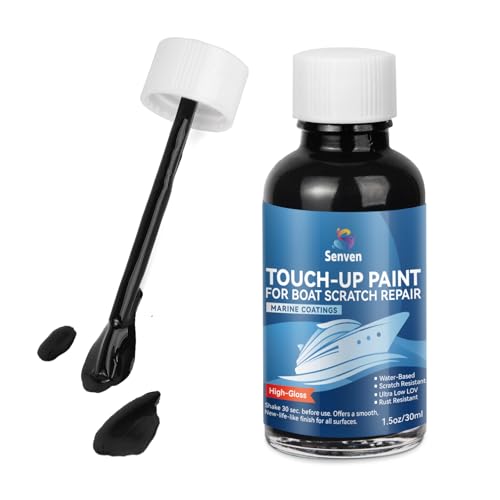
SENVEN’s touch-up pen offers a high-gloss marine-grade coating for chips, scratches, and minor repairs on hulls and decks. It’s suitable for boats, wood, fiberglass, aluminum, and metals, with an integrated brush for precise application. This product is best for small repairs and touch-ups between full refinish jobs. It is not a full bottom anti-fouling or heavy removal product, so rely on it for surface blemishes rather than layer removal.
- Best for precise touch-ups and small repairs.
- Better for interior and exterior surfaces requiring quick cosmetic fixes.
- Avoid relying on it for major bottom paint removal or large areas.
TotalBoat Spartan Boat Bottom Paint

TotalBoat Spartan combines multi-season protection with a high copper content to resist fouling in mixed water. It features a smooth, abrasion-resistant finish and an ablative formula that reduces buildup over time. This makes re-application easier after haul-out. Best for boats that require reliable performance in varied conditions, with options for burnishing for a faster, more streamlined surface.
- Best for high-fouling, mixed-water environments.
- Better for boats that are routinely hauled and relaunched.
- Avoid overly aggressive coatings on delicate hull finishes without proper prep.
Buying Guide: Key considerations for marine bottom paint removal and selection
Assess coating complexity: If your hull has several layers of polyurethane or acrylic coatings, a dedicated remover like a water-based gel stripper can save time and reduce risk to the gel coat. For lighter deposits or pre-finish cleanup, cleaners are sufficient.
Surface type and exposure: Hull materials (fiberglass, wood, steel) respond differently to solvents, cleaners, and coatings. Always test on a small area first and follow manufacturer directions for your substrate.
Safety and environmental concerns: Choose products with low hazard profiles where possible. Ventilation, PPE, and proper disposal are essential for both DIY and professional projects.
Reapplication strategy: If you plan to re-coat, consider ablative coatings and reactivation methods to minimize sanding. Some products are designed for multi-season use and easier maintenance during haul-outs.
Marina restrictions: Low-VOC or water-based formulas may be preferred in marinas or restricted zones. Check local regulations before applying coatings in enclosed spaces.
FAQ
- What is the safest way to remove old bottom paint? Use a gel-based, water-based remover on thick coatings, following with mechanical lifting or sanding as needed, while protecting the gel coat underneath.
- Can I use cleaner products to replace paint removers? Cleaners are helpful after removal to prep the surface but are not substitutes for heavy-duty paint removers on multiple-layer coatings.
- Is low-VOC paint better for marinas? Yes, low-VOC options reduce fumes and environmental impact, aligning with marina restrictions in many areas.
- How long does re-coating take after removal? Timing depends on the product, surface prep, and environmental conditions; always follow the coating’s recoat window guidance.
- Should I hire a professional for bottom paint removal? For complex multi-layer coatings or large vessels, professional stripping may save time and ensure gel coat integrity is preserved.
- What should I test before full application? Conduct a small patch test to verify compatibility with gel coat and substrate, and to observe curing and finish results.