Best Kicker Plate for Boat: Top 5 Outboard Mounts for Small Boats
The best kicker plate for a boat helps elevate and stabilize small outboard motors, improving control, trim, and overall handling. This guide highlights five proven options ideal for skiffs, dinghies, and other compact craft. Each selection targets a distinct sailing scenario—from lightweight trolling to heavier auxiliary motors—so buyers can pick the right mount for their hull and engine size. Designed for quick mounting, these plates support engines up to 20–35 HP, with varying height adjustments and mounting features. The summary table below contrasts the key points at a glance.
| Product | Best For | Adjustability | Material |
|---|---|---|---|
| Camoo MJ-1-DP Jack Plate | Short-shaft boats with up to 35HP | 4″ setback | Cast aluminum |
| Haida 2 Stroke Bracket | Auxiliary up to 20HP | Manual height | 304 stainless steel |
| Mojiate 2 Stroke Bracket | 7.5–20HP small to mid boats | 5-position height | Aluminum |
| YaeMarine 2 Stroke Bracket | 2-stroke up to 25HP | Vertical lift ~10.5″ | Stainless |
| Marinebaby Bracket | 2-stroke 7.5–20HP | 5-position lock | Aluminum |
Camoo MJ-1-DP Jack Plate 4” Setback

Best for short-shaft outboard motors on small boats. This cast aluminum offset jack plate extends 4″ off the transom to position a long shaft engine for better trim and balance. Includes a wooden mounting block to ensure a precise, stable installation. Suitable for clamp-on motors up to 35 HP on skiffs, aluminum boats, and inflatables. Choose this if you need a simple, sturdy upgrade for limited transom height.
Why select this: It directly addresses the mismatch between engine shaft length and transom height, delivering more reliable control and improved performance. The wooden block helps ensure a firm fit and reduces risk of misalignment. A potential limitation is that this model is tailored for smaller engines and shorter transoms.
Haida 2 Stroke Outboard Bracket

Best for light auxiliary setups up to 20 HP. This stainless steel bracket has a plastic base and a compact mounting footprint, making it suitable for small boats where weight reduction is important. It requires manual lifting to raise and lower the motor, which keeps costs down while preserving durability. Best for paddling or fishing craft that need occasional motor adjustments rather than frequent repositioning.
Why select this: It combines corrosion resistance with a straightforward manual mechanism. Avoid this if you require powered or automatic height changes or plan to use a heavier 4-stroke engine, which may exceed the recommended load.
Mojiate 2 Stroke Marine Bracket

Best for small to mid-sized boats needing enhanced motor balance. The Mojiate bracket features a heavy-duty aluminum frame with stainless steel springs and a plastic mounting plate. It offers a 5-position adjustable height, enabling precise motor positioning to improve trim and performance without exceeding 20 HP. This makes it suitable for 7.5–20 HP engines on light to medium craft.
Why select this: The combination of steel springs and a durable aluminum frame supports repeated use and variable loads. Consider this if you anticipate frequent height tweaks during trolling or varied chop. It may be overkill for very small boats with lighter motors.
YaeMarine 2 Stroke Bracket

Best for up to 25 HP two-stroke motors, with a robust stainless stamped construction and multiple mounting dimensions. The motor pad is wide, and the bracket uses stainless nuts and precise dimensions to fit common 2-stroke configurations. The vertical lift is about 10.5 inches, supporting significant engine height adjustments for better water flow and trim control on lightweight boats.
Why select this: It provides solid corrosion resistance and a wide mounting footprint. Avoid this if you use 4-stroke engines or require a higher load capacity beyond 25 HP.
Marinebaby Aluminum Bracket
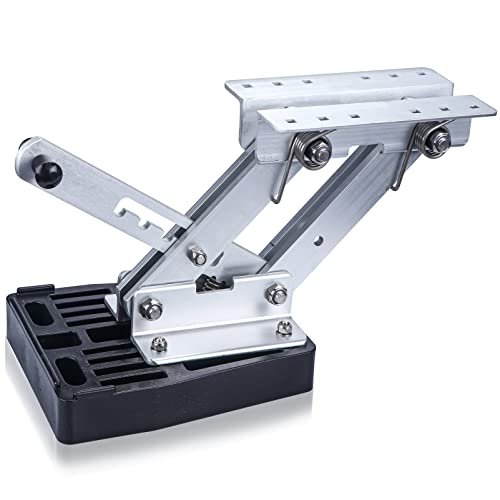
Best for 7.5–20 HP two-stroke motors requiring a strong aluminum stand. The Marinebaby bracket uses stainless steel springs to counterbalance motor weight and a solid polypropylene mounting board. It features a 5-position height adjustment to fine-tune engine position for balance and efficiency on small powerboats or canoes.
Why select this: The counter-balance springs help with handling, especially in rough water. It may be less compatible with very heavy 4-stroke engines and has built-in limitations to the 20 HP range.
Buying Guide: How To Choose The Right Kicker Plate
What engine weight and power should guide your choice? For boats with 7.5–20 HP engines, prioritize brackets and plates offering 5-position height adjustments and reliable stainless or aluminum construction. If your transom is low or your shaft is longer than the hull design, a 4″ setback jack plate like the Camoo model can improve engine alignment and trim.
How important is adjustability? Look for adjustable height ranges that fit your typical water conditions and cruising speed. A wider range helps in adapting to loads, gear, and fuel, reducing drag and optimizing performance. Consider manual versus spring-loaded mechanisms based on how often you re-position mid-ride.
Material and durability matter. Stainless steel resists corrosion in saltwater conditions, while aluminum is lightweight and typically sufficient for lighter motors. A plastic mounting board is common but ensure it can handle engine vibrations and impacts from wakes.
Mounting options and compatibility. Ensure the plate or bracket matches your motor’s shaft type (short, long) and your transom’s construction. Some kits include mounting hardware and wooden blocks for precise alignment, which simplifies installation and reduces misfit risk.
Frequently Asked Questions
- What is a kicker plate, and why do I need one? It elevates and positions the engine relative to the transom to improve balance, trim, and efficiency on small boats with mismatched shaft lengths.
- Can I use these with 4-stroke motors? Many are designed for 2-stroke engines up to 20–25 HP. Check each product’s specifications to confirm compatibility with 4-stroke motors.
- Is manual height adjustment sufficient? For occasional motor position changes, yes. For frequent adjustments, a model with adjustable height or a spring-loaded system may be preferable.
- Do these require professional installation? Simple bolt-on kits can be installed by the owner with basic tools, but ensure you follow mounting hardware instructions to avoid misalignment.
- What maintenance is needed? Regularly check mounting screws, ensure rubber pads remain intact, and inspect for corrosion or wear in stainless steel components.
- Which option is best for a small jon boat? A compact 7.5–20 HP bracket with a 5-position height adjustment, such as the Mojiate or Marinebaby models, typically offers the best balance of weight, durability, and ease of use.