Best Automatic Marine Fire Extinguishers for Boats and Harbors
Answering the most common buyer question: Which automatic marine fire extinguisher provides reliable, maintenance-free protection for boats, cabins, and electrical compartments? The top picks below are designed for marine environments, offering automatic activation, compact installation, and low upkeep. They’re best for boaters who want quick, hands-off fire safety in enclosed spaces, from engine rooms to electrical panels. The table highlights five options that balance ease of use, effectiveness, and installation speed.
| Product | ||
|---|---|---|
| First Alert Fire Extinguisher | Marine FE1A10GR | UL 1-A:10-B: C, automatic activation | Boat owners needing a dual-purpose, rechargeable marine extinguisher |
| FEROSTICKER F09 Automatic Fire Extinguisher (2 Pack) | Automatic aerosol, self-activating at 170°C | Enclosed spaces on ships, electric panels, and machinery |
| FEROSTICKER F09 Automatic Fire Extinguisher (1 Pack) | Automatic aerosol, self-activating at 170°C | Compact protection for small spaces and installations |
| FEROSTICKER F03 Automatic Fire Extinguisher | Automatic aerosol, self-activating at 170°C | Small enclosed spaces such as electric panels and fuse boxes |
| First Alert FE5R-PWCNA Personal Watercraft Extinguisher | Marine-rated, UL 5-B:C dry chemical | Personal watercraft and related marine equipment |
First Alert Marine Fire Extinguisher FE1A10GR
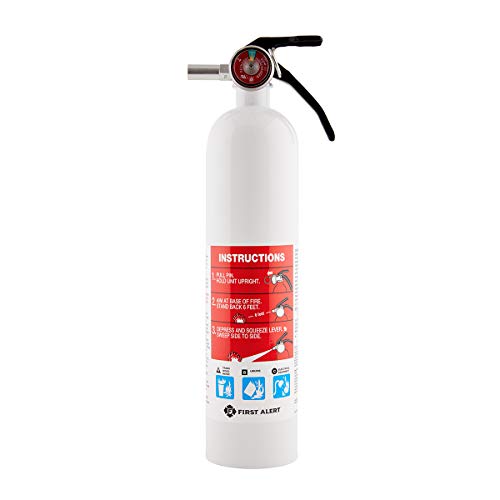
Features: UL rated 1-A:10-B: C with durable all-metal construction, commercial-grade valve and trigger. Multipurpose extinguisher handles wood, paper, trash, plastics, gasoline, oil, and electrical fires. Uses monoammonium phosphate. Rechargeable by certified professionals after use. Best for boat owners seeking a robust, reusable option for engine rooms, electronics spaces, or general marine use. Caution: Recharge after discharge by a professional; ensure mounting location allows quick access in emergencies.
FEROSTICKER F09 Automatic Fire Extinguisher (2 Pack)
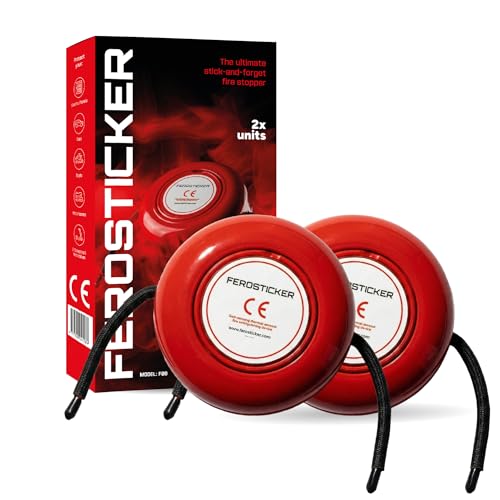
Features: Activates at 170°C ±10°C (356°F) releasing aerosol to suppress fires by disrupting combustion. No power, pressure, or wiring required. Quick, tool-free installation with peel-and-stick design. Suitable for ships, electric panels, tractors, and enclosed spaces up to 0.9 m³ (31.8 ft³). Best for users who want maintenance-free, always-on protection in high-risk spaces; better for installations where running power is impractical. Caution: Follow mounting guidelines to ensure proper dispersion in the target volume.
FEROSTICKER F09 Automatic Fire Extinguisher (1 Pack)

Features: 170°C activation, aerosol-based suppression, no electricity or wiring required. Engine rooms, fuse boxes, solar generators, and confined spaces are suitable targets. Best for small to medium enclosed spaces where a compact, maintenance-free unit is preferred. Caution: This is an automatic device; verify the protected volume aligns with installation space.
First Alert PWCNA Marine Fire Extinguisher FE5R-PWCNA

Features: Meets U.S. Coast Guard Size I requirements; UL Class 5-B:C; dry chemical agent suitable for flammable liquids and electrical fires. Designed for personal watercraft use, making it a practical choice for riders and boaters who need portable, marine-rated fire protection. Best for PWC owners who require a lightweight, coast-guard-compliant extinguisher. Caution: Ensure correct mounting on board or within reach of operators during runtime.
Buying Guide
What to consider when choosing an automatic marine fire extinguisher
Space and enclosure volume determine which unit fits best. Automatic aerosol units work well in engine rooms and electrical panels, while traditional dry chemical units are favored for versatility on larger spaces. Consider the protected volume and mounting method to ensure effective dispersion and rapid access in emergencies.
Fire class coverage and material type
Common marine options cover A (ordinary combustibles), B (flammable liquids), C (electrical), and some F (cooking fats) in certain models. Monoammonium phosphate is a typical agent in traditional extinguishers, while aerosol systems offer quick, maintenance-free action in compact spaces.
Maintenance and installation
Automatic systems require minimal human intervention but may need professional recharging after use in some cases. Self-activating units eliminate the need for manual operation but must be correctly sized for the space. Peel-and-stick or simple mounting solutions save time, especially in tight boat compartments.
Best practices for placement
- Place extinguishers near likely ignition points but not directly over fuel sources.
- Ensure clear access from the operator’s position in the cockpit or cabin.
- Verify that automatic units are within the target enclosure’s volume and not obstructed by insulation or equipment.
Durability and environmental considerations
Marine environments demand corrosion-resistant casings and sealed units. Look for all-metal valves and durable housings. Some aerosol-based solutions are designed for enclosed spaces and require no power or wiring, which can be advantageous in damp or remote locations.
Frequently Asked Questions
- What type of fire extinguisher is best for a boat engine compartment?
- Are automatic extinguishers maintenance-free?
- Can I install an automatic extinguisher myself?
- Do marine extinguishers need to be serviced or recharged?
- Is a multipurpose extinguisher better for boats?
- Which extinguisher should I choose for a small cabin?
Automatic marine extinguishers with a suitable protected volume and corrosion-resistant casings are ideal for engine compartments. Consider a unit rated for A, B, and C fires and that can be installed out of direct fuel contact.
Many automatic units are maintenance-free until discharge or recharging is required by the manufacturer. Some models require no batteries or wiring, offering true maintenance-free operation.
Yes, many models provide peel-and-stick or simple mounting solutions. Follow the product’s mounting guidelines and ensure the unit is accessible and appropriately sized for the space.
Traditional extinguishers may require professional recharging after use. Automatic aerosol systems may need replacement of the canister or professional servicing depending on the model and certification.
Multipurpose extinguishers cover common marine risks, including fires from wood, plastics, liquids, and electrical equipment. They are generally suitable for general boat safety, especially in shared spaces.
For small cabins, consider a compact automatic model with a defined protected volume, easy installation, and minimal maintenance. Ensure the unit remains within reach and does not impede movement in tight spaces.