Best Bilge Pump Speed Controller Options for Reliable Boat Maintenance
For boaters and DIY enthusiasts, a bilge pump speed controller helps regulate pump flow to protect bilges, manage battery load, and prevent over-pumping. The top picks below are PWM-based speed controllers suited for 7–70V systems and 12–60V motor setups. They vary in voltage range, amperage, and features, so choose based on your pump’s voltage, current draw, and whether you need forward/reverse control, soft start, or built-in protection. The list highlights five versatile options for boat bilge applications and small water-pump projects.
Summary of chosen products:
- Hosyond PWM DC Motor Speed Controller DC 7-70V, 30A, with Fuse — versatile, easy-to-install, includes a 30A fuse for protection.
- RioRand 7-70V PWM DC Motor Speed Controller, 30A — durable aluminum housing, extra fuse, suitable for DIY projects.
- EC Buying ZK-BMG DC Motor Speed Controller — 9V-60V, 12A (20A max), adjustable frequency and duty cycle, digital display features.
- PEMENOL PWM Motor Driver 5V-24V, 5A/150W — compact, memory function, soft-start, external switch control.
- EPLZON DC 12-60V Motor Speed Controller — 20A, forward/reverse, soft-start protection, compact installation.
Hosyond PWM DC Motor Speed Controller

The Hosyond controller operates from 7V to 70V with a maximum 30A current, making it compatible with a wide range of bilge pump setups. It includes a 30A fuse to protect the motor interface from short circuits and provides run, stop, and brake functions at the board level. Best for boat owners needing a robust, plug-and-play solution for moderate pumps. A detachable 15 cm potentiometer cable adds installation flexibility. Use this when you require straightforward control with strong protection for marine use.
Best for: boats with 12–24V bilge pumps or hobby pumps that require reliable protection and simple wiring. Choose this if you want an all-in-one package with fuse protection and easy setup. Caution: ensure the wiring and fuse rating match your pump’s current draw to avoid overload.
RioRand 7-70V PWM DC Motor Speed Controller

The RioRand controller supports 7–70V and up to 30A, designed for brushed DC motors. It offers 1–100% duty cycle (12 kHz PWM) with specified power limits per voltage and an aluminum housing for durability. It includes an extra fuse for backup protection and highlights a low-heat design suitable for long-term use. It’s a solid option for DIY robotics projects or small water pumps where compact, heat-conscious design matters.
Best for: DIY bilge pump projects that need a durable, heat-managed controller and clear current limits. Better for: users who want precise duty-cycle control and an additional fuse. Caution: verify the “no-load” output voltage behavior and measure under load to avoid misinterpretation of performance.
EC Buying ZK-BMG DC Motor Speed Controller

The EC Buying ZK-BMG unit covers 9V–60V with a 12A rating (20A max) and up to 500W, featuring a broad adjustable frequency range (1 kHz to 99 kHz) and a full 0–100% duty cycle. It includes a digital display that shows duty cycle, frequency, and limits, plus a digital encoder knob for easy control. This model stores settings after power-off, which helps when reapplying protection parameters. It’s a good pick for compact systems needing adjustable frequency and clear feedback.
Best for: tight bilge pump installations that require clear digital feedback and flexible tuning. Choose this if you want adjustable frequency alongside duty-cycle control. Caution: ensure your motor and wiring comply with the 20A max rating to prevent overload.
PEMENOL PWM Motor Driver
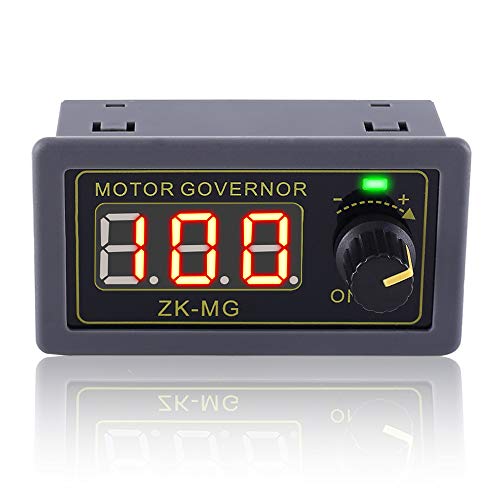
The PEMENOL driver runs DC from 5V to 24V with up to 15A (150W). It features a memory function that saves settings after power-off, a soft-start option to limit inrush, and a start-stop control that can be connected to an external switch. This makes it well-suited for small bilge applications where you want smooth startup, reduced electrical stress, and easy external control integration.
Best for: small, low-voltage bilge pumps or hobby devices needing smooth startup and reliable memory. Better for: setups where a simple external switch is preferred. Caution: confirm your pump’s current draw stays within the 15A continuous rating to avoid overheating.
EPLZON DC 12-60V Motor Speed Controller

The EPLZON model handles 12–60V with up to 20A continuous current, offering forward/reverse control and soft-start protection. It’s designed for compact spaces and includes install-ready dimensions. The controller supports PWM-based speed adjustment with a 0–100% duty cycle and is suitable for bilge pumps with tight installation constraints.
Best for: boats with limited mounting space where a compact, forward/reverse capable controller is needed. Choose this if soft-start protection is a priority. Caution: verify the physical mounting footprint to ensure it fits within your hull space.
Buying Guide: Key Purchase Considerations for Bilge Pump Controllers
- Voltage Range: Match the controller with your bilge pump’s operating voltage (e.g., 12V typical, some models accept up to 60V).
- Current Capacity: Choose a unit with a current rating at or above your pump’s draw to prevent overheating.
- PWM Frequency: Higher frequencies can reduce audible whine and improve smoothness for certain motors; verify range if needed.
- Protection Features: Look for fuses, overcurrent protection, and soft-start to extend pump life and boat electrical reliability.
- Control Interface: Consider whether you need simple on/off control, a dial, or digital readouts with an encoder for precise adjustments.
- Installation Space: Some controllers are compact; verify mounting dimensions and need for external wiring or switches.
- Wiring and Connectors: Ensure compatible connectors and gauge wiring to handle current without voltage drop.
Frequently Asked Questions
- What is a bilge pump speed controller used for?
– It regulates pump speed to balance drainage needs with electrical load and battery efficiency, helping prevent nuisance tripping or battery drain. - Can I use any PWM motor controller for a bilge pump?
– Only controllers designed for DC motors with compatible voltage and current ratings should be used; ensure the device supports your pump’s voltage and amperage. - Why is soft-start important for bilge pumps?
– Soft-start reduces electrical inrush and mechanical stress, extending motor life and protecting power systems aboard. - Is a built-in fuse necessary?
– A fuse provides essential protection against short circuits and motor faults, which is critical for marine safety. - How do I choose between forward/reverse and simple PWM?
– Forward/reverse is helpful for testing or reversing flow in certain setups; for standard bilge pumping, a unidirectional control with reliable protection may be sufficient.