Best Sacrificial Anodes for Boats: Pick the Right Marine Corrosion Protection
Answering the question “which sacrificial anode should I buy for my boat?” this guide highlights five reliable options and explains who they’re best for. If you operate in saltwater or brackish environments, sacrificial anodes shield your hull and components from electrochemical corrosion. This article targets boat owners, winterizers, and marine technicians seeking durable, cost-effective protection that matches different vessel types and installation needs.
Summary table of selected products
| Product | Best For | Why It Stands Out | Material |
|---|---|---|---|
| MARTYR CM656934A | Aluminum-hulled boats in saltwater or brackish water | Longer-lasting protection with aluminum alloy; bolt-on hull design | Aluminum |
| holama Sacrificial Zinc Anode | Boat lifts and dock installations in mixed water | High-quality zinc alloy; includes long stainless cable and crimps | Zinc |
| Martyr CMDIVERA | Large aluminum boats requiring bolt-on protection | Long, slotted bolt-on design for easy mounting; aluminum alloy | Aluminum |
| Lectrotab Trim Tab Alloy Sacrificial Anode | Trim-tab assemblies and small to mid-size boats | Superior aluminum/indium alloy for extended life | Aluminum/Indium alloy |
| Martyr CMX03 Zinc Streamlined Shaft Anode | Saltwater vessels with exposed shafts or drive components | Compact, streamlined design; zinc alloy for solid protection | Zinc |
MARTYR CM656934A Aluminum Hull Bolt-On Anode

Best for aluminum-hulled boats exposed to saltwater or brackish environments. The CM656934A uses an aluminum alloy designed for mixed-water protection and claims to provide longer-lasting cathodic protection than traditional zinc anodes. Suitable for hull bolt-on installations where quick replacement and low-cost maintenance are priorities. A potential limitation is performance in very cold freshwater where aluminum alloys may underperform compared to zinc in specific conditions.
holama Sacrificial Zinc Anode For Marine Use
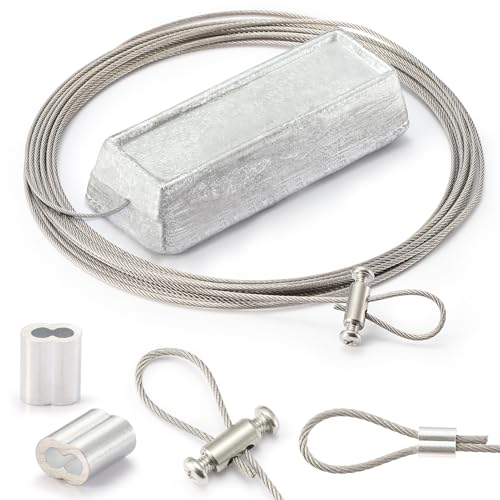
Best for boat lifts, docks, and marine structures in saltwater pools or mixed environments. This holama zinc anode combines a high-grade zinc alloy with a 20-foot 316 stainless steel cable and three crimps for versatile attachment. It offers robust electrochemical protection and is well-suited for longer runs from the waterline to lift mechanisms. A caution is that zinc anodes may wear faster in environments with strong electrical currents or low salinity, necessitating more frequent inspection.
Martyr Anodes CMDIVERA Aluminum Hull Anode

Best for large aluminum boats needing a robust bolt-on solution. The CMDIVERA features a long, slotted design that simplifies mounting on hulls and provides extended protection in saltwater and brackish conditions. It uses an aluminum alloy chosen for corrosion resistance in mixed waters. A limitation is that installation requires attention to proper bolt sizing and alignment to maximize contact with the hull.
Lectrotab Trim Tab Alloy Sacrificial Anode
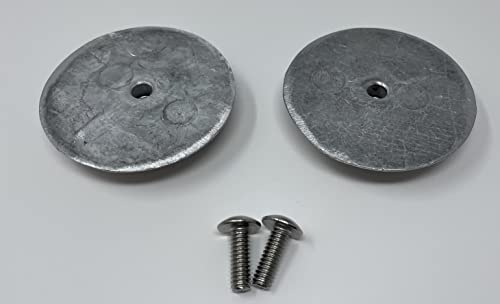
Best for trim-tab assemblies on mid-size vessels that require steady, long-lasting protection. The Lectrotab anodes employ a superior aluminum/indium alloy, delivering enhanced protection relative to standard zinc. These are favored for boats with integrated trim tabs where corrosion protection must accompany maneuvering hardware. A caveat is that mixed-metal trim-tab stacks may require careful clearance checks to prevent interference with hydraulics or hardware movement.
Martyr CMX03 Zinc Streamlined Shaft Anode

Best for boats with exposed drive shafts or propeller shafts in saltwater. The CMX03 uses zinc alloy streamlined to reduce drag while providing reliable sacrificial protection. It’s suitable for smaller to mid-size vessels where shaft protection is critical. Limitations include zinc’s wear rate in certain high-current or heavily mineralized waters, which may necessitate more frequent replacement checks.
Buying Guide: Key Considerations For Sacrificial Anodes
What material should you choose? Zinc is common for general-purpose protection in saltwater. Aluminum alloys offer longer life on aluminum hulls and mixed-water environments. Indium-containing aluminum alloys provide extended life in some conditions but may come at a premium. Consider your hull material, water salinity, and the type of installation when selecting an anode.
Which design fits my installation? Bolt-on hull anodes are straightforward for regular maintenance. Slotted or streamlined designs can improve contact area and reduce drag or interference with moving parts. Ensure mounting hardware matches the boat’s bolt patterns and hull thickness.
How do I size and place the anode? Place anodes where they can most effectively sacrifice corrosion without interfering with critical components. For shafts, rudders, trim tabs, and hull areas with strong electrochemical activity, assign dedicated anodes to those parts to balance protection.
Maintenance and inspection tips. Inspect anodes every season or after rough voyages. Replace if more than 50% corroded, or if wear is uneven. Keep anodes clean and free of marine growth to maintain efficient electrical contact with seawater.
FAQ
- Do I need different anodes for different parts of the boat? Yes. Different components (hull, shaft, trim tabs) may require dedicated anodes to ensure balanced protection across the vessel.
- Is aluminum better than zinc for all boats? Not always. Aluminum works well on aluminum hulls and in mixed-water environments; zinc is a versatile, common choice for many applications, especially in pure saltwater.
- How often should anodes be replaced? Replace when they show significant wear, typically when 50% or more of the material has corroded, or after a season of heavy use in corrosive water.
- Can I mix different anode materials? Yes, but do so thoughtfully. Mixing materials can tailor protection for different parts, but ensure you monitor wear and avoid creating galvanic imbalances.
- What installation considerations matter for bolt-on anodes? Verify bolt size, hull thickness, and proper contact with the hull. Use appropriate gaskets or washers to prevent loosening and ensure reliable electrical connection.
- Are sacrificial anodes safe for freshwater use? They can be used, but some alloys perform better in saltwater; consult your hull material and water conditions for the best match.