Best Battery Cable for Boat: Top Marine-Grade Cables for Reliable Power
Direct answer: choose rugged, marine-grade battery cables that resist corrosion, handle high current, and fit your boat’s terminal sizes. This guide highlights five reliable options best suited for marine use, including 4 AWG and 6 AWG cables with durable copper cores and heat-shrink ends. The right cables improve starting reliability, inverter performance, and solar setups on boats. The buyer types covered include marina-docked boat owners, offshore anglers, and RV/boat hybrids needing dependable power links. A quick comparison table below helps you scan key specs at a glance.
| Product | Size | Key Use | Best For |
|---|---|---|---|
| 4 AWG Battery Cable 6FT (A ABIGAIL) | 4 AWG, 6 ft | Positive/Negative power runs | Open-water boats needing long reach |
| 4 AWG Battery Cable 4FT (A ABIGAIL) | 4 AWG, 4 ft | Close-terminal runs | Compact engine bays, mid-size boats |
| CARTMAN 4AWG 24-Inch | 4 AWG, 24 in | Short runs with sturdy lugs | Tight engine compartments |
| Linkstyle 6 PCS 4 AWG | 4 AWG, 12 in each | Parallel/series wiring | Solar/inverter setups |
| InstallGear 5 Gauge 10ft | 5 AWG, 10 ft | Two-core sets for larger systems | Custom solar/automotive installs |
4 AWG Battery Cable 6FT From A ABIGAIL

This 4 AWG, 6-foot battery cable set uses pure copper with tinned copper lugs for corrosion resistance and stable conductivity, making it suitable for boat, automotive, and solar inverter connections. The PVC insulation is designed to resist abrasion, moisture, and heat, with heat-shrink ends for added insulation during engine-room use. Best for longer runs where distance between the battery and power electronics matters, such as dual-battery configurations on mid-to-large boats.
Best for: boaters needing a longer reach battery link with strong oxidation resistance and robust insulation. This set is also viable for RV and solar setups where extra length helps accommodate layout constraints. Caution: longer cables can introduce a touch more resistance; confirm amperage needs to avoid excessive voltage drop over 6 feet.
4 AWG Battery Cable 2AWG Variant — A ABIGAIL 1FT

This 4 AWG bundle features a 1-foot length option with the same high-quality copper and lugs as longer variants. It’s best for tight installations where space is limited, such as engine compartments with close battery terminals. The PVC jacket provides abrasion resistance and moisture protection, while heat-shrink ends deliver reliable insulation for marine environments. Better for: quick, short cable runs to inverter batteries in compact boats or when tying into a starter battery in limited spaces. Limitation: very short lengths reduce flexibility for future reconfigurations.
4 AWG Battery Cable 4FT From A ABIGAIL
This 4-foot version provides a balanced length for typical boat installations, combining a compact footprint with robust copper cores and tinned lugs. The heat-shrink-sealed ends and PVC insulation are designed to guard against moisture and abrasion in engine bays. Best for: shorter, easier-to-manage runs between battery banks and inverters in small to mid-size boats. Caution: ensure lug size matches your terminal posts to avoid loose connections.
CARTMAN 4AWG 24-Inch Battery Cables
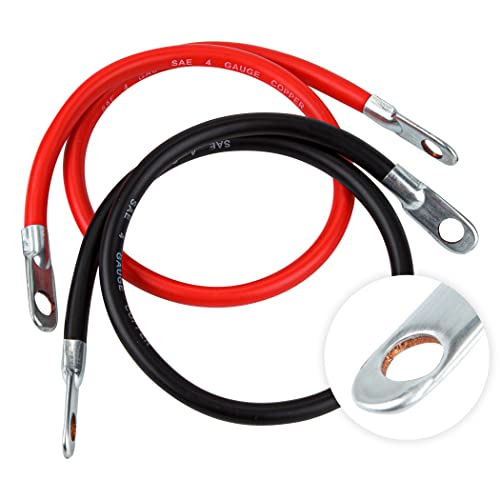
This CARTMAN set offers 4 AWG copper wiring with 24 inches of length per lead and sturdy copper lugs. The design emphasizes corrosion resistance and robust current handling for vehicle and marine applications, including boats that require reliable short runs between the battery and inverter or distribution block. Best for: tight spaces where a compact length and strong lug hardware are essential. Better for: setups where quick, clean connections are prioritized over extended reach. Limitation: shorter length means less flexibility for future rearrangements.
Linkstyle 6 PCS 4 AWG Cables for Marine Use

This set includes six 12-inch cables in red and black with 3/8″ tinned copper lugs, designed for parallel or series connections. The flexible PVC insulation resists wear, water, moisture, and heat—ideal for harsh marine environments. Best for: parallel battery configurations or multi-device connections on boats with multiple power sources. Caution: ensure proper polarity pairing when using multiple cables to avoid cross-connections or short circuits.
GEARit 8 Gauge Ground Kit For Marine/Auto

GEARit offers an 8 GA ground kit, featuring copper-clad aluminum wire with red and black jackets, 15 lugs, and 20 heat shrinks. While not a pure copper version, it provides a complete, budget-friendly grounding solution for automotive and marine projects. Best for: quick grounding needs where a complete kit is desired and weight is a consideration. Caution: aluminum-based conductors can have higher resistance than pure copper; verify current requirements for high-demand systems.
A ABIGAIL 6 AWG Battery Cable 3FT

This 6 AWG option provides a shorter length (3 ft) with the same corrosion-resistant copper and heat-insulated jacket. It suits boats that require robust power links in tighter engine bays or when upgrading older wiring with a smaller gauge. Best for: older boats needing upgrade without a long cable run. Limitation: thicker gauge requires adequate terminal clearance and larger lugs.
Buying Guide
What gauge should you choose for boat wiring?
For main power runs between the battery and inverter or distribution block, 4 AWG to 6 AWG is common on mid-sized boats. Heavier loads or longer distances benefit from thicker cables, but check terminal lug sizes and space constraints.
Which features matter most on a boat?
Look for pure copper or tinned copper ends, flexible PVC insulation, moisture resistance, and heat-shrink-sealed ends. Marine-rated cables should resist salt, humidity, and abrasion and have lugs that fit standard terminal posts (3/8 inch is common).
Should you get a multi-pack or single-length cables?
Multi-packs (like the 6-piece 4 AWG set) are useful for parallel or series configurations and future expansions. Single-length cables simplify a specific job but limit flexibility.
How do you avoid common installation issues?
Ensure correct polarity, verify lug size compatibility, and minimize exposed conductor. Route cables away from heat sources and sharp edges, and use protective sleeves where needed to extend life in harsh marine environments.
What about copper quality?
Pure copper with tinned lugs offers high conductivity and corrosion resistance, essential for saline environments. Copper-clad aluminum can save weight and cost but may have higher resistance; weigh needs against budget and performance.
Important safety and maintenance tips
- Inspect cables and lugs for corrosion or wear before each boating season.
- Keep connections tight to prevent voltage drop and heat buildup.
- Use heat shrink tubing and proper insulation to seal ends from moisture.
- Choose cables with lengths that minimize excess slack while avoiding tension on connections.
FAQ
- Q: Are 4 AWG cables enough for most boats? A: For many mid-sized boats, yes, especially for main runs or inverter connections. Confirm current requirements to prevent voltage drop.
- Q: Do these cables work with solar setups? A: Yes; many are designed for automotive, marine, and solar uses, making them suitable for solar-powered boats.
- Q: Should I use copper or aluminum? A: Copper offers lower resistance and better corrosion resistance; aluminum is lighter and cheaper but has higher resistance.
- Q: How do I know if lug size fits my terminals? A: Check the lug size (commonly 3/8 inch) on the product specs and compare to your battery and inverter terminals.
- Q: How long should my boat battery cables be? A: Choose length based on distance between battery, inverter, and distribution blocks while avoiding excess slack that can snag or wear.
- Q: Can I reuse these cables on other boats? A: If lug sizes and insulation meet your new setup, reusing is feasible, but inspect for corrosion and wear.