Best 12 Volt Boat Air Conditioners for Off-Grid Comfort on Water
Answering the demand for off-grid cooling aboard a small boat, these 12V rooftop air conditioners deliver dependable cooling with battery-powered operation. They’re best for boat owners who want quiet, compact units that can run from a marine battery or vehicle power while docked or underway. This guide highlights five strong options, focusing on 10,000 BTU models with low-profile designs, durable housings, and energy-efficient performance. Each selection is evaluated for suitability to boats, ease of installation, and off-grid reliability. Use the quick comparison table below to choose the best fit for your vessel and cruising needs.
| Product | BTU / Power | Best For | Notes |
|---|---|---|---|
| OutEquip 12V Rooftop + Heater | 10,000 BTU | Off-grid boating with heater needs | Low-profile, durable housing, 8–10 hour battery life estimates |
| Gidrox 10000 BTU 12V DC A/C with APP | 10,000 BTU | Quiet comfort on long trips | Ultra quiet, 3 modes, app remote |
| iHooToo 12V 10,000 BTU A/C with Heat | 10,000 BTU | Cross-country RVs and boats | 10-minute cooling/heating, solid low-profile |
| Countrymod 12V 10,000 BTU A/C | 10,000 BTU | Energy-efficient, APP control | Inverter design, 0.3 kWh/h, low noise |
| VEVOR 12V 10,000 BTU Truck A/C | 10,000 BTU | Compact, high airflow | 400 m³/h airflow, inverter for efficiency |
Below are five in-depth product profiles to help you determine which unit best suits a boat environment. Each entry includes what the product is best for, its key advantages, and a practical caution where relevant.
OutEquip 12V Rooftop A/C With Heater (Boat-Ready)

Best for boaters who want integrated heating alongside cooling in a compact package. This unit delivers 10,000 BTU for quick onboard cooling and runs off the vehicle or boat battery. It features UV-resistant ABS housing, a zinc-coated condenser, and EPDM foam gasket for tight seals against marine moisture and heat. The kit is suitable for small to mid-sized boats where off-grid operation is a priority.
- Cooling time: typically under 15 minutes to comfortable cabin temperatures.
- Battery life: estimates suggest 8–10 hours depending on battery capacity when parked.
- Best for: boat owners needing reliable cooling with optional heater for shoulder seasons.
Caution: Ensure your boat’s electrical system supports extended 12V runtime and confirm mounting clearances for a low-profile unit.
Gidrox 10000 BTU 12V DC A/C With APP Remote

This model is ideal for boaters who value quiet operation and remote control. It offers 3 modes (Turbo, ECO, Sleep) and a 40dB sleep mode for undisturbed rest. Powered directly from the RV boat battery, it minimizes inverter use and supports extended nights when paired with a larger battery bank. It’s well-suited for modest cabins where space is at a premium.
- Best for: boats requiring rapid temperature adjustment with app-based control.
- Cooling speed: fast, with precise temperature management.
- Caution: app connectivity depends on pocket device compatibility and marine mounting considerations.
iHooToo 12V 10000 BTU RV A/C With Heat

This 12V unit combines cooling and heating in a low-profile design, making it a versatile choice for boats operating in varied climates. It claims rapid cooling and heating within about 10 minutes and a robust ABS shell that resists marine wear. A good fit for boats with mid-range cabin sizes and a need for consistent climate control.
- Best for: boaters seeking balanced cooling and heating with a practical install footprint.
- Heating performance: 3,500 BTU supplementary heat for milder conditions.
- Caution: avoid relying on heating in very cold climates as a primary heat source.
Countrymod 12V DC RV A/C 10k BTU

Designed with energy efficiency in mind, this unit uses a variable inverter design to adapt cooling output and conserve power. It’s suitable for boats with a well-equipped battery system, offering APP remote control and a 0.3 kWh per hour energy draw on average. It’s a practical pick for vessels that prioritize longer off-grid operation without sacrificing cooling performance.
- Best for: boats needing efficient, adjustable cooling with app control.
- Energy use: notably lower than standard AC units, extending battery life.
- Caution: ensure voltage stability to prevent nuisance shutdowns during transients at sea.
VEVOR 12V Truck A/C 10k BTU
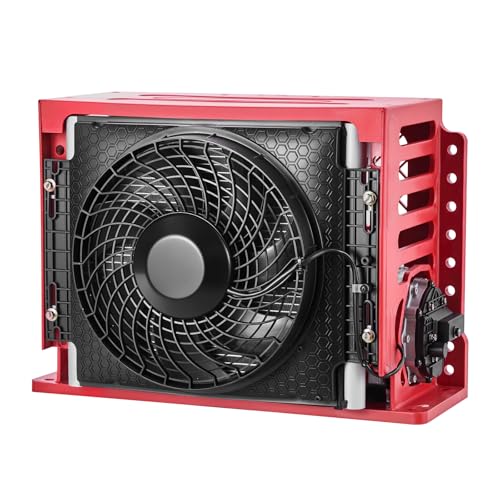
Best for boats needing strong airflow in a compact package. This unit delivers 10,000 BTU with a 400 m³/h airflow rate and inverter-based efficiency. It’s louder than some peers but offers robust cooling performance, which can be helpful in hot, enclosed helm or cabin areas on boats with limited space.
- Best for: harsh sun and cabin heat where powerful airflow is desirable.
- Noise: higher than ultra-quiet designs; plan for overnight placement away from bunks if needed.
- Caution: ensure mounting surfaces and ducting accommodate the unit’s dimensions and weight.
Buying Guide: 12V A/C For Boats
What should you consider when choosing a 12V boat air conditioner? Start with power and battery compatibility. A 10,000 BTU unit typically requires substantial battery capacity or shore power; verify your boat’s battery bank and inverter capacity. Consider heat sources onboard, noise tolerance, and whether you need a heater for shoulder seasons. Look for low-profile designs to fit over hatches or under compact decks, and assess weatherproofing features such as UV-stabilized housings and corrosion-resistant condensers. Inverter efficiency, sleep modes, and app control can simplify operation on the water. Finally, plan installation: ensure adequate mounting space, proper sealing, and electrical connections rated for marine use.
FAQ
- How much battery life can I expect from a 12V A/C on a boat? — Battery life depends on battery capacity (Ah) and discharge rate. Many units assume several hours at moderate use, but heavy cooling or continuous operation may reduce runtime without shore power.
- Can these units work without an inverter? — Some models can run directly from a 12V battery, but many rely on an inverter for consistent performance. Check the product specs for inverter requirements.
- Are 10,000 BTU units suitable for small boats? — Yes, for compact cabins, 10,000 BTU provides strong cooling without overwhelming space; verify cabin size and air distribution.
- Do these units provide heating as well? — Several models include a separate heater or dual heating/cooling modes, useful for variable climates on board.
- What maintenance is required for marine use? — Regularly inspect seals, ducts, and condensate drainage; keep condensers clean and protect electrical components from salt exposure.
- Is installation recommended for DIY or professional? — Both are possible; however, marine installation should ensure watertight seals, proper mounting, and electrical safety compliance.