Best Marine Engine Compartment Heaters for Cold-Weather Boating
If you’re looking to protect a boat engine compartment from freezing and extend your boating season, these marine engine compartment heaters are designed to keep bilges warm and dry. They are suited for boaters who store vessels in cold climates, live-aboard mariners, and anglers who need reliable winter protection for engines, pumps, and related equipment. This guide highlights five top options, explaining who each is best for, why it’s a strong pick, and any practical limitations to consider. A quick buying table follows to help you compare at a glance.
| Product | Best For | Key Benefit |
|---|---|---|
| THERELMAX 500W Boat Engine Heater (HMA500) | Smaller boats, moderate cold, cost-conscious buyers | Fast heating with adjustable thermostat |
| Xtreme Heaters 400W Marine Bilge Heater | Compact spaces, easy installation | Self-regulating PTC, durable construction |
| Xtreme Heaters 800W Marine Bilge Heater | Larger bilge spaces, stronger protection | Higher wattage for faster warm-up |
| Haoguo 400W Bilge Heater | Compact boats, simple setup | Self-regulating PTC with consistent temperature |
| Binmaton 400W Bilge Heater with Automatic Thermostat | Automatic control, winter storage | Automatic thermostat, self-regulating element |
Therelmax 500W Boat Engine Heater With Thermostat
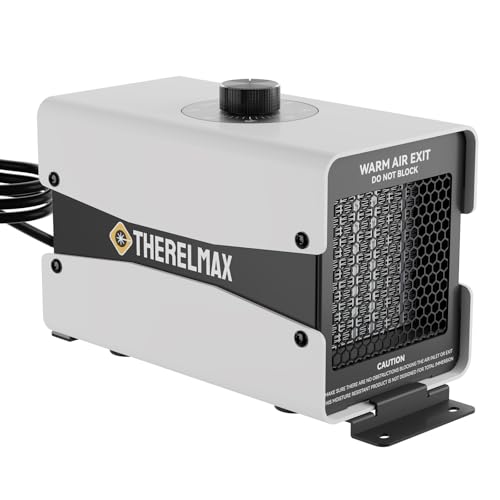
Best for smaller boats and budget-conscious buyers, this 500W heater uses a safe PTC ceramic element and a waterproof fan to quickly warm the bilge. The built-in adjustable thermostat covers a practical range for many marine applications, enabling a targeted bilge temperature around 46℉ as a guideline. It is designed to extend boating seasons by preventing critical components from freezing. A caution: ensure proper mounting and ventilation to avoid overheating in confined spaces.
Xtreme Heaters 400W Marine Bilge Heater

Best for compact spaces and lightweight setups, this 400W model uses a self-regulating PTC element and turns on around 40℉ and off near 55℉. It features a durable anodized case and a waterproof fan for reliable operation in damp bilges. Choose this if you want a simple, low-profile heater that still offers steady temperature control. Limitation: lower wattage may take longer to reach desired warmth in very cold climates.
Xtreme Heaters 800W Marine Bilge Heater

Best for larger bilge spaces or boats that require faster warm-up, this 800W model builds on the 400W design with higher output. It uses a self-regulating PTC element and a robust waterproof fan, ensuring steady heat distribution. Opt for this if your engine compartment is roomy or you routinely operate in harsher cold. Caution: higher wattage may demand more electrical capacity and proper circuit protection.
Haoguo 400W Bilge Heater

Best for boats up to about 350 cubic feet, this 400W model focuses on preventing cabin pump freezing with a simple, portable design. It uses a self-adjusting PTC system and a water-resistant fan for durable operation. Choose this if you want predictable performance with straightforward installation. Limitation: performance may vary with very large or unusually shaped engine compartments.
Binmaton 400W Bilge Heater With Automatic Thermostat

Best for automatic control and winter storage, this 400W heater uses self-regulating PTC technology and a built-in thermostat that turns on around 40°F and off around 55°F. It’s a practical choice for marinas and off-season protection when you want reliable, maintenance-free operation. Caution: verify power supply and mounting compatibility with your vessel’s bilge area.
Buying Guide
What size heater do you need? Match wattage to your boat’s bilge volume. Larger compartments typically require 650W–800W options, while smaller vessels can suffice with 400–500W units. Consider the environment: damp, exposed areas demand waterproof fans and sealed electronics. Self-regulating PTC elements help prevent overheating and simplify safety. Look for adjustable thermostats to tailor heat to your needs, not just ambient conditions.
How should you install? Favor mounting locations that promote even heat distribution and avoid obstructing bilge pumps or vents. Some models are praised for mounting in any direction, including upside down, which can be a practical advantage in tight spaces. Power supply and wiring should meet marine electrical standards, with appropriate circuit protection and proper GFCI if required by marina codes.
What about longevity and maintenance? Durable housings, corrosion-resistant components, and sealed fans reduce maintenance needs. Heaters with automatic thermostats require minimal user intervention. Consider ease of replacement parts and the availability of spares when choosing a model.
Safety and compatibility tips: verify you have adequate ventilation in the bilge area to prevent overheating and monitor electrical load when running engines and other devices simultaneously. Always follow manufacturer mounting and wiring guidelines to reduce fire risk and ensure consistent performance in freezing conditions.
FAQ
- What is the primary purpose of a boat engine compartment heater? To prevent freezing of the bilge, pumps, and engine components by maintaining a warmer environment in cold weather.
- Is a higher wattage heater always better? Not necessarily. Higher wattage heats faster but requires more electrical capacity and may not be needed for small bilges.
- Should I choose a heater with a thermostat? Yes. An adjustable thermostat provides precise control and helps avoid overheating in confined spaces.
- Are self-regulating PTC heaters safer? They offer automatic power adjustment to prevent overheating, which improves safety and reliability.
- Can these heaters be mounted in any direction? Some models advertise versatile mounting (including upside down); confirm the specific unit’s installation instructions before proceeding.
- What maintenance is required? Regular checks of wiring, seals, fan operation, and thermostat function help maintain performance and safety.