Best Aluminum Floors for Inflatable Boats: Durable, Stable, Easy-Install Options
Finding the right aluminum floor for an inflatable boat improves stability, durability, and ease of setup. This guide highlights five top options, explains who each product is best for, and compares features that influence performance on the water. Each choice is evaluated for typical use cases such as family outings, fishing trips, or rugged coastal adventures. Whether you’re upgrading an ATR-series dinghy or outfitting a larger dinghy with a robust deck, these selections help balance weight, cost, and installation ease.
Quick comparison table of selected products
| Product | Best For | Key Benefit | Limitations |
|---|---|---|---|
| EXOCET Aluminum Floor Slide – ATR330 Accessory | Small to mid-sized inflatable boats | Tool-free assembly, lightweight aluminum rails | Specific to ATR series; installation requires careful finger safety |
| EXOCET 10.8ft Inflatable Dinghy Boat | Family or group outings with larger boats | Aluminum floor and transom, stable V-hull | Higher price may apply for aluminum components |
| Inflatable Sport Boats Manta Ray 8.8′ Aluminum Floor | Fishing or tendering with portable setup | Heat-welded PVC with aluminum floor; durable and stable | Lower passenger capacity (up to 4) |
| BEYOND MARINA 8.2ft Inflatable Dinghy | Casual recreation and family outings | Sturdy build with floor panels; versatile for small crews | Material specifics on floor panels not always aluminum |
| FOCEAN EVA Boat Flooring (Non-aluminum) | DIY upgrades for non-aluminum decks | Self-adhesive, slip-resistant, easy to cut | Not aluminum; used as a reference for non-metalbed options |
EXOCET Aluminum Floor Slide – ATR330 Accessory

Features include an aluminum floor mounting slide track designed for ATR-series inflatable dinghies. For boats under 10.8 feet, two rails (one per side) are sufficient; larger boats (12.5 feet and above) require four rails (two per side) to maximize stability. The system supports smooth operation and durability while enabling tool-free assembly and disassembly. A safety note emphasizes keeping fingers away from pinch points during installation.
Best for: Small to mid-sized inflatable boats using ATR-series rails. Choose this if you want a lightweight, modular aluminum deck solution that’s easy to install without tools. Better for users prioritizing quick setup and reliable stability. Caution: proper finger safety during installation is essential to avoid pinching.
EXOCET 10.8ft Inflatable Dinghy Boat

This 10.8-foot dinghy features a durable aluminum floor and aluminum transom with a V-shaped hull for enhanced stability and tracking. The hull uses a premium Hextex PVC with reinforced edge protection and robust welding to resist punctures and wear. With four independent air chambers, it maintains buoyancy even if a chamber is compromised. The aluminum components contribute to a sturdy, long-lasting platform suitable for fishing or family cruising.
Best for: Families or groups needing a spacious inflatable with a solid aluminum deck and transom for steady performance. Choose this if you want long-term durability and a stable ride in varied waters. Caution: aluminum parts add weight and cost relative to non-aluminum decks.
Inflatable Sport Boats Manta Ray 8.8′ Aluminum Floor

The Manta Ray 8.8′ uses heat-welded PVC with an aluminum floor system for improved rigidity and stability. It supports up to four people with a maximum load around 1070 lbs. The high-pressure drop-stitch floor offers a balance of firmness and lightweight design, making setup and stowage easier for anglers, families, or tendering duties.
Best for: Anglers or families seeking a stable, roomy inflatable with a dedicated aluminum floor for better stiffness and ride quality. Better for: quick setup, shallow-water or dockside activities. Caution: ensure proper care of aluminum sections to prevent corrosion in saltwater environments.
BEYOND MARINA 8.2ft Inflatable Dinghy
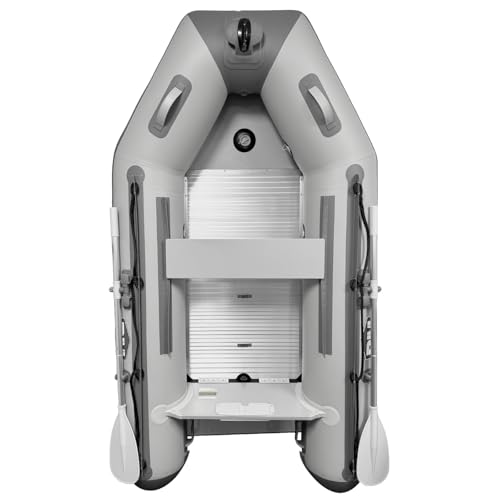
This 8.2-foot inflatable dinghy emphasizes durability with a sturdy build and floor panels. It’s designed for two people and features a durable transom and tubes. Although explicit material details for the floor panels aren’t always stated, the design focuses on robust support for leisure and family outings. It’s best chosen for users who want a compact, stable platform with solid deck support for casual boating.
Best for: Small crews seeking a dependable, compact inflatable with solid deck support. Choose this if aluminum floor details aren’t a strict requirement but you want sturdy floor panels for stability. Caution: verify floor material if aluminum is a must-have.
10FT Inflatable Boat With Drop-Stitch Floor

This option features a drop-stitch floor rather than an aluminum floor. It’s lightweight and rigid, suitable for quick setup and easy transport. The floor is designed to support 3-4 people with several aluminum seat boards included. It’s best for users who prioritize a lightweight, rigid deck and don’t require aluminum floors. Caution: not aluminum—note as such for buyers seeking metallic floors.
Buying Guide: Aluminum Floor Considerations
- What boat size and type most commonly use aluminum floors? Aluminum floors are common on mid-to-large inflatable boats that require rigid decks for better standing space and load distribution. They are frequently paired with aluminum transoms for added durability on saltwater or rugged conditions.
- What installation effort is involved? Look for tool-free or minimal-tool installation for rails, floors, and deck components. Aluminum systems can be modular but may require proper alignment and secure fasteners to maintain stiffness.
- What environments matter most? Aluminum floors resist corrosion and deformation better in saltwater or frequent sun exposure than some plywood or composite decks, but require regular maintenance to prevent galvanic corrosion when paired with other metals.
- What trade-offs exist? Aluminum floors add weight and cost but provide long-term stiffness and durability. For lightweight or budget-focused setups, a non-aluminum floor might be preferable if the priority is mobility and cost.
- How to maintain aluminum components? Rinse with fresh water after saltwater use, dry completely, and apply corrosion-preventive measures as needed. Inspect for dents, cracks, and loose fittings regularly.
Frequently Asked Questions
- What is the main benefit of an aluminum floor on an inflatable boat? It provides stiffness, better load distribution, and a more stable riding platform compared to soft floors.
- Are aluminum floors compatible with wooden or PVC transoms? Compatibility depends on design; check manufacturer guidance for joinery and mounting hardware.
- Can aluminum floors be installed on small inflatables? Some small inflatables support aluminum rails or partial decks; verify rail and rail-length requirements per model.
- Do aluminum floors require special maintenance? Regular cleaning and protection against corrosion are recommended, especially in saltwater environments.
- Which product offers the best balance of price and performance? Consider overall hull stability, rail system, and deck rigidity; aluminum floors generally excel in stiffness with higher upfront cost.