Best Marine Diesel Fuel Hose Options for Boats and Ships
Find the right marine diesel fuel hose for fuel transfer, engine feeds, and venting on boats, ships, or other watercraft. This guide highlights five reliable hoses that balance pressure ratings, temperature ranges, and material durability. Best for different vessel sizes and fuel types, these picks help you choose a hose that resists fuel permeation, withstands salt spray, and remains flexible under marine conditions.
Summary table of selected products:
| Product | Best For | Key Specs |
|---|---|---|
| EVIL ENERGY 3/8″ Marine Fuel Line Hose Type A1-15 | Medium-duty fuel feed on small to mid-sized boats | 3/8″ ID, 25 ft, -20°F to 221°F, 300 PSI working |
| Continental 58524 Fuel Fill/Marine Exhaust Hose | Marine exhaust and vent lines | 1.5″ ID, 48″, 2-ply, helix wire |
| 3/8 Marine Fuel Line Hose – 20FT Byredio | Diesel and ethanol blends on small crafts | 10 mm ID, 18 mm OD, 20 ft, 16 PSI working |
| 5/16″ Marine Fuel Line Hose Rubber Type A1-15 | Reliable feed for mid-size engines | 5/16″ ID, 10 ft, 300 PSI |
| Sierra Marine Fuel Feed Hose 368/360 | Low permeation, longer runs | 3/8″ x 10′, UV/weather resistant |
EVIL ENERGY 3/8″ Marine Fuel Line Hose Type A1-15

The EVIL ENERGY hose is sized at 3/8″ ID (9.8 mm) with a 16.2 mm outer diameter and comes in a 25-foot length. It features a maximum working pressure of 300 PSI and a burst pressure of 900 PSI, suitable for gasoline and diesel marine feeds. The material combines an NBR inner layer with an NBR+PVC outer layer, reinforced by a polyester fiber braid. Temperature tolerance spans -20°F to 221°F (-30°C to 105°C). Best for smaller to mid-sized boats needing flexible, fuel-grade hose with strong resistance to fuel permeation.
Best for: small to medium boats requiring a durable, flexible fuel line for standard diesel or gasoline feeds. Use this if you need a longer run without frequent hose changes. Caution: higher temperature extremes are supported, but ensure proper routing to avoid sharp bends near fittings.
Continental 58524 Fuel Fill/Marine Exhaust Hose

The Continental 58524 is a 1.5 inch ID hose with a 48-inch length. It’s designed for use with gasoline, methanol, ethanol, and diesel in marine applications such as fuel filler necks, tank vents, and exhaust hoses. Constructed as a 2-ply synthetic hose with a helix wire providing rigidity and stability. This hose is best for larger vessels needing a robust, multi-purpose line for fuel and vent/exhaust pathways. Consider this option if you need a direct connector in a wider bore and require added structural support.
Best for: larger boats or ships needing a versatile, reinforced hose for fuel fill and exhaust pathways. Caution: larger ID means more space required in the engine bay and may not fit tight routing in smaller crafts.
3/8 Marine Fuel Line Hose – Byredio

Byredio’s model uses a 3/8″ ID with an 18 mm outer diameter, 20 feet long. It supports a working pressure around 16 PSI and a burst pressure of 50 PSI, with temperatures from -40℃ to 100℃ (-104℉ to 212℉). The construction features an upgraded flame-retardant NBR inner with NBR+PVC outer layers reinforced by a polyester braid. The hose is positioned as a flexible option for diesel, gasoline, and ethanol blends. Best for: owners needing a shorter, flame-retardant line with basic fuel compatibility. Caution: burst pressure is relatively low; avoid high-flow or high-load installations.
5/16″ Marine Fuel Line Hose Rubber Type A1-15

This NexaNova hose uses a 5/16″ ID (8.1 mm) and 9/16″ OD (14.5 mm) with a 75 mm minimum bending radius. It offers a working pressure of 300 PSI and a burst pressure of 900 PSI, with a broad temperature range from -20°F to 221°F (-30°C to 105°C). The compatibility includes gasoline, diesel, biodiesel, kerosene, and ethanol blends. Best for: mid-size boats needing a reliable, flexible line with strong pressure tolerance. Caution: ensure correct ID/OD match to existing fittings to prevent leaks.
Sierra Marine Fuel Feed Hose 368/360

Midnight Marine’s Sierra Marine Fuel Feed Hose features low permeation with a plastic barrier veneer and an NBR outer layer to reduce fuel permeation. It’s offered in 5′, 10′, or 20′ lengths and handles temperatures from -20°F to 212°F. The reinforced hose is designed to comply with EPA and CARB very low permeation requirements and is weather/UV resistant. Best for: longer runs in exposed outdoor settings where permeation resistance matters. Caution: verify compatibility with long-term UV exposure if stored outside for extended periods.
POHIR 3/8″ Marine Fuel Line Hose SAE J1527
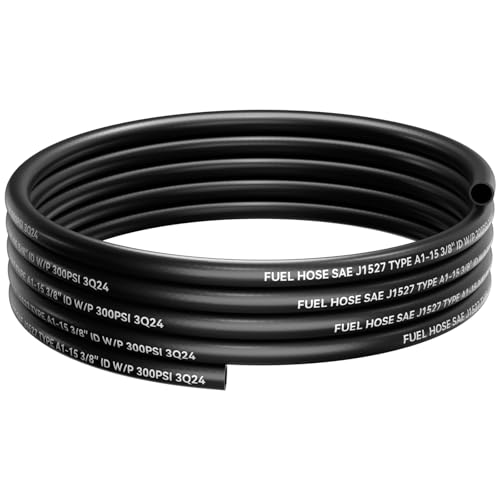
POHIR offers a 3/8″ ID hose with 5/8″ outer diameter and a 3/8″ ID. It features a maximum working pressure of 300 PSI and a bursting pressure of 900 PSI, with a temperature range from -22°F to 212°F. The construction includes three-layer NBR inner, NBR+PVC outer, and a reinforced polyester fiber braid; the outer material emphasizes flame retardancy at V-0 level. Best for: engines and pumps on boats needing a flame-retardant, robust feed line. Caution: ensure proper routing to avoid contact with hot exhaust components.
CHOIMOON 5/16 Marine Fuel Line Hose

CHOIMOON’s 5/16″ ID hose is a 10 ft length with a 75 mm minimum bending radius. It lists a working pressure of 300 PSI and a burst pressure of 900 PSI, with a temperature range of -40°F to 212°F (-40°C to 100°C). The hose is compatible with gasoline, diesel, and ethanol blends. Best for: smaller engine feeds on boats where compact routing is essential. Caution: shorter length may require more connections on longer runs.
MPI 1.5″ USCG Approved Fuel Fill Hose

MPI’s 1.5″ USCG-approved fuel fill hose is sold by the foot, with a helical wire for flexibility. It is designed for USCG compliance in fuel fill applications, suitable for installations requiring a larger bore. Best for: larger vessels or commercial craft needing an approved fill hose with easy customization by foot. Caution: not intended for small-diameter fuel lines or tight routing where flexibility is limited.
Buying Guide: How to Choose the Right Marine Diesel Fuel Hose
What matters most when selecting a marine diesel fuel hose? Consider these practical questions:
- What diameter do you need? Match ID to the engine, fuel tank, and fittings to ensure a proper seal and adequate flow.
- What is the expected operating pressure? Choose a hose with a working pressure comfortably above your system’s maximum flow; avoid underspecified hoses.
- Is flame retardancy important? Some models use flame-retardant outer layers, helpful in crowded engine rooms or near exhaust areas.
- What fuels will you transfer? Check compatibility with gasoline, diesel, biodiesel, ethanol blends, and kerosene where applicable.
- Temperatures and environmental exposure? Ensure the hose handles your climate, storage, and UV exposure if outdoor or high-heat areas.
- Length and routing flexibility? Longer runs require hoses with minimal permeation and good bend radii to prevent kinks.
FAQ
Q: Can these hoses handle diesel and gasoline in the same system?
A: Most listed hoses are designed for both diesel and gasoline, but always verify the listed fuel compatibility on the product page to ensure suitability for your application.
Q: What is the meaning of burst pressure vs working pressure?
A: Working pressure is the continuous service pressure the hose is rated to carry. Burst pressure is the higher pressure at which the hose might fail. Choose hoses with a comfortable safety margin between these values.
Q: How do I determine the correct hose ID?
A: Measure the inner diameter (ID) of the hose that matches your existing fittings and ensure the hose fits without excessive slack or compression at the connection points.
Q: Are there hoses specifically for exhaust vs fuel lines?
A: Yes. Some hoses are designed for fuel fill and vent lines, while others are intended for exhaust paths or general fuel transfer. Always select the hose type that matches your intended use.
Q: Should I prioritize low permeation?
A: If you have long runs or outdoor exposure, a low-permeation hose reduces fuel loss over time and helps meet environmental and CARB/EPA requirements.
For any marine fuel hose installation, ensure proper clamps, routing, and fitment with your vessel’s fittings. This helps maintain a secure connection and reduces the risk of leaks or permeation over time.