Best Deep Cell Trolling Motor Batteries for Reliable Marine Power
Answering the question “which deep cycle battery is best for a trolling motor?” this guide highlights five top options that balance weight, longevity, and compatibility. The best picks cover AGM and LiFePO4 chemistries, so you can choose based on weight, cycle life, and maintenance needs. This overview is ideal for boaters, RV travelers, and anglers seeking dependable power on the water without frequent recharging. The table below summarizes key details to help you compare at a glance.
| Product | Chemistry | Capacity | Weight | |
|---|---|---|---|---|
| Newport 12V50Ah Deep Cycle AGM | AGM Lead Acid | 50 Ah | 32 lbs | Lightweight trolling motor use with sealed, maintenance-free design |
| Eiiev 12V 100Ah LiFePO4 | LiFePO4 | 100 Ah | ~24.25 lbs | Long life, high cycle count, light weight for trekking and boating |
| WEIZE 12V 100Ah AGM | AGM Lead Acid | 100 Ah | Not specified | Maintenance-free option with solid day-to-day reliability |
| CHITOLI 12V 100Ah LiFePO4 | LiFePO4 | 100 Ah | ~22.6 lbs | Smart BMS protection and strong cycle life |
| SUPER EMPOWER 12V 100Ah LiFePO4 | LiFePO4 | 100 Ah | ~21.6 lbs | Drop-in replacement with high cycle life and safety features |
Newport 12V50Ah Deep Cycle AGM Battery

Features: 32 lbs, lightweight design for easy transport and installation. Sealed AGM lead-acid construction provides durability and leak-proof operation. Specifically compatible with trolling motors, offering reliable power for boating trips.
Best for: Boat owners who need a lightweight, sealed AGM option for trolling motors and easy handling. Caution: AGM batteries can be heavier than LiFePO4 equivalents and may have shorter cycle life in some high-use scenarios.
Eiiev 12V 100Ah LiFePO4 Battery

Features: 4000–15000 cycles depending on DoD, 10-year lifetime, high efficiency with minimal memory effect. Weighs about 24.25 lbs, making it a practical option for portable setups. Built-in BMS aids in safe operation and consistent performance.
Best for: Users prioritizing longevity and deep cycle performance for trolling motors, camping, and off-grid use. Caution: Not intended for engine starting or high-current crank applications.
WEIZE Deep Cycle AGM 12V 100Ah Battery
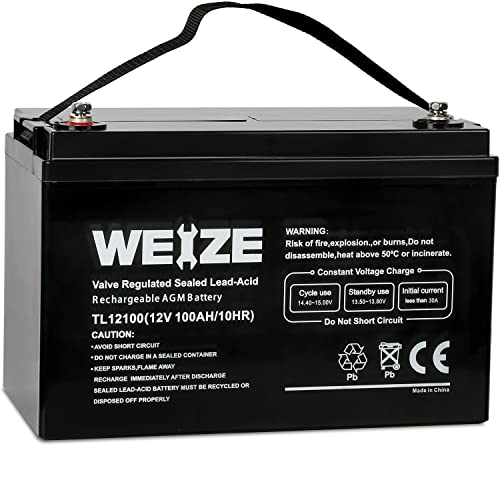
Features: AGM sealed design with 12V 100Ah capacity, low self-discharge, and maintenance-free operation. Designed for RV, solar, trolling motors, and marine applications with broad compatibility.
Best for: Those seeking a solid, maintenance-free AGM option for multiple power needs on the water. Caution: Weight and handling considerations vary by model; verify physical fit in tight battery boxes.
CHITOLI 12V 100Ah LiFePO4 Battery

Features: 100Ah capacity with built-in 100A BMS, Group 24 size, smart protections against overcharge, over-discharge, and short circuits. Lighter than many lead-acid equivalents.
Best for: Boaters upgrading from lead-acid to lithium with a compact footprint and safety features. Caution: Primarily for energy storage; not a cranking power source.
SUPER EMPOWER 12V 100Ah LiFePO4

Features: 100Ah capacity, 10-year life, UL/FCC compliant, drop-in replacement for lead-acid systems. Compact and lighter for easier handling on boats and RVs. Includes smart BMS for safe operation.
Best for: Those seeking a long-life lithium option with straightforward installation and robust protection. Caution: LiFePO4 batteries have different charging requirements than lead-acid; ensure compatible chargers and wiring.
Buying Guide
What should I consider when choosing a deep cycle trolling motor battery?
- Battery chemistry: LiFePO4 offers longer cycle life and lighter weight; AGM provides sealed maintenance-free operation at a lower upfront cost.
- Capacity and runtime: Higher Ah means longer operation between charges, especially important for larger boats or longer trips.
- Weight and size: Lithium options are typically lighter; confirm fit in existing battery boxes and mounting areas.
- Cycle life and depth of discharge (DOD): LiFePO4 often delivers thousands of cycles at various DOD, increasing total runtime over years.
- Charging requirements: LiFePO4 systems may require compatible chargers and BMS integration; ensure your setup supports the chemistry.
How to choose by use case
- Casual freshwater trolling: AGM options like Newport offer sealed, maintenance-free operation with adequate runtime.
- Frequent use, long trips, or off-grid needs: LiFePO4 options (Eiiev, CHITOLI, SUPER EMPOWER) maximize cycles and reduce weight for easier handling.
- Limited space: LiFePO4 batteries with compact dimensions and lighter weight fit tighter battery boxes better than many AGM options.
Installation and maintenance tips
- Use appropriate terminals and wiring gauges for the chosen chemistry to ensure safe charging and discharging.
- Install in a dry, ventilated area with proper mounting to prevent movement during operation.
- Follow manufacturer charging recommendations to optimize life span and performance.
FAQ
- What is the main difference between AGM and LiFePO4 for trolling motors?
– AGM is seal-protected but heavier with shorter cycle life; LiFePO4 is lighter, longer-lasting, and requires compatible charging equipment. - Can I mix battery chemistries in one system?
– It’s generally not recommended due to mismatched voltage and charging characteristics. - Will LiFePO4 batteries work with all trolling motors?
– Most trolling motors are compatible, but ensure the battery is wired correctly and the charger supports LiFePO4 chemistry. - Do these batteries require special chargers?
– LiFePO4 batteries often need LiFePO4-compatible chargers or smart BMS-enabled charging; AGM may work with standard deep-cycle chargers. - How many cycles can I expect from these batteries?
– LiFePO4 options typically offer several thousand deep cycles; performance depends on DoD and usage patterns. - Are there safety concerns with LiFePO4 on boats?
– When used with a proper BMS and in compliant packaging, LiFePO4 batteries are considered safe and reliable for marine use.