Best Bus Bar for Boat Wiring: Top Marine Power Distribution Blocks for 12V Systems
Answer: For reliable 12V boat wiring, choose a heavy‑duty marine bus bar with ample amperage, solid terminals, and a secure cover. This guide compares five top options ideal for boats, RVs, and automotive solar setups. Best for high-current marine wiring, best for compact layouts, and best for vibration resistance are highlighted below.
Buyer considerations table (quick view)
| Product | Best For | Amperage / Voltage | Key Feature |
|---|---|---|---|
| RVBOATPAT Power Distribution Block 12V | General marine and automotive use | 150A, up to 48V DC | 1/4″ stud + M6 bolt design |
| Avelis Bus Bar 12V 150A | Clean, professional wiring with secure covers | 150A, up to 48V | Solid copper, snap-lock covers |
| RVBOATPAT Marine Bus Bar 12V 150A | Secure, buckle bottom design | 150A DC, 48V AC max | Buckle bottom for cover retention |
| Joinfworld 250A Power Distribution Block | Higher current 12V systems | 250A, up to 48V | 4 x 5/16″ (M8) studs |
| Joinfworld 400A Power Distribution Block | Extreme current and robust builds | 400A, up to 48V DC | 8mm thick copper plate, multiple studs |
The following sections detail five top choices, including who benefits most from each, why they were selected, and practical cautions to consider for marine, automotive, and solar wiring projects.
RVBOATPAT Power Distribution Block 12V 150A

This marine bus bar is designed for 12V systems with up to 150A and 48V DC operation. It uses 12 stainless M4 terminal screws and a 1/4″ (M6) terminal stud with a nut for straightforward wiring routing. Includes a positive and a ground bus bar, plus covers and copper lugs. Best for boaters needing a compact, rugged distribution point with simple installation.
Who it’s best for: Small to mid‑sized boats and DIY rigs where space is limited and corrosion resistance matters. Ideal for solar, engine compartment, or auxiliary circuits.
Why selected: A complete bundle with both positive and ground bars and multiple lugs makes it easy to consolidate leads and reduce wiring clutter in compact areas.
Limitations: Limited to 150A continuous, so avoid wiring plans that demand higher current in the same block without verifying safe margins.
Avelis Bus Bar 12V 150A
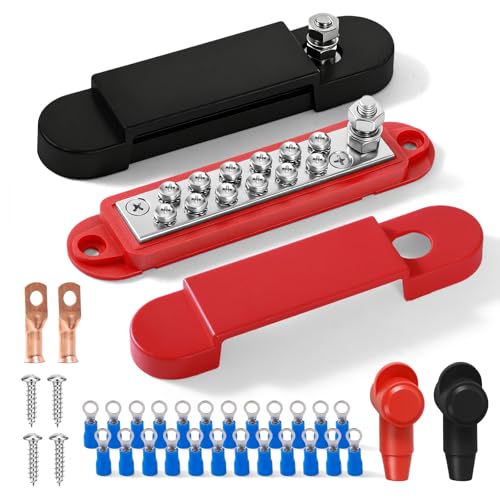
Featuring a solid tinned copper bus bar and a rigid base, this unit provides low‑resistance connections for 12V systems up to 150A and 48V. It includes snug snap‑lock covers to resist vibration and protect terminals during service or transport. Centralizes multiple leads for cleaner wiring and easier troubleshooting in solar, marine, or automotive projects.
Who it’s best for: Users who prioritize a tidy, professional‑looking installation with secure, vibration‑resistant covers.
Why selected: The tinned copper and secure covers help minimize corrosion and accidental shorts in harsh environments.
Limitations: While it offers solid performance, higher current projects may require larger blocks or multiple units to avoid overloading a single block.
RVBOATPAT Marine Bus Bar 12V 150A

This unit expands on basic features with a bottom buckle design to firmly fasten the cover to the terminal block, reducing the risk of cover detachment in rough seas or bumpy installations. It includes 12 M4 stainless steel terminal screws and a 1/4″ (M6) stud with a nut, offering robust attachment options for complex wiring. Best for demanding marine applications where vibration is a concern.
Who it’s best for: Boat owners who need a dependable block that stays protected under motion and vibration.
Why selected: The buckle design improves reliability in rough conditions, keeping terminals shielded during active use.
Limitations: The 150A rating is suitable for many systems but not ideal for very high‑current networks on larger vessels without additional distribution points.
Joinfworld 250A Power Distribution Block

This 12V bus bar is rated at 250A, with 4 x 5/16″ (M8) studs and three additional #8 screw terminals. It uses a thicker copper bus bar plate to handle a wider range of cables, making it suitable for larger marine, automotive, or solar installations. The nylon bottom, secured by M8 posts, helps prevent stripping and enhances durability.
Who it’s best for: Operators needing higher current capacity without stacking multiple blocks, such as mid‑size boats with multiple high‑demand circuits.
Why selected: The 250A rating and thicker copper plates provide flexibility for larger wire gauges and heavier loads.
Limitations: Larger terminals and a bigger footprint may require more space and careful routing in confined compartments.
Joinfworld 400A Power Distribution Block
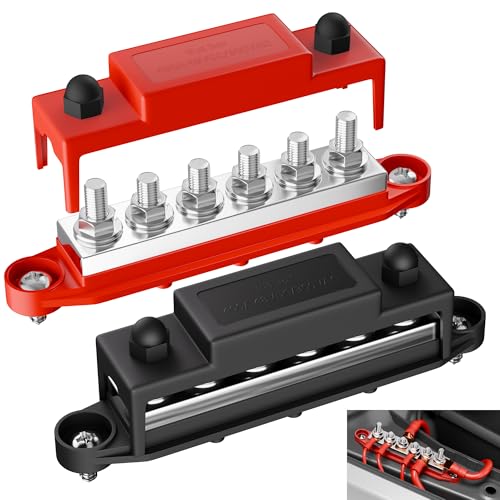
This heavy‑duty unit is built for extreme current demands, rated 400A with a 48V DC maximum and 300V AC compatibility. It uses six 5/16″ (M8) studs and a thick copper bus bar plate, plus dual red/black blocks for positive and negative connections. A sturdy nylon base with secure fastening ensures stability in challenging environments. Best for boats or systems requiring a robust, high‑current distribution hub.
Who it’s best for: Users planning large solar arrays, engine rooms, or power centers on boats that require a strong, centralized distribution point.
Why selected: The 400A rating and thick copper plate provide significant headroom for future expansion and high‑current devices.
Limitations: The high current capacity demands careful wire sizing and proper protection to avoid overloading any single branch.
Buying Guide: How To Choose The Right Boat Bus Bar
- Current requirements: Match the continuous amperage rating to your total load. If you expect multiple high‑draw devices, consider 250A or 400A blocks or use multiple blocks.
- Number and size of terminals: Check terminal sizes (1/4″, 3/8″, 5/16″) and the number of screw terminals to ensure compatibility with your cables and connectors.
- Voltage range: Most marine bus bars support 12V systems up to 48V; confirm the maximum recommended voltage for your installation.
- Physical design: Look for buckle or snap‑lock covers, vibration resistance, and a sturdy base in marine environments.
- Space and layout: Plan for cable routing paths, clearance for lugs, and the possibility of future expansion when selecting block size.
- Material durability: Prefer copper bus bars with corrosion‑resistant coatings and flame‑retardant nylon bases for longevity in harsh environments.
- Installation effort: Some units include both positive and negative bars and all necessary lugs; others may require additional hardware. Assess what’s included to estimate installation time.
Frequently Asked Questions
- What is a bus bar in boat wiring? A bus bar is a centralized terminal block that distributes electrical power from a battery to multiple circuits with solid, low‑resistance connections.
- Why choose a 12V bus bar for marine use? Most boats operate on a 12V system; a 12V bus bar supports efficient distribution to lights, pumps, and accessories while managing safety and organization.
- How many amps should a boat bus bar handle? It depends on your system’s total load. Choose a block with a capacity above your expected continuous draw to reduce risk of overheating.
- Are higher amperage bus bars necessary for all boats? Not always. Smaller vessels may be fine with 150A blocks, but larger boats with high‑load devices may require 250A or 400A options or multiple blocks.
- What is the benefit of a bus bar with a secure cover? Covers help prevent accidental shorts and protect terminals from moisture and debris, especially in wet or saltwater environments.
- Can I mix positive and negative blocks? Yes, many kits come in red (positive) and black (negative) pairs to simplify wiring and reduce confusion.