Best Marine Engine Hour Meters for Boats and More
Looking for a reliable hour meter to track engine usage across marine, ATV, and outdoor equipment? This guide compares five top options, highlighting who each model is best for, how they perform, and any limitations. Ideal buyers include boaters needing precise outboard tracking, DIY enthusiasts monitoring maintenance intervals, and professionals outfitting fleets. The table below helps you compare key details at a glance.
| Product | Voltage Range | Reading Range | Best For |
|---|---|---|---|
| Magicalmai Inductive Hour Meter | 12–DC compatibility | 0–9,999.9 hours | Marine, ATV, small engines |
| 2 Inch/52mm Hour Meter (White & Silver) | 12/24V DC | 0–99,999.9 hours | Cars, Boats, Trucks, Motorcycles |
| AIMILAR Mechanical Hour Meter | DC 8–80V / AC 110–250V | 0–99,999.9 hours | Boats, ATVs, Generators |
| Mercury Marine 8M6020008 OEM Hour Meter | Typically 12/24V systems (OEM) | Total engine hours | Mercury outboard setups |
| Mechanical Round Hour Meter AC/DC (ZHELIOSMX) | DC 12–48V (typical circuits) | 0–99,999.9 hours | Marine, Snowmobile, Generators |
The following sections review each option in detail. For each product, you’ll find who it’s best for, why it was selected, and a practical caveat to consider before you buy.
Magicalmai Inductive Hour Meter for Gas Engines

This inductive hour meter supports many gas engines and generators, including marine, ATV, motorcycle, and more. It records up to 9,999.9 hours with a stand-by life exceeding 20,000 hours. The LED-like hour glass indicator provides a clear visual cue when counting. It uses an ABS epoxy-encapsulated casing, delivering waterproof and shockproof performance up to 85°C. Best for: boat owners and outdoor equipment users who need a robust, long-life track of running time. Caution: ensure proper mounting in a dry area to avoid exposure to extreme heat or direct water spray beyond its rating.
2 Inch/52mm Hour Meter 0-99999.9H (White & Silver)
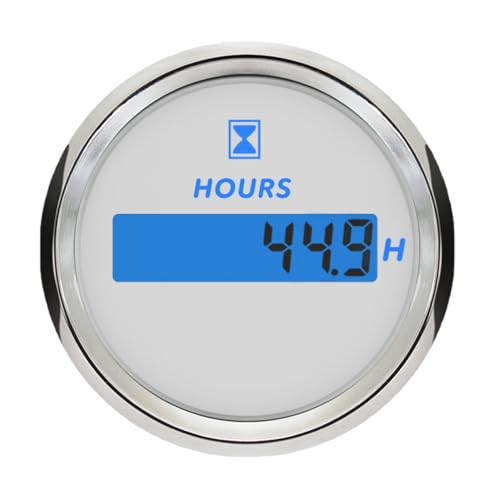
This compact 52mm hour meter fits most dash panels and features a 0–99999.9-hour range with 0.1-hour resolution and IP67 sealing for water and dust resistance. It operates on 12V or 24V systems and offers eight backlight colors for visibility in varying conditions. Best for: boat dashboards and small vehicles where a low-profile meter is needed. Limitation: installation requires a compatible panel cutout and proper sealing to maintain IP67 integrity.
AIMILAR Mechanical Hour Meter

Mechanical, not electronic, this hour meter supports DC 8–80V or AC 110–250V and provides a TOT counter up to 99,999.9 hours with 0.1-hour resolution. It installs in a 2-inch round hole and comes with an adjustable retrainer clip for mounting on materials up to 9/32 inch thick. Best for: older builds or systems where a robust, mechanical readout is preferred. Caution: depth behind the panel is about 1.77 inches, so ensure available space behind the mounting surface.
Mercury Marine 8M6020008 Hour Meter Gauge

This OEM hour meter is designed by Mercury Marine for precise run-time tracking on outboard engines. It supports Mercury 2-stroke and 4-stroke installations, delivering a clean, classic black face with a chrome bezel for a sleek dash appearance. Best for: Mercury-powered boats seeking a factory-original, fit-for-purpose gauge. Limitation: as an OEM part, compatibility should be verified with your specific engine model before ordering.
Mechanical Round Hour Meter (ZHELIOSMX)

This mechanical round hour meter fits in a 2″ hole and includes an adjustable retrainer clip. It reads up to 99,999.9 hours with a quartz accuracy of 0.01 hours, suitable for marine engines, snowmobiles, boats, and generators. Best for: users who want a precise, low-power mechanical option in a compact format. Caution: ensure voltage compatibility with your system to avoid misreadings or damage.
Buying Guide
What features matter most?
Key considerations include voltage compatibility (12V vs 24V and AC options), reading range (0–99,999.9 hours vs lower ranges), durability (IP rating, waterproof/shockproof construction), and mounting requirements (hole size, panel depth). For marine use, IP67 or better sealing helps resist spray and humidity. If you prefer mechanical vs. electronic displays, choose based on maintenance style and reliability preferences.
How do you choose the right mounting approach?
Pair the meter’s hole size with your dash or panel. Two-inch (52 mm) rounds are common for dashboards, while smaller or slate-like panels may require different form factors. Consider panel depth to avoid interference with wiring, and plan for accessible readouts in bright or low-light conditions (backlight options help here).
What about compatibility with engines and vehicles?
12V or 24V DC meters suit most small engines, boats, ATVs, and motorcycles. Some meters also support AC power for generators. If you have a Mercury engine, OEM options ensure a closer fit and dash aesthetics. Always verify the engine’s electrical system before purchase to avoid mismatches.
Maintenance and accuracy considerations
Quartz-based meters deliver high precision (0.01–0.1 hour resolution) and broad ranges. Mechanical meters rely on physical counters and may be more robust in harsh environments but can be less flexible in terms of readout features. For long-term maintenance planning, select a meter with a wide total-hour range and clear display.
Durability and protection against the elements
Waterproof and dustproof ratings (IP67 or better) extend life in salty air and wet environments. ABS or metal casings with epoxy encapsulation reduce corrosion. If you operate in extreme temperatures, check the device’s thermal tolerance to avoid degradation.
Installation tips
Prepare the mounting hole and panel cutouts before wiring. Use appropriate seals and gaskets to maintain IP ratings. Ensure clear labeling on the dash so operators can read hours at a glance, especially in bright sunlight or at night.
FAQ
- Do hour meters work on both 12V and 24V systems? Yes. Many meters support both voltages or offer models specifically for 12V or 24V. Check the product’s voltage range to match your system.
- What does the hour reading indicate? It records the total running hours of the engine or equipment, helping plan oil changes and other maintenance tasks.
- Can I install these myself? Most models are designed for DIY installation in a standard 2″ dash hole; follow the included mounting instructions and ensure proper wiring and sealing.
- Are mechanical meters better than quartz? Mechanical meters can be robust in vibration-heavy environments; quartz meters offer higher precision and a longer readout range, depending on the model.
- Will an OEM hour meter fit my Mercury engine? OEM meters are designed to fit specific engine models; verify compatibility with your exact Mercury engine before purchasing.
- What if the display is hard to read? Choose models with backlighting or higher contrast displays for better legibility in varied lighting conditions.