Best 1 1/2 Inch Thru-Hull Fittings for Boats: Top Picks for 2026
Finding the right 1 1/2 inch thru-hull fitting depends on your boat type, hull material, and whether you need barbed, threaded, or gasket-assisted connections. This guide highlights five selections that balance durability, installation ease, and marine-grade reliability. Ideal buyers range from DIY boat owners upgrading bilge outlets to professional installers seeking corrosion resistance. A quick summary table follows the intro to compare key specs at a glance.
Summary Table of Selected Products
- Attwood 3875-3: Polypropylene straight thru-hull, white; best for lightweight, non-metal hulls and easy plumbing installs.
- Attwood 66551-3: Stainless steel barbed, long, 1 1/2″; best for rugged use and thicker hulls with full-thread compatibility.
- NRC&XRC Marine Grade: 316 SS, short straight with gasket; best for secure, heavy-duty installations needing a custom seal.
- Seachoice 90-Degree: High-impact plastic; best for tight routing and flexible hose fits.
- SEAFLO 2-Pack: Polypropylene; best for saltwater drains and bilge outlets with corrosion resistance.
Attwood 3875-3 1.5″ Polypropylene Straight Thru-Hull Connector

Material: Polypropylene; Size: 1 1/2 inch I.D.; Stem length: 3 1/2 inch; Hull thickness: up to 1 1/4 inch. This straight-thru-hull design is lightweight and corrosion-resistant for non-metal hulls or where quick, simple plumbing is required. Best for smaller powerboats or sailboats with straightforward bilge or deck drains. A potential limitation is polypropylene’s lower heat resistance compared with metal alternatives, so avoid prolonged exposure to high heat sources near the fitting.
Attwood 66551-3 Stainless Steel Barbed Straight Thru-Hull
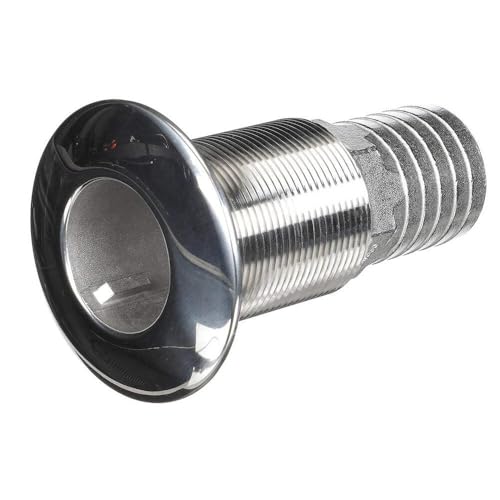
Material: Stainless steel; Hose size: 1-1/2″ I.D.; Features a full-length threaded design for thick hulls and secure tightening. Best for rugged, long-term installations in boats with thicker hulls and higher stress on connections. This model is well-suited for saltwater use due to stainless construction. Caution: stainless fittings can require proper anti-seize or thread sealant to prevent galling in repetitive vibration conditions.
NRC&XRC Marine Grade 316 Stainless Steel Short Thru-Hull

Material: Marine Grade 316 stainless steel; Short straight 1-1/2″ ID thru-hull with gasket and nut. Best for heavy-duty, high-durability installations where a solid gasket interface is beneficial. The gasket option adds installation flexibility on irregular hulls. Limitation: assembly may require precise gasket alignment and additional hardware for a watertight seal in some hull configurations.
Seachoice 90-Degree Thru-Hull Connector

Material: High-impact plastic; Fits 1-1/2 in. ID hose; max hull diameter about 1-3/8 in. This 90-degree design helps routing in tight spaces where straight fittings cannot reach. Best for boats with crowded bilge areas or limited deck space. Consideration: plastic components may be less impact resistant than stainless steel in harsh marine environments, so monitor after rough usage.
SEAFLO 1½” Thru Hull Fitting (2-Pack)
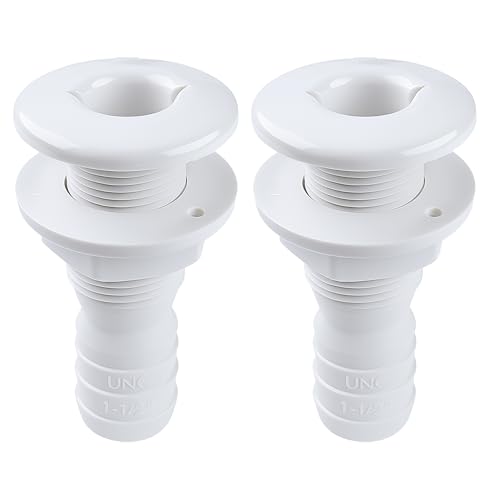
Material: Polypropylene; Size: 1½”; Use: Overflow drains, bilge outlets, and livewell plumbing. Best for marine applications requiring UV and saltwater resistance with no metal corrosion risk. The two-pack offers value for multiple connections. Limitation: polypropylene may be less robust under heavy external impact than metal fittings; inspect for cracks after impact events.
Buying Guide: Key Considerations For 1-1/2 Inch Thru-Hull Fittings
- Material matters: Stainless steel (316 SS) offers superior corrosion resistance and strength for saltwater use. Polypropylene is lighter and resistant to chemicals but can be less durable under impact.
- Hull compatibility: Check hull thickness and whether the fitting is short or standard length. Thick hulls may require longer threads or a flange design for a proper seal.
- Connection type: Barbed fittings are easier to clamp but may require flexible hoses; threaded fittings provide a secure seal in thicker hulls. Consider your hose size and clamp options.
- Routing and space: 90-degree fittings help in tight spaces; straight fittings are simpler where space allows. Plan hose routing before purchase to avoid fitment issues.
- Gasket and seal: Some options include gaskets for easier seal installation. Ensure gasket material is marine-grade and compatible with your hull material and environment.
- Maintenance: Look for corrosion-resistant materials and compatible sealants or anti-seize compounds if you anticipate frequent disassembly.
FAQ
- What is the typical use for a 1-1/2″ thru-hull fitting?
They are commonly used for bilge outlets, overflow drains, livewell plumbing, and deck drains on boats with 1-1/2″ hose fits.
- Which material is best for saltwater boats?
316 stainless steel offers the best corrosion resistance in saltwater environments; polymer options are lighter but may be less durable under impact.
- Should I choose a straight or 90-degree fitting?
Choose straight when routing is clear and space allows; choose 90-degree when space is tight or hoses must make a sharp turn.
- Do all thru-hull fittings come with gaskets?
Not all do. When a gasket is included, verify compatibility with your hull material and ensure proper installation torque.
- Is a longer stem beneficial for thick hulls?
Yes, longer stems help reach through thick hulls and provide a secure connection, but ensure the stern or inner hull closure remains accessible for maintenance.
- Can I install multiple fittings on the same hull?
Yes, but verify clearance, gasket compatibility, and avoid crowding which can hinder sealing and hose routing.