Best Sailboat Rigging Tension Gauge for Precise Cable Tension
Answering the need for precise, one-person rigging measurements, these sailboat rigging tension gauges are designed to help sailors keep standing rigging within recommended tension ranges. The best options suit different cable diameters and environments, from dinghy setups to larger sailboat stays. This guide highlights five top performers, clarifying who benefits most from each tool and why they were chosen.
The following quick-reference table summarizes the five selected gauges, including compatible cable sizes and notable strengths.
| Product | Compatible Cables | Capacity | Best For |
|---|---|---|---|
| Upgrade PT-2 Sailboat Rigging Tension Gauge | 3/16″, 7/32″, 1/4″ | 2000 lbs | One-person tuning on larger stays |
| Hazztoll PT-2 Sailboat Rigging Tension Gauge | 3/16″, 7/32″, 1/4″ | 2000 lbs | Rugged, durable marine use |
| Sailboat Rigging Tension Gauge PT-1M (Touri) | 2.5, 3, 4 mm | 800 lbs | Small to mid-size rigs, easy readability |
| Fhroiny PT-1 Sailboat Rigging Tension Gauge | 2.55 mm, 3 mm, 4 mm | 360 kg (800 lbs) | Hands-free operation with clear scale |
| PT-2 (Hohnezl) Sailboat Rigging Tension Gauge | 3/16″, 7/32″, 1/4″ | 2000 lbs | High precision, one-person setup |
Upgrade PT-2 Sailboat Rigging Tension Gauge

Best for serious sailors handling standard standing rigging on boats that use 3/16″, 7/32″, or 1/4″ cables. The PT-2 model offers ±5% precision and a hands-free clamp design that lets you measure while you adjust, reducing setup time. It ships with a calibration table in pounds for quick reference, making it suitable for crews who value speed and consistency. Caution: verify cable compatibility before purchase to ensure a secure fit.
Hazztoll PT-2 Sailboat Rigging Tension Gauge
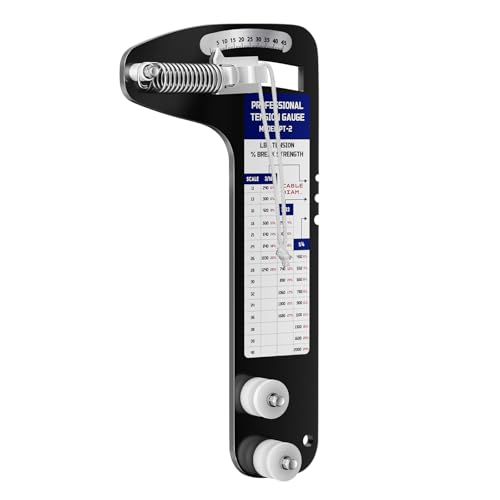
Designed for durability in harsh marine environments, this gauge provides reliable ±5% readings for cables in the 3/16″ to 1/4″ range. It’s ideal for standing rigging on salt-air boats and other tension-critical applications. Best for: boats requiring rugged performance with straightforward readouts. Limitation: occasionally requires recalibration to maintain peak accuracy in variable conditions.
Sailboat Rigging Tension Gauge PT-1M (Touri)

Best for small to mid-size rigs using 2.5–4 mm cables, the PT-1M emphasizes a clear, kg-based readout and a ±5% accuracy range. The compact form makes it convenient for boats with tighter rigging spaces. Choose this if you need a lightweight gauge with recognizable metric readings for quick checks during sail setup. Limitation: metric readout may require conversion for users accustomed to pounds.
Fhroiny PT-1 Sailboat Rigging Tension Gauge

Best for hands-free operation with a wide 360 kg (800 lb) capacity and 2.55–4 mm cable compatibility. It emphasizes corrosion-resistant aluminum construction and a side-notched design for quick cable sizing identification. Use this when you want a robust, low-maintenance gauge that supports quick adjustments without constant handling. Limitation: larger models may be heavier to manage on smaller vessels.
PT-2 Hohnezl Sailboat Rigging Tension Gauge
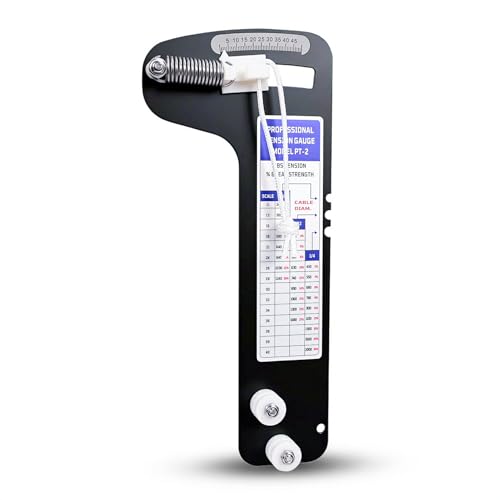
Best for crews needing a high-precision, hands-free tension gauge that works with 3/16″, 7/32″, and 1/4″ cables. This model mirrors the PT-2 class with a 2000 lb capacity and a bottom hanging hole for carabiner attachment, aiding secure one-person operation. Potential drawback: ensure the clamp fits snugly on your specific cable diameter to avoid misreadings.
Loos & Co. PT-2 Professional Tension Gauge
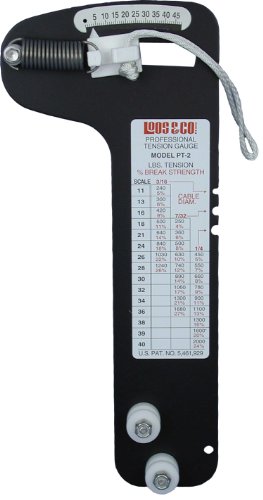
Best for larger rigging setups in need of reliable, field-tested tension measurement. The analog gauge provides pounds readings with ±5% accuracy. It suits ships with larger forestays or rod rigging where consistent tension is critical. Limitation: fewer cable size options listed beyond standard 3/16–¼ inch diameters.
PT-1M Sailboat Rigging Tension Gauge (Hohnezl)
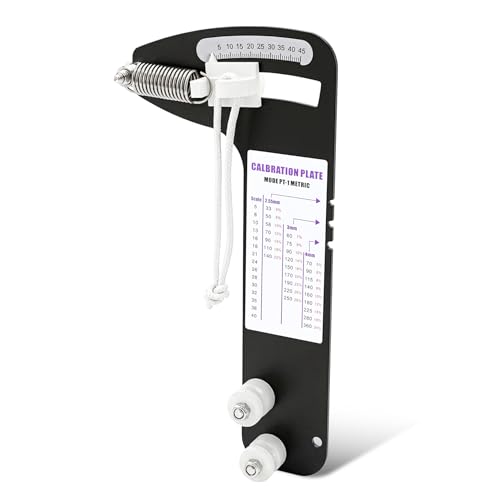
Best for sailboats needing a compact, robust metric-based tension readout with a 0-800 lb range. The hands-off design supports continuous readings during turnbuckle adjustments, and side notches identify cable sizes for accuracy. Suitable for sailors who value short setup times and clear, repeatable results. Limitation: metric-to-imperial conversions may be required for some crews.
Buying Guide: Key Purchase Considerations
- Cable diameter compatibility: Confirm your boat’s rigging cable sizes (common ranges include 2.5–4 mm and 3/16″–1/4″) to ensure the gauge clamps securely.
- Capacity needs: Larger boats or forestays may require gauges up to 2000 lbs, while smaller setups can use 800 lb models. Match capacity to avoid over-stressing equipment.
- Readout type: Analog dial gauges provide quick, at-a-glance readings; some models offer metric (kg) readouts. Consider your preferred unit system and calibration references.
- Hands-free operation: If you rig and tune solo, a hands-free clamp and bottom attachment point simplify measurements without removing the gauge between tweaks.
- Durability: Marine environments demand corrosion-resistant materials and robust construction. Look for aluminum or stainless-steel builds and moisture-resistant casings.
- Calibration and reference charts: A clear reference table or chart accelerates setup and reduces guesswork, especially for beginners.
- Ease of use: Side notches for cable size identification and simple installation improve efficiency during rigging sessions.
- Weight and size: For small sailboats, a compact gauge improves maneuverability; larger gauges may offer enhanced durability and stability for onboard use.
FAQ
- What gauge is best for a small sailboat with 3/16″ rigging?
Best options: a PT-2 type gauge with 3/16″ compatibility or a PT-1M model that supports smaller diameters; both offer easy reading and hands-free operation. - Are these gauges suitable for permanent installation on a mast?
Most models are designed for temporary setup or clamp-on use; verify mounting provisions like a bottom hole for carabiners if permanent installation is desired. - Should I buy a metric or imperial readout gauge?
Choose based on your familiarity. Metric readouts simplify some conversions, while imperial readings align with common sailwork references in the U.S. - How important is ±5% accuracy for rigging?
±5% accuracy is generally sufficient for routine tuning, preventing under- or over-tensioning while maintaining safety margins. - Can these gauges measure non-sailboat applications?
Yes. They are suitable for other tension-critical setups like tents, towers, or fences, provided cable sizes fall within the gauge’s specification. - Do I need to recalibrate after a new installation?
Calibration should follow manufacturer guidelines; some gauges include a calibration plate or reference chart to maintain accuracy.