Best Solar Trolling Motor Battery Chargers for 12V Boats, RVs, and More
Answering the need for reliable, maintenance-friendly 12V charging, these solar battery chargers are designed for boats, campers, trailers, and other 12V systems. This guide highlights five top options, explaining who each is best for, and why. If you want low- or no-maintenance charging with smart protection, this selection covers a range of outputs and MPPT capabilities to match different battery types and climates.
Summary of selected products:
- SUNER POWER Waterproof 12W MPPT Charger and Maintainer (12V)
- POWOXI Upgraded 7.5W Trickle Charger Maintainer (12V)
- SOLPERK 20W Panel Kit with MPPT Controller (12V)
- SUNER POWER Waterproof 20W MPPT Charger (12V)
- Voltset 12V 20W Solar Battery Charger with MPPT (12V)
SUNER POWER 12W MPPT Solar Battery Charger & Maintainer
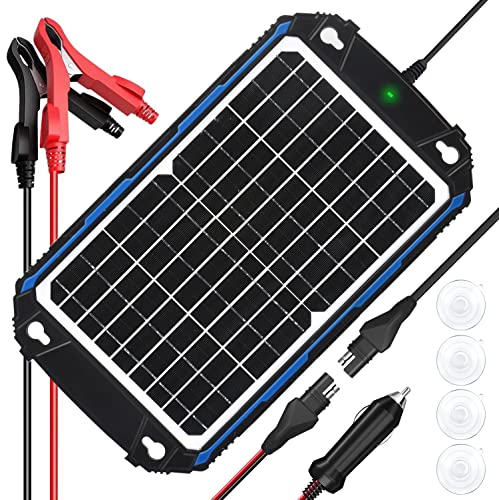
Best for small, portable setups where space is limited, such as small boats, trailers, or compact RV electrical bays. This unit uses Ultra-Smart MPPT to maximize energy capture, with a peak efficiency up to 98% and tracking up to 99%. It offers a three-stage charging cycle (Bulk, Absorption, Float) to protect and extend battery life. A key advantage is maintenance-free operation, stopping at full charge and resuming when needed. Best for occasional trickle charging and easy installation.
Limitations: its 12W output is suited for smaller batteries or supplemental charging rather than high-demand cycles.
POWOXI 7.5W Solar Battery Trickle Charger Maintainer
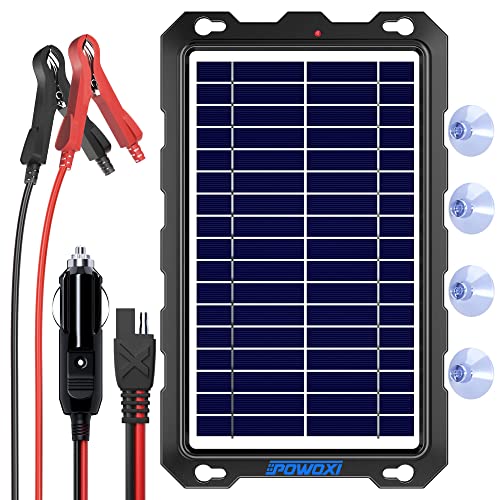
Best for smaller vehicles or motorcycles and parked boats where compact size matters. The 7.5W panel includes an intelligent controller and a protective system to prevent overvoltage and short circuits. It emphasizes safety and long-lasting operation with a high-transparency, durable glass cover. Choose this if you need a compact, safe trickle charger that minimizes risk of battery damage in storage scenarios.
Limitation: lower power output means slower charging for larger batteries or prolonged use.
SOLPERK 20W MPPT Solar Panel Kit
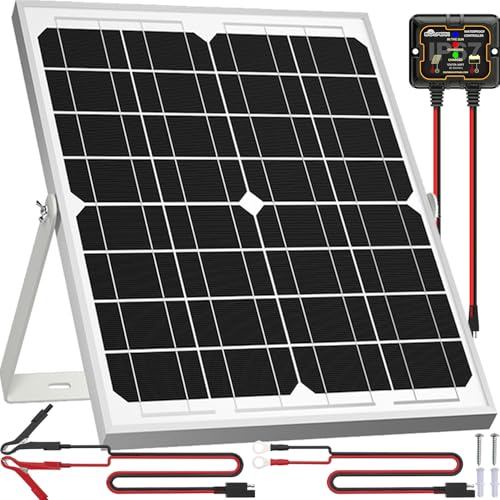
Best for mid-sized battery systems in boats, RVs, and trailers, offering a higher 20W output and robust construction. The kit uses a smart MPPT controller with three-stage charging to prevent overcharge and optimize battery health. It is designed to work with multiple 12V battery chemistries, including LiFePO4 and AGM. The panel’s weather-proof build and corrosion-resistant frame support long-term outdoor use.
Limitation: larger panels require mounting space and appropriate mounting hardware for secure installation.
SUNER POWER 20W 12V MPPT Solar Charger Maintainer

Best for users needing a balance of power and compactness, this 20W unit leverages Ultra-Smart MPPT for efficient energy collection and a three-stage charging protocol. It resumes charging automatically after discharging, requiring minimal user intervention. It is well-suited for boats and RVs where space allows a moderate panel size and a need for reliable trickle charging.
Limitation: while versatile, it may not be ideal for very large battery bank recharge cycles on harsh days with limited sun.
SUNER POWER 30W MPPT Solar Charger & Maintainer

Best for larger battery arrays on boats or RVs where more daily sun can be harnessed. The 30W output combined with Ultra-Smart MPPT enables high tracking efficiency and strong charging performance. The three-stage charging protocol protects battery health and provides a maintenance-ready solution for extended off-grid periods. Choose this for bigger DIY solar setups needing dependable, continuous trickle charging.
Limitation: requires more roof or deck space and may need more detailed wiring considerations for optimal performance.
Buying Guide: How to Choose the Right Solar Battery Charger
- Output power vs. battery size: Match wattage to your battery bank. Smaller setups do well with 7.5–12W, while larger systems benefit from 20–30W panels.
- MPPT vs. non-MPPT: MPPT controllers maximize energy harvest, especially in variable sun conditions. If MPPT is available, prioritize it.
- Battery chemistry compatibility: Check that the charger supports your battery types (LiFePO4, AGM, Gel, etc.).
- Weather resistance and durability: Look for waterproofing, tempered glass, and corrosion-resistant frames for marine environments.
- Auto maintenance features: A charger that stops at full charge and resumes when needed reduces upkeep.
- Installation footprint: Consider panel size, mounting options, and available space on boats, RVs, or trailers.
- Safety features: Overcharge protection, short-circuit protection, and reverse polarity safeguards are important for long-term use.
Compare at a Glance
| Product | Best For | Key Benefit | Limitations |
|---|---|---|---|
| SUNER POWER 12W MPPT | Small boats, trailers | Ultra-Smart MPPT, maintenance-free | Lower output |
| POWOXI 7.5W | Compact setups | Safety-focused, durable | Lowest power |
| SOLPERK 20W | Boats, RVs | 20W output, versatile chemistries | Mounting space required |
| SUNER POWER 20W | Medium setups | Solid balance of size and MPPT | Moderate space |
| Voltset 20W | RV/Boat/trailer users | Advanced protection, 20–30% faster charging | Standard 20W footprint |
Frequently Asked Questions
- What is MPPT and why does it matter for trolling motor batteries? MPPT stands for Maximum Power Point Tracking. It optimizes solar energy harvest, especially under varying light conditions, improving charging efficiency for 12V systems.
- Can these chargers support LiFePO4 and AGM batteries? Yes, several models list universal 12V compatibility, including LiFePO4 and AGM, but always verify compatibility for your exact battery type.
- Do these units require professional installation? Basic installations can be done by DIY enthusiasts with basic electrical knowledge; however, marine or vehicle electrical work may benefit from professional wiring guidance.
- Will a higher-watt system charge faster? In general, higher wattage can charge faster, but charging time depends on sun, battery state, and the charger’s efficiency.
- Are these chargers weatherproof for marine use? Most models feature waterproof design and tempered glass; confirm IP rating and mounting requirements for your application.
- What maintenance is required? These units are described as free maintenance, stopping at full charge and resuming automatically as needed.