Best in-Dash Depth Finder for Boats: Clear Depth Readings on Board
Answering the need for reliable water depth data, these in-dash depth finders provide fast, accurate readings for boaters who rely on depth information for safe navigation and optimal routes. The best picks below are suitable for different boat types and installations, from transom mounts to integrated dash displays. This guide helps you choose devices that deliver dependable depth data, alarms, and temperature readouts where relevant.
Buyer’s Snapshot: Top 5 In-Dash Depth Finders
| Product | Depth Range / Key Features | Ideal For |
|---|---|---|
| DepthTrax 2B Boat Mount In Dash Digital Depth Finder | 2.5–600 ft; 200 kHz transducer; dual transducer option; alarm system | Large dash displays; speed up to 60 mph; alert-driven navigation |
| Hawkeye Boat Depth Sounder Display Gauge DT2B | 2 inch display; black housing | Compact, simple inline depth gauge for small panels |
| Hawkeye in Dash Depth Finder w/Air & Water Temperature – Transom Mount | In-dash digital depth temp gauge; transom mount | Boats needing depth and temperature data in a single unit |
| Srum Digital Depth Sounder, 2” In-Dash Depth Finder | 0–100 m (0–328 ft); 9–32 V operation; stainless bezel | Rugged, long-life depth gauge for varied seas |
| Estink Depth Sounder Kit, Dash Depth Finder | 9–32 V; IP67; white backlight | Durable dash depth finder kit for yachts and boats |
DepthTrax 2B Boat Mount In Dash Digital Depth Finder

The DepthTrax 2B provides uninterrupted depth readings from 2.5 to 600 feet on a large in-dash display, with mounting versatility and an audible alarm. Its 200 kHz transducer supports transom or through-hull installation, making it flexible for many boat types. The device includes a 3-stage Advanced Warning System with an audible alarm, LED warning light, and LCD indicators. Best for: boaters who value a broad depth range, a bright interface, and strong alarm capabilities. Limitation: installation may require hull access for through-hull or solid fiberglass compatibility.
Hawkeye Boat Depth Sounder Display Gauge DT2B | 2 Inch Black
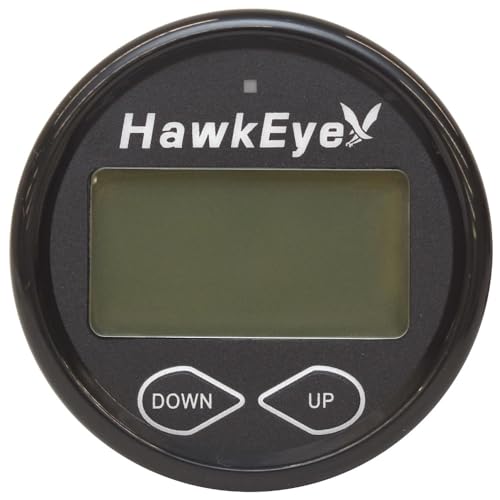
The DT2B is a compact 2-inch black depth gauge designed for tight dash spaces. It’s best for boaters who need a small, easily readable depth readout without occupying much panel real estate. Best for: small craft or pilot houses where space is at a premium. Limitation: smaller display may be harder to read at a distance or in rough seas.
Hawkeye in Dash Depth Finder w/Air & Water Temperature – Transom Mount

This Hawkeye unit combines depth with water temperature data in a transom-mount arrangement, providing a comprehensive reading package. Best for: anglers and coastal pilots who want quick depth and temperature at a glance. Caution: ensure compatibility with your dash layout and the transom mounting hardware on your vessel.
Srum Digital Depth Sounder, 2” In-Dash Depth Finder

The Srum depth sounder is a compact 2-inch in-dash unit with a stainless steel bezel and anti-fog glass. It operates on 9–32 V and delivers depth readings up to 100 meters (328 feet). Best for: boats seeking a rugged, low-power, quick-start depth gauge. Limitation: check exact mounting compatibility with your hull and dash configuration.
Estink Depth Sounder Kit, Dash Depth Finder
The Estink kit delivers a dash-depth sounder with a 9–32 V input and IP67-rated durability, featuring a white backlight for improved readability. Best for: yachts and larger boats needing a robust dash display with weather resistance. Caution: verify the included installation hardware suits your dash layout.
Buying Guide: Key Purchase Considerations
What depth range do you need? Choose a model with a depth range that matches your typical sailing or fishing environment. If you operate in shallow coastal zones, a 0–100 ft range may suffice; for deep open-water passages, opt for models with 600 ft or more. Consider whether you want through-hull, transom, or dual-mount transducers based on hull material and mounting space.
Display size and readability matter. Larger displays improve quick interpretation in rough seas. If space is limited, compact 2-inch gauges are usable but may require closer viewing. Temperature sensors add value for anglers and climates where water temperature affects behavior.
Power and installation. Most units run on 9–32 V DC, but verify compatibility with your boat’s electrical system. Some dash finders offer through-glass or through-hull transducers; ensure your hull type and material support your choice. Alarm features improve safety by signaling shallow or deep readings and malfunctions.
Durability and weather resistance. IP ratings and anti-fog glass help ensure long-term reliability in saltwater environments. Stainless steel bezels are common on marine-grade units, increasing longevity in harsh conditions.
Ease of use and alarms. Look for units with audible alarms and LED indicators if you operate in noisy environments or at speed. One-touch muting and memory retention of settings can improve daily usability.
Frequently Asked Questions
- What is the typical depth range I should look for? Common ranges include 0–100 ft for lakes and inshore waters, up to 600 ft for open ocean navigation. Select a range that fits your usual boating environment.
- Do these devices require a hull-specific transducer? Many in-dash units support transom mounts or through-hull installations. Check hull material and thickness to confirm compatibility.
- Can I read depth in feet or meters? Most models support both, but some allow user-selectable units. Choose one that matches your preferred system for navigation and charts.
- Are temperature readings always included? Temperature sensing is included on some models (coastal and fishing applications). If you need water temperature, verify the feature before purchasing.
- Is installation complicated? Installation varies by transducer type and dash layout. Some units are ready for quick dash mounting; others may require professional help for through-hull fittings.
- What maintenance is required? Regularly inspect transducers for fouling, ensure seals remain intact, and keep lenses free of salt buildup to preserve accuracy.