Best Boat Flares Coast Guard Approved for Safer Maritime Signaling
When choosing Coast Guard approved boat flares, prioritize reliability, visibility, and regulatory compliance. This guide presents five top-rated electronic and traditional flare options that meet or exceed USCG standards, helping boaters select the right solution for night signaling, day signaling, and audible distress. Best for: recreational sailors, small fishing boats, and emergency kits. The table below summarizes core attributes to compare at a glance.
| Product | Signal Type | Visibility | Best For |
|---|---|---|---|
| Sirius Signal C-1003 SOS LED Distress Signal | Electronic LED, Day & Night | Up to 10 nautical miles | Night signaling, long-lasting readiness |
| TEKTITE SOSeFLARE 5 | Electronic SOS, Audible | Visible at distance, Morse SOS | USCG/SOLAS compliance, durability |
| QnmtShna Boat Flares (2 PCS) | Electronic/LED with smart sensing | Automatic in low visibility | Sudden visibility enhancements |
| ACR ResQFlare | E-Flare with Flag | 360° visibility | Night & day signaling with flag |
| Orion Safety 584 ALERTER | 12 GA flare alternative | Up to 500 ft altitude | Traditional aerial signaling |
Sirius Signal C-1003 SOS LED Distress Signal
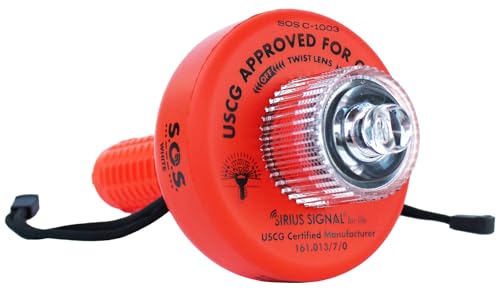
The Sirius Signal C-1003 is a Coast Guard approved electronic distress signal kit that covers night, day, and audible signaling requirements. It is designed to replace traditional pyrotechnic flares with a safer, reusable LED beacon. Best for boaters who want a long-lasting, low-maintenance signaling option that remains visible for extended periods. The included daytime flag and whistle add multi-signal capability for varied scenarios. A key strength is its long runtime, with the signal flashing according to USCG specs for up to 60 hours, well beyond minimum requirements. Caution: batteries are included, but users should verify replacement intervals per usage to maintain readiness.
- USCG Night, Day, and Audible distress compliance
- Up to 60 hours of SOS signaling
- Visible up to 10 nautical miles
Best for: boaters seeking a reusable, bright electronic distress signal that reduces the need for disposable flares and provides long-term readiness. Choose this if you want a high-visibility option that can be deployed quickly in emergencies. Avoid if you require traditional pyrotechnic signaling or if battery changes are a concern in extreme conditions.
TEKTITE SOSeFLARE 5
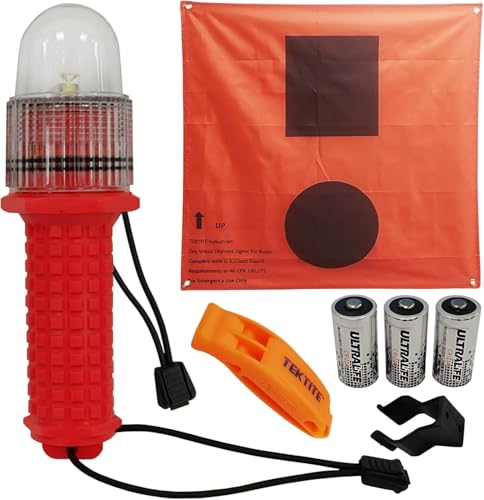
The TEKTITE SOSeFLARE 5 serves as a compliant electronic distress signal kit, designed to legally replace traditional flares with an LED-based system that meets USCG and SOLAS requirements. It includes an audible whistle and a distress flag for comprehensive visibility in day and night conditions. It’s ideal for boats that need a durable, legally clear signaling device with both light and sound components. The system runs on CR123 lithium batteries, delivering 30+ hours of operation, and is designed to float upright and be water resistant to significant depths. Caution: battery life can vary with usage, and unused batteries should be checked to prevent failure in emergencies.
- USCG and SOLAS compliant
- 30+ hours battery life; user-replaceable
- Waterproof, floats upright to 500 ft
Best for: captains seeking a standalone, all-weather electronic distress signal with audible and visual cues. Better for boats prioritizing legal compliance and nighttime visibility. Choose this if you want a rugged option that stays visible in harsh maritime conditions. Avoid if you prefer a two- or three-flare shot approach with traditional pyrotechnics.
QnmtShna Boat Flares (2 PCS)

These 2-pack LED boat flares from QnmtShna are marketed as Coast Guard approved and suitable for boats requiring quick, automated signaling in low visibility. The smart sensing system automatically lights up when appropriate and turns off when conditions improve, which can conserve power. They are designed to perform in wet, windy marine conditions and are described as waterproof and durable. Caution: batteries are not included, so operators must stock AA batteries separately and ensure proper installation for reliable operation. The setup requires correct screw-tightening to activate the light.
- USCG-approved signaling
- Smart sensing activation for visibility in low light
- Waterproof structure for harsh marine environments
Best for: boaters who want a compact, affordable LED signaling duo that activates automatically in dim conditions. Choose this if you need a simple upgrade to existing signaling kits. Avoid if you require included batteries or prefer a single-purchase option with built-in power.
ACR ResQFlare Electronic Distress E-Flare and Flag
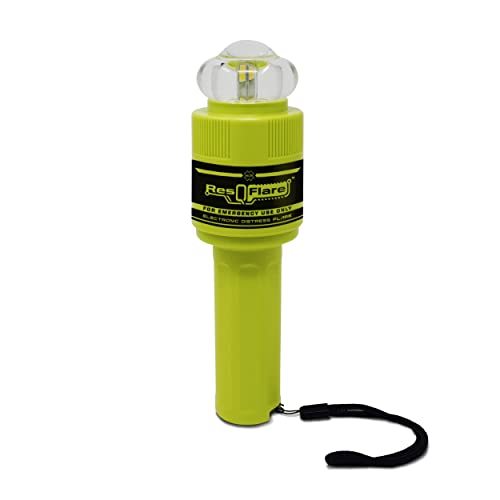
The ACR ResQFlare E-Flare combines an electronic distress signal with an included flag to serve as a versatile replacement for traditional pyrotechnic flares. It features 360° visibility and IP67 waterproofing for submersion protection. It is certified under USCG 161.013 as a nighttime distress signal and includes a daytime signal flag under USCG 160.072. This device is compact and lightweight for easy storage. Caution: as with all electronic signaling devices, battery integrity over time is essential to ensure functionality when needed.
- USCG and 161.013 nighttime signaling
- 360° visibility; IP67 waterproof
- Includes distress flag for daytime signaling
Best for: skippers who want a compact, compliant electronic flare that covers day and night signaling without pyrotechnics. Choose this if you need a reliable, all-weather device with built-in flag signaling. Avoid if you require a longer battery life beyond typical 30+ hour estimates or prefer standalone flares for immediate side signaling.
Orion Safety Orion 584 ALERTER

The Orion Safety 584 ALERTER provides a traditional, single-shot aerial signaling option with a corrosion-resistant 12-gauge launcher, a bandolier for six signals, and a lifetime warranty. It includes four USCG-approved red aerial flares achieving signaling elevations up to 500 feet and approximately 7 seconds of burn time. This choice is best for boaters who prefer familiar pyrotechnic signaling and a robust launcher. Caution: this option involves traditional flares and requires proper handling, storage, and disposal in line with safety guidelines.
- 12-gauge, corrosion-resistant launcher
- 4 USCG-approved aerial flares; up to 500 ft altitude
- Lifetime warranty and included safety manual
Best for: crews accustomed to pyrotechnic signaling and needing proven, high-altitude visibility. Choose this if you want the immediacy and tradition of traditional flares. Avoid if you prioritize a non-pyrotechnic solution or require safer, reusable signaling methods in confined spaces.
COASTAL ALERT LAUNCHER KIT

The Coastal Alert Launcher Kit includes six 12-gauge red aerial signals and a SOLAS-approved whistle with a lanyard. It is USCG approved for both day and night signaling, presenting a straightforward, ready-to-deploy solution for signaling in emergencies. It is well-suited for larger vessels or groups that require multiple flares in a single kit. Caution: as a traditional flare kit, it involves handling live pyrotechnics and requires proper training in use and disposal.
- USCG approved for day and night signaling
- Includes six 12-gauge red aerial signals
- Includes SOLAS-approved whistle
Best for: boats needing a compact, multi-flare kit with traditional signaling. Choose this if you want a ready-to-deploy package with multiple flares. Avoid if you prefer electronic or non-pyrotechnic signaling due to regulatory storage requirements and safety practices.
Buying Guide: Key Purchase Considerations
Selecting the right Coast Guard approved boat flares combines regulatory compliance, signaling needs, and environmental considerations. Practical questions help refine choices:
- What signaling method is preferred: electronic LED or traditional pyrotechnic flares?
- Do you need day signaling, night signaling, or both?
- Is a long battery life and reusability important for your sailing style?
- How much storage space and ease of deployment are critical?
- Will you operate in saltwater or freshwater environments, and what depth exposure may occur?
Signal Type And Compliance
USCG and SOLAS compliance ensures your device meets minimum visibility and duration standards. Electronic flares offer reusable signaling with safety advantages, while traditional flares provide immediate, high-intensity light at altitude. For commercial or rental vessels, confirm that the device meets applicable local regulations and carry the appropriate documentation with your gear.
Durability And Lifespan
Waterproofing, floatation, and submersion ratings indicate resilience in rough seas. Battery life and replaceable components affect readiness in extended voyages. Consider devices with long runtimes and clear maintenance instructions to minimize risk during emergencies.
Visibility And Range
Range is a practical indicator of effectiveness. LED devices typically offer up to several miles of visibility, while traditional aerial flares provide rapid, high-altitude signals that can cover broader areas. Choose based on typical boating environments—coastal, lake, or offshore.
Portability And Storage
Compact, lightweight devices fit into standard safety kits. For larger vessels or groups, multi-signal kits with several flares and flags can streamline response and reduce clutter in emergency packs.
FAQ
- What does USCG approved mean for boat flares?
It indicates the device meets specified requirements for nighttime visual signaling, day signaling, and audible alerts where applicable.
- Are electronic distress signals safer than traditional flares?
Yes, electronics reduce burn risks and waste, and they can be reused, but they rely on battery condition and environmental exposure.
- Can I use a mix of electronic and traditional flares?
Yes, many skippers keep both to ensure signaling options in different scenarios and to comply with varied regulatory expectations.
- How long do electronic distress signals typically last?
Most offer 30–60+ hours of continuous signaling on a set of batteries, depending on usage and model.
- Do I need to store batteries separately for electronic signals?
Yes, follow the manufacturer’s guidance on battery types, replacement intervals, and safe storage to maintain readiness.
- What should I consider when choosing a kit for small boats?
Consider size, weight, ease of use, and whether the kit covers night, day, and audible signaling with minimal maintenance.