Best High Power Trolling Motor Options for Serious Boaters
If you need reliable propulsion that minimizes noise and maximizes efficiency, a high power trolling motor is a smart investment. This guide highlights five top picks suitable for different boat sizes and fishing styles, from compact skiffs to larger craft. Ideal buyers include anglers seeking strong low-end torque, saltwater use, or a longer all-day runtime without overheating. The following table summarizes key specs to compare at a glance.
| Product | Thrust | |||
|---|---|---|---|---|
| Newport NV-Series 36 lb (12V) | 36 lb | 30 in | 2 Blade | Small boats, calm waters, budget-minded anglers |
| Newport NV-Series 55 lb (12V) | 55 lb | 30 in | 3 Blade | General trolling, better low-end torque |
| Newport NV-Series 62 lb (12V) | 62 lb | 36 in | 3 Blade | Medium to larger boats, robust low-end torque |
| Newport Kayak Series 55 lb (12V) | 55 lb | 24 in | 6-Inch Telescoping, 3 Blade | Kayak or small craft, flexible placement |
| Newport L-Series 86 lb (24V) | 86 lb | 40 in | 3 Blade | Large boats, deep water, high power needs |
Newport NV-Series 36 lb Trolling Motor

Reference features show a 36 lb thrust rating, 12V operation, a 30-inch shaft, and a 5-LED battery meter. A 6-inch telescoping tiller handle and a 2-blade propeller support straightforward maneuvering. Eight speeds include five forward and three reverse. Best for small boats or budget-conscious anglers who want dependable trolling without overkill. Caution: top speed around 3 mph and performance varies with boat type, water, and wind.
Newport NV-Series 55 lb Trolling Motor
This model increases thrust to 55 lb with a 30-inch shaft, a 5-LED battery meter, a 6-inch telescoping tiller handle, and a 3-blade propeller. With eight speeds (five forward, three reverse), it’s designed to deliver solid low-end torque and steady mid-range performance. Best for anglers who fish in variable conditions and need more punch than the 36 lb version. Avoid if you’re on a very small craft where weight and space are severely limited.
Newport NV-Series 62 lb Trolling Motor
With 62 lb thrust and a 36-inch shaft, this motor emphasizes stronger low-end torque and stability for larger vessels or harsher currents. It combines a 5-LED battery meter, a 6-inch telescoping tiller, and a 3-blade propeller. Top speed around 4.25 mph, though real-world speed depends on boat weight and conditions. Best for bigger boats that still require efficient trolling, and for anglers tackling choppier water. Caution: longer shaft may be more susceptible to grounding in shallow waters if not positioned carefully.
Newport Kayak Series 55 lb Trolling Motor
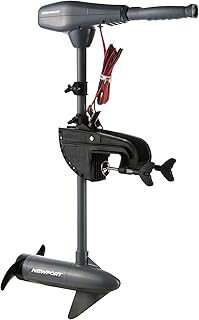
This kayak-focused model delivers 55 lb thrust with a 24-inch fiberglass kayak shaft, offering flexible depth placement and corrosion-resistant hardware for saltwater use. It features eight speeds, a 6-inch telescoping handle, and a 3-blade propeller. Best for kayaks or small craft where maneuverability and placement control are crucial. Limitation: shorter shaft may not reach deeper drafts on larger vessels.
Newport L-Series 86 lb Trolling Motor
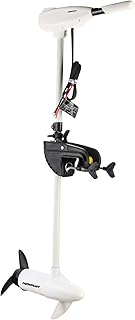
This high-power option offers 86 lb of thrust with a 40-inch shaft, a 5-LED battery meter, a 6-inch telescoping tiller, and a 3-blade propeller. Eight speeds (five forward, three reverse) provide strong trolling performance for larger boats or challenging conditions. Best for anglers who need maximum power for heavy boats or demanding currents. Caution: the longer shaft increases the risk of hitting submerged obstacles in shallow waters.
Buying Guide
What size boat and typical water conditions determine the right thrust? For small to mid-sized boats in calm water, 36–55 lb models may be sufficient, while larger boats or stronger currents benefit from 62–86 lb options. Consider shaft length relative to hull height and transom mounting space. A longer shaft improves depth control but can complicate storage and handling on smaller crafts.
Power Versus Runtime
Higher thrust usually requires more battery capacity and may impact runtime. If you troll for long periods, a model with a larger battery indicator and reliable cooling is advantageous to prevent overheating during extended use. For saltwater environments, corrosion-resistant hardware is important over the long term.
Propeller Configuration
Two-blade props offer solid performance in weeds and open water; three-blade props provide better low-end torque for getting moving and maintaining forward momentum in choppy conditions. Choose based on vegetation density and desired acceleration.
Mounting and Adjustability
Look for adjustable mount angles, height, and lockable direction controls to tailor positioning for your boat and fishing style. A telescoping tiller handle enhances comfort during extended trolling sessions.
Maintenance and Longevity
Saltwater rated motors with corrosion-resistant hardware extend service life in brackish or ocean environments. Regular maintenance, including battery health checks and propeller inspections, helps sustain performance across seasons.
Best-For Summary
- Best for budget-minded small boats: 36 lb model with essential features.
- Better for general trolling on mid-sized vessels: 55–62 lb range with more torque.
- Choose this if you fish from a kayak or require compact placement: 24 in shaft with kayak-specific design.
- Best for large boats or high power needs: 86 lb 24V model with maximum thrust.
FAQ
- What thrust should I choose for a 16-foot boat? – A 36–55 lb motor is typically suitable, depending on load and water conditions.
- Do I need a 24V motor for larger boats? – For larger vessels or strong currents, 24V systems (like the 86 lb model) provide more power, but require compatible batteries.
- Is shaft length important? – Yes. Longer shafts help avoid prop strikes and improve deeper water trolling, especially on deeper hulls.
- Can I use a trolling motor in saltwater? – Yes, if the motor and hardware are rated for saltwater use and corrosion resistance is present.
- How many speeds are typical? – Most models offer eight speeds, with five forward and three reverse, balancing control and efficiency.
- Is a longer shaft harder to store? – Generally, yes; ensure your storage space accommodates the extended length when not in use.