Best 100-Gallon Boat Fuel Tanks for Extended Range
If you need extra fuel capacity for long trips or demanding days at sea, a 100-gallon boat fuel tank can extend your range and reduce stops. This guide highlights five solid options that balance durability, size, and practicality. Good for long-range anglers, offshore cruisers, and workboats that require reliable fuel storage. The following picks cover bladder, rigid tanks, and portable options to fit different deck layouts and budgets.
| Product | Type | Approx. Capacity |
|---|---|---|
| Luoweikadeng Fuel Bladder | Flexible bladder | 100 gallons |
| Weather Guard Rectangle 100-Gallon Transfer Tank | Rigid transfer tank | 100 gallons |
| Weather Guard 100 Gallon Transfer Tank | Rigid transfer tank | 100 gallons |
| ATL Petro-Flex 100 Gallon Pillow-Style | Flexible bladder | 100 gallons |
| VEVOR Portable Diesel Tank, 116 Gallon | Portable rigid tank with pump | 116 gallons |
Luoweikadeng 100-Gallon Fuel Bladder
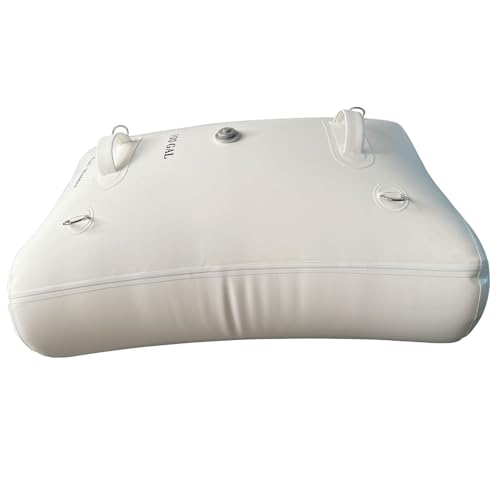
Best for long-range fishing boats or yachts where deck space allows flexible placement. This 100-gallon bladder is designed for high-capacity fuel storage with tear- and puncture-resistant construction. It includes handles and tie-down features for secure installation. The flexible design can be shaped to fit irregular deck spaces, making it a strong option where rigid tanks won’t fit. Best for boats seeking range extension without permanent hull modifications.
Limitations: Bladders require careful mounting and regular inspection for wear, and fitment may vary by vessel structure. Best when paired with a proper venting and fill setup to prevent overpressure.
Weather Guard Rectangle 100-Gallon Transfer Tank

Better for boats with defined cargo areas or pickup trucks needing a high-volume diesel reservoir. This 100-gallon rectangle transfer tank is designed for diesel and hydraulic fluids, offering a durable option for full-size vehicles and some larger boats. The rigid design helps maintain shape under motion, reducing slosh and improving stability aboard. Choose this if you want a dedicated, stationary fuel reservoir with straightforward mounting.
Limitations: Not suitable for all deck layouts; installation may require mounting hardware and professional fitment depending on hull design and clearance.
Weather Guard 100 Gallon Transfer Tank
Choose this if you need a robust, full-pressure-rated supply for high-demand applications on boats that regularly operate at sea. Its 100-gallon capacity supports longer runs between fills, and the rigid construction can withstand marine conditions. Best for owners who prefer a dedicated, fixed fuel source over portable options.
Limitations: Heavier and less portable than bladder solutions; installation may require professional mounting support on certain vessel configurations.
ATL Petro-Flex 100 Gallon Pillow-Style

Best for installations needing a flexible, moldable fuel bladder that can contour to unusual spaces. The 100-gallon Petro-Flex bladder is built with rugged Mil-Spec rubberized material, designed for extended-range use with a fill dimension of roughly 55″ x 53″ x 16″. It’s ideal for yachts, workboats, or trailers where a rigid tank would be impractical. Better for custom-fit applications and budget-conscious range extension.
Limitation: Bladder capacity may be influenced by installation shape; ensure adequate tie-downs and access to fill and vent hardware to avoid pinch points.
VEVOR Portable Diesel Tank, 116 Gallon

Best for on-the-go refueling needs where portability is essential. The 116-gallon VEVOR portable diesel tank includes a 12V electric transfer pump and a 13.1-foot hose, making it convenient for quick fuel transfers. The tank is polyethylene, UV-resistant, and features an integrated mechanical gauge. Choose this if you need mobility between vessels or work sites and want a unit with built-in transfer capabilities.
Limitation: Portable tanks can be less stable on rough seas; secure mounting and careful operation are crucial to prevent movement during transit.
Buying Guide: 100-Gallon Boat Fuel Tanks — Key Considerations
- Tank type: Rigid tanks offer stability and easier mounting; bladders provide flexible placement but require careful installation and maintenance.
- Space and mounting: Measure available deck or storage space and consider whether a fixed or portable option best fits your vessel’s layout.
- Fuel compatibility: Ensure the tank is rated for the fuel type you carry (diesel vs. gasoline/ethanol blends). Some products specify compatibility with diesel or hydrocarbons only.
- Ventilation and fittings: Look for compatible fill, venting, and return options. Proper fittings reduce the risk of leaks and vapor buildup.
- Durability: Marine environments demand UV resistance, corrosion resistance, and rugged construction. Rigid tanks typically resist punctures better; bladders resist impacts and can be lighter.
- Weight distribution: Large tanks affect boat trim and balance. Plan placement to maintain stable handling and weight distribution.
- Maintenance and inspection: Regularly inspect hoses, seals, and mounting hardware. Replace worn components promptly to avoid leaks.
FAQ
- What is the main difference between a bladder and a rigid 100-gallon fuel tank?
Bladders are flexible and fit irregular spaces, while rigid tanks provide a fixed position and often easier mounting on flat surfaces. - Can a 100-gallon tank be used for diesel and gasoline?
Some 100-gallon products are designed specifically for diesel or for multiple fuels. Check product specs for compatibility. - Is portable fuel storage safe on boats?
Portable tanks offer mobility but require secure mounting and proper venting to prevent spills and vapor buildup. - How do I choose between a bladder and a rigid tank for long trips?
If you need space flexibility and lower installation weight, a bladder can be advantageous. For steady fuel storage with fixed placement, a rigid tank is preferable. - What maintenance is required for a 100-gallon fuel system?
Regularly inspect connections, seals, and hoses. Clean and replace filters as needed, and ensure venting systems function properly. - Are there any safety considerations for high-capacity tanks on sailboats or yachts?
Yes. Maintain proper ventilation, avoid overfilling, and ensure secure mounting to prevent movement and spills during operation.