Best 12 Volt High Amp Hour Batteries for Reliable Off-Grid Power
Looking for 12-volt high amp hour batteries to power RVs, cabins, or off-grid systems? This guide highlights top AGM and LiFePO4 options that deliver solid capacity, low maintenance, and dependable discharge performance. The selections cater to users seeking long runtimes, deep-cycle capability, and straightforward installation. Best uses include RV living, boats, solar setups, and backup power for essential devices. The table below compares five strong choices to help you pick the right match for your power needs.
| Product | Type | Capacity (Ah) | Best For | Why Pick |
|---|---|---|---|---|
| AGM | 200 | High-demand power draws | Low self-discharge; strong discharge current; maintenance-free | |
| AGM | 100 | Balanced capacity and cost | Trusted safety; series/parallel connections supported | |
| AGM | 100 | Budget-friendly home and small systems | Low self-discharge; solid for solar or RV setups | |
| LiFePO4 | 100 | Long lifecycle and durable chemistry | Drop-in replacement with versatile wiring; safer LiFePO4 chemistry | |
| AGM | 12 | Compact backup and small devices | Easy installation; compatible with standard F2 terminals |
Renogy 200Ah Deep Cycle AGM Battery

Brand: Renogy
Features: Maintenance Free with thick AGM separators; high discharge current up to 2000A peak; low self-discharge (below 3% at 77℉); safe charge for home appliances. The design minimizes acid leakage and reduces maintenance needs.
Best for: Off-grid cabins, RVs, and marine setups requiring long runtimes and robust discharge performance. The 200Ah capacity supports heavy loads like inverters and essential appliances for extended periods.
Why selected: It offers a strong balance of high capacity and dependable AGM safety, with minimal upkeep. Consider this if you need maximum runtime from a single 12V bank and plan series/parallel configurations.
Caution: Large footprint and weight may require robust mounting and proper venting in enclosed spaces.
Renogy 100Ah Deep Cycle AGM Battery

Brand: Renogy
Features: AGM technology with safe, sealed design; support for series and parallel connections; high chemical stability and reduced maintenance.
Best for: Smaller solar arrays or mobile setups where space and weight matter, yet you still need reliable 12V power.
Why selected: The 100Ah model offers a solid balance between capacity and footprint, making it a versatile choice for many off-grid configurations.
Caution: Not ideal for extremely high-current loads that demand heavy peak bursts without proper sizing of the overall system.
WEIZE 100Ah AGM Deep Cycle Battery

Brand: WEIZE
Features: Maintenance-free AGM design; low self-discharge (1-3% per month); wide operating temperature range; suitable for RV, solar, trolling motor, and marine uses.
Best for: Budget-conscious solar or RV users who need dependable 12V power with straightforward installation.
Why selected: The 100Ah capacity paired with a low self-discharge rate helps preserve charge over longer periods, important for infrequent use or extended storage.
Caution: Temperature sensitivity can affect performance; avoid extreme heat or cold without appropriate charging strategies.
Battle Born 100Ah LiFePO4 Battery

Brand: Battle Born Batteries
Features: LiFePO4 chemistry; safe, durable, and scalable for series/parallel configurations; versatile mounting and high-cycle life.
Best for: Users seeking high longevity and safer lithium power for extended off-grid or backup applications.
Why selected: LiFePO4 offers longer cycle life and more stable performance under varied temperatures, which is beneficial for long-term installations.
Caution: Higher upfront cost than AGM; ensure compatible inverter/charger and BMS integration for best results.
ExpertPower EXP12120 12V 12Ah AGM
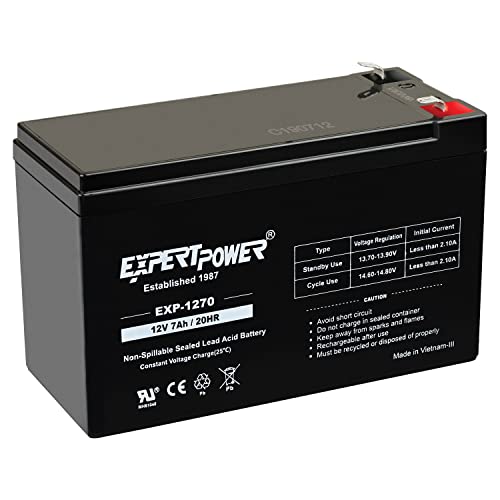
Brand: ExpertPower
Features: 12V 12Ah with F2 terminals; maintenance-free; versatile for UPS, alarms, or small ride-on toys. Simple replacement for standard 12V packs.
Best for: Small, low-demand applications, backup devices, or spaces where compact size matters.
Why selected: Offers a compact high capacity for limited spaces and quick upgrades to 12V systems without significant reconfiguration.
Caution: Limited overall capacity means it’s not ideal for energy-intensive loads or extended usage without frequent recharging.
Buying Guide: Key Considerations For 12V High-Amp-Hour Batteries
- Chemistry choice: AGM provides maintenance-free operation and good safety, while LiFePO4 (lithium) offers longer cycle life and lighter weight. Choose lithium for longevity and space savings, AGM for lower upfront costs.
- Capacity needs: Calculate daily energy use (Ah per day) and choose a battery bank size that provides days of autonomy. Higher Ah means longer runtimes, but also heavier and more expensive upfront.
- Discharge behavior: Look for batteries with low self-discharge and high discharge current if you anticipate deep or abrupt power draws, such as in motorized setups or inverters.
- Temperature tolerance: Batteries have optimal temperature ranges. Extreme temperatures reduce performance and lifespan; plan ventilation and climate considerations accordingly.
- Maintenance and safety: AGM is typically maintenance-free; LiFePO4 requires proper BMS integration but offers safer chemistry and better lifecycle. Ensure proper storage and charging practices.
- System compatibility: Check that the battery terminals, dimensions, and mounting options fit your existing enclosure, racks, and inverter/charger setup.
- Wiring and configuration: If using more than one battery, understand series vs. parallel wiring to achieve required voltage and capacity while maintaining balance.
Frequently Asked Questions
- What is the difference between AGM and LiFePO4 for 12V systems?
– AGM is maintenance-free with solid safety and lower upfront cost, but generally shorter lifecycle. LiFePO4 lasts longer, is lighter, and supports deeper cycling with a higher upfront cost. - How many Ah should I choose for an off-grid cabin?
– Estimate daily energy use and multiply by the number of days of autonomy you want; select a battery bank that meets that Ah target with some headroom for peak loads. - Can I mix battery chemistries in one system?
– It is not recommended to mix chemistries in a single bank, as different chemistries have different charging profiles and may reduce overall performance and lifespan. - Do high-amp-hour batteries require special charging?
– Most 12V AGM and LiFePO4 systems use compatible multi-stage chargers. For LiFePO4, ensure a charger with a LiFePO4 charging profile is used to optimize lifespan. - Is a larger single battery better than multiple smaller ones?
– It depends on space, weight, and redundancy. A single large battery has fewer connections but can be a single point of failure; multiple smaller units can offer easier replacements and balanced loads. - What maintenance is required for AGM vs LiFePO4?
– AGM is largely maintenance-free; LiFePO4 requires proper BMS management and charging, though needs less frequent servicing overall.