Best Engine Noise Insulation for Boats and Cars: Top Heat Shield Roll Options
Answering your search for boat and car engine noise insulation, these top picks help reduce heat transfer and block road and engine noise. The selections below are best for DIYers seeking easier installation, good adhesion, and durable heat shielding. Buyers include boat owners needing marine-grade insulation, car enthusiasts tuning cabins, and DIYers replacing worn sound deadening. The table summarizes five standout products to compare at a glance.
| Product | Thickness | Coverage | Key Benefit |
|---|---|---|---|
| BuyUneed 590 mil Auto Boat Sound Deadening | 15 mm | 34.6 sq ft | Strong heat block, high noise reduction |
| uxcell 394mil 10.76sqft | 10 mm | 10.76 sq ft | Balanced heat and sound barrier, compact sheet |
| BuyUneed 390 mil Auto Boat Sound Deadening | 10 mm | 18 sq ft | Good heat insulation with easy handling |
| Allwin Car Heat Sound Deadening 394 Mil | 394 mils | 10.8 sq ft | Excellent heat blocking and moisture resistance |
| CZXNBI 197 mil 40×40 (2 Pack) | 197 mils | 21.6 sq ft | Cost-effective, larger area coverage |
BuyUneed 590 mil Auto Boat Sound Deadening

Best for high-heat environments and heavy vibration, this 15 mm closed foam deadener includes a 1/16″ aluminum layer. It reduces engine and wind noise while blocking heat transfer from sun and engine. The adhesive-backed roll allows straightforward installation on panels, floors, and bulkheads. Best for boats and vehicles needing substantial noise and heat insulation. Caution: thicker sheets require careful cutting and trimming to fit complex curves.
uxcell 394mil 10.76sqft Car Fender Engine Heat

Better for modest spaces and budget-conscious installs, this 10 mm foam pad combines aluminum foil with foam to dampen engine, road, and transmission noise. The size fits fenders, engine bays, and trunks, and its reflective surface helps minimize heat gain. Choose this if you want straightforward, all-purpose protection without heavy bulk. Limitation: single sheet may require multiple pieces for larger areas.
BuyUneed 390 mil Auto Boat Sound Deadening
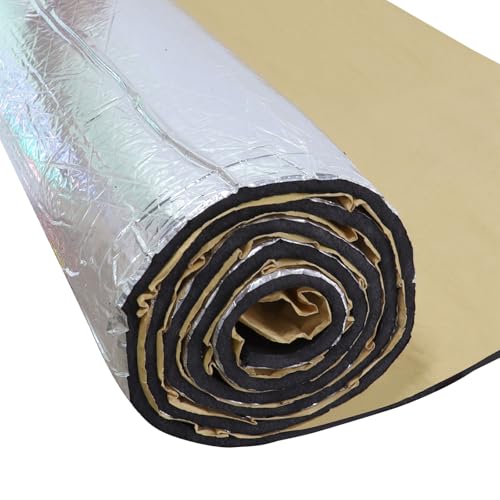
This 10 mm closed foam option balances heat insulation with ease of installation. It provides notable heat block and noise reduction for automotive or light marine use. Best for owners who need a lighter roll for smaller spaces or mid-range insulation. Limitation: less thickness than the 590 mil option, so it may be less effective in very high-noise environments.
Allwin 394 Mil 10.8 Sqft Car Heat Deadening

Offering excellent thermal barrier properties, this self-adhesive insulation blocks up to 98% of radiant heat. The 394 mil thickness yields strong sound deadening and moisture resistance, making it suitable for engine bays, trunks, and roofs. Best for those who prioritize heat protection and moisture resistance in a single layer. Caution: larger sheets may require planning for precise cuts in curved surfaces.
CZXNBI 40×40 2 Pack 197 Mil

Two-pack at 197 mils thick, offering ample area coverage for larger projects. This option provides solid heat insulation and noise reduction for mid-range budgets. Best for those who need more square footage per purchase. Limitation: thinner than the 390–394 mil offerings, so performance can vary in extreme heat or noise conditions.
Buying Guide: Key Considerations For Engine Noise Insulation
- Material thickness: Thicker foams provide better sound dampening and heat blocking but add weight and stiffness. Trade off between space and performance.
- Heat reflection vs. absorption: Aluminum layer aids heat reflection; foam blocks radiant heat absorption. Choose combinations that fit your climate and vehicle type.
- Adhesion and installation: Self-adhesive backings simplify DIY installs. Prepping surfaces (clean, dry, dust-free) improves adhesion and longevity.
- Environmental exposure: Marine use requires moisture resistance and corrosion protection. Check for water resistance and venting considerations in boats.
- Sheet size and coverage: For curved panels, larger sheets or multiple pieces may be needed. Plan layout before purchasing to minimize waste.
- Temperature tolerance: Consider working temperature ranges to ensure the insulation remains effective under engine heat and external conditions.
Frequently Asked Questions
- What thickness is best for boat engine noise insulation? – A thicker option (around 10–15 mm) with a metal backing tends to provide stronger heat blocking and noise reduction, especially in high-heat Marine environments.
- Can I install automotive insulation on a boat? – Yes, many products are designed for multi-surface use, but verify marine-grade moisture resistance and corrosion protection before applying in wet areas.
- Will insulation reduce fuel efficiency? – Proper insulation can reduce AC load by keeping cabin temperature stable, which may indirectly affect fuel usage, but it depends on overall climate control demands.
- How do I cut insulation to fit oddly shaped panels? – Use sharp scissors or a utility knife, measure precisely, and cut slightly oversized first, then trim for a perfect fit.
- Is self-adhesive insulation permanent? – Most are designed for long-term use, but heavy exposure to moisture or heat can reduce adhesive performance over time; ensure surfaces are clean and dry during installation.
- Should I use more than one product at once? – For best results, combine products in areas with different heat exposure (engine bays vs. cabin walls) to optimize coverage and cost.