Best Jump Starters for Boats: Portable, High-Power Boat Jump Starters
Answering the need for dependable boat battery boosts, this guide highlights five top jump starters that work well on boats and other vessels. These devices are best for boaters who want quick starts, compact storage, and integrated power banks for on-deck charging. The top picks vary in peak amperage, battery type, and extra features, so you can match your engine size and climate. Below, a summary table helps compare key details at a glance.
Summary Table
| Product | Peak Amps | Best For | Power Bank | |
|---|---|---|---|---|
| NOCO Boost GB40 | 1000 | Smaller boats, gas engines up to 6.0L, diesel up to 3.0L | Yes | Spark-proof protection |
| NOCO Boost GB70 | 2000 | Larger boats, engines up to 8.0L gas | Yes | Higher starting power |
| TREKURE 8000A | 8000 | Medium to large boats, multi-engine readiness | Yes | Compact for high power |
| S ZEVZO ET03 | 4000 | All 12V boats and marine rigs | Yes | Force start and USB ports |
| OXILAM 6000A | 6000 | Boats with larger 12V systems | Yes | 10 safety protections |
NOCO Boost GB40: 1000A UltraSafe Jump Starter
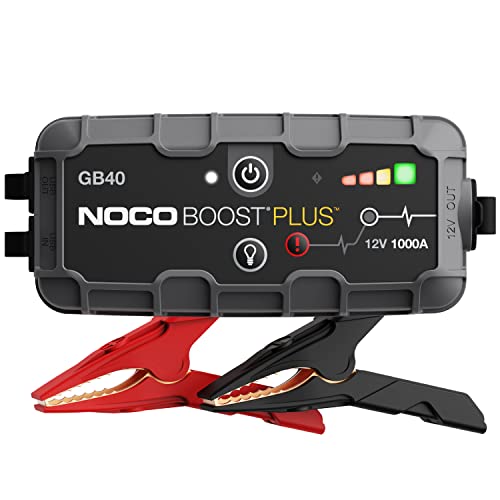
The NOCO Boost GB40 delivers 1000 peak amps for quick starts on 6.0L gas and 3.0L diesel engines, making it suitable for smaller boats and marine equipment. Its UltraSafe Technology includes spark-proof and reverse polarity protection, reducing user error during connection. The integrated power bank can recharge smartphones or tablets, with a full recharge in about three hours. Best for boaters who want a compact, reliable jump starter with built-in charging capability.
Best for: small to mid-sized boats with modest engine sizes and a need for emergency smartphone charging. Choose this if you value safety features and a lightweight device for occasional marine use. Caution: limited peak amperage compared to larger marine setups means it may take longer to start bigger engines in extreme conditions.
NOCO Boost GB70: 2000A UltraSafe Jump Starter

The GB70 provides up to 2000 amps, enabling up to 40 starts per charge for engines up to 8.0L gas and 6.0L diesel. It shares NOCO’s Ultrasafe design with spark-proof and reverse polarity protection and includes a portable power bank for on-the-go charging. It recharges via USB-C, making it a strong choice for larger boats with higher electrical demands. Best for: boaters who need more starting power and quick recharging on extended trips. Limitation: larger footprint than the GB40, so storage may require more space.
TREKURE 8000A Jump Starter

The TREKURE 8000A model offers 8000 amps and 26800mAh capacity, with an 18W fast-charging USB port. Its 18V-volt capable jump cables and dual protection system support starts on many gas and 12L diesel engines, even in extreme temperatures. The compact form factor fits glove boxes or travel bags, plus a built-in LED light enhances nighttime use. Best for: boaters needing high power in a compact package for on-deck emergencies. Limitation: higher amperage can increase weight and price relative to mid-range models.
S ZEVZO ET03 Jump Starter 4000A

The ET03 delivers up to 4000 amps for up to 8.0L gas and 7.0L diesel engines, with a 74Wh portable power bank and two USB outputs. It supports force start for dead batteries and includes an LCD display and LED light. Best for: boat owners who need a robust all-purpose jump starter with charging ports and on-screen status. Caution: ensure the battery is fully charged or above 14V before using on a completely dead boat battery to maximize effectiveness.
OXILAM Jump Starter 6000A

The OXILAM model peaks at 6000 amps with a 60-jump-start capacity per charge and offers 10 intelligent safety protections to guard against short circuits, reverse polarity, and overheating. It doubles as a USB power bank with multiple ports and provides an upgraded Type-C input for faster charging. Best for: boats with larger electrical systems or frequent long trips where reliability is crucial. Limitation: higher complexity may require careful operation for first-time users.
Buying Guide
- Engine size and fuel type: Match peak amperage to your boat’s engine size. Gas engines generally require less peak power than large diesel setups.
- Portability vs. power: Smaller boats benefit from compact models like GB40, while larger boats may need higher amperage like ET03 or OXILAM.
- Safety features: Prioritize spark-proof, reverse polarity protection, and thermal management for marine use where vibrations and moisture are present.
- Battery life and recharging: Consider models with USB-C or USB-A charging and clear indicators to know when a unit is ready for use.
- Integrated power bank: A built-in charger is valuable for on-deck emergencies and phone use during boat trips.
- Durability and water exposure: Look for rugged designs and protective seals if the unit may be exposed to spray or rain.
- Storage space on the boat: Favor compact profiles with carry handles or storage bags to keep the cockpit clutter-free.
Frequently Asked Questions
- Will a jump starter work on a boat engine? Yes, jump starters are designed to power 12V marine batteries when the engine battery is depleted, provided the unit’s peak amperage meets or exceeds the engine’s needs.
- What does “force start” mean? It indicates the device can deliver a momentary surge to crank a battery with very low voltage, helping to start a stubborn engine.
- Can I use these to charge marine electronics? Many units include USB ports or wireless charging, useful for phones, tablets, and small devices on board.
- Is warranty important for marine jump starters? A reliable warranty helps cover damage from salt spray, vibration, and frequent charging cycles typical on boats.
- How should I store a jump starter on a boat? Store in a dry, cool place away from direct sun, and keep cables neatly coiled to prevent tangling during a voyage.
- Can these jump starters start boats with diesel engines? Some models support diesel starts up to specific diesel engine displacements; verify the exact diesel limit before purchase.