Best Jack Plate Transducer Mounts for Smooth Boat Sonar Performance
Answering buyers: If you need a reliable jack plate transducer mount, these five options cover screwless adhesive plates, stainless steel brackets, and compact mounting boards. They’re best for small to medium vessels, shallow-water anglers, and boats where drilling is limited or undesirable. Below, you’ll see who each product suits best and why it stands out, plus a practical buying guide and a concise FAQ to help you decide.
| Product | Best For | Key Feature |
|---|---|---|
| Saillong Transducer Mounting Plate Kit | Boat owners prioritizing a screwless adhesive install | 4.33 x 3.54 inch plate with 2mm adhesive backing |
| Garmin 010-12106-10 Jack Plate Mount | Garmin echo fishfinder users needing solid low-speed sonar | Supports 4/8/12-pin transducers |
| 000-12603-001 Transom Transducer Mount Bracket | Durable stainless steel option for StructureScan transducers | Sturdy galvanized steel, mount on transom or jack plate |
| Transducer Mounting Plate, Marine-Grade Kit | Non-drill mounting for compact transducers | Adhesive installation with scouring pad and wipes |
| Bert’s Custom Tackle USA-Made Transducer Mounting Board | Compact design for tight spaces | Heavy-duty polymer, hull-friendly mounting |
Saillong Transducer Mounting Plate Kit

The Saillong kit is a screwless, adhesive-based transducer mounting solution designed to simplify installation. The kit includes a transducer mounting plate block, a scouring pad, a cleaning wipe, and cable clips, making it suitable for anglers who want a quick, clean setup without drilling. The plate measures 4.33 x 3.54 inches with a 0.98 inch thickness, and the adhesive backing is 2mm thick for a strong bond in marine environments. Best for boat owners who want a tidy, non-permanent install and are willing to wait 18 hours for full adhesive cure. Caution: ensure the surface is thoroughly prepared and allow the full curing time to minimize detachment risk.
Who it’s best for: Small-to-mid-sized boats, anglers seeking a non-drill solution, and users who prefer a clean deck or hull. Why selected: its corrosion-resistant polypropylene construction and adhesive-based mounting reduce hull wear and simplify maintenance. Limitation: adhesive cure time adds a prolonged installation window and may require surface prep for optimal adhesion.
Garmin 010-12106-10 Jack Plate Mount

The Garmin jack plate mount is designed to attach compatible transducers to the boat’s jack plate, including 4, 8, and 12-pin configurations. It emphasizes clear sonar returns at low speeds and helps protect transducers from underwater obstructions while minimizing drag. This option is well-suited for Garmin echo fishfinder users who need reliable performance at slower speeds and a straightforward mounting process. A potential limitation is that compatibility is tied to Garmin-specific transducers and pin configurations, so verify your model before purchasing.
Who it’s best for: Garmin Echo Fishfinder users seeking stable low-speed sonar performance. Why selected: it provides solid protection and avoids extra drag. Better for those who already own Garmin transducers and value a snug, boat-ready fit.
000-12603-001 Transom Transducer Mount Bracket
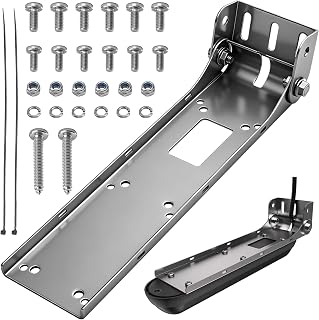
This transom mount bracket is a robust stainless steel solution designed for StructureScan 3D/HD and TotalScan transducers. It’s galvanized to resist rust and corrosion, providing a sturdy mounting point on a transom, jack plate, or under boat steps. Best for anglers using advanced StructureScan systems who need a durable, reformable mounting solution. Limitation: steel construction adds weight and may require careful installation to avoid hull area interference.
Who it’s best for: StructureScan users needing a long-lasting bracket. Why selected: strong build and corrosion resistance. Choose this if you prioritize durability in harsh marine conditions and have compatible transducers.
Transducer Mounting Plate, Marine-Grade Kit

This mounting plate kit emphasizes an adhesive installation approach without hull drilling. It’s designed for small to medium transducers and includes a simple cleaning-and-press method for secure adhesion. Best for boaters who want a quick, non-invasive install and straightforward maintenance. Caution: not ideal for larger transducers or high-vibration environments where adhesive performance could vary.
Who it’s best for: Casual anglers and boaters who prefer non-drill installations on compact transducers. Why selected: ease of use and hull-sparing application. Better for smaller vessels or lighter transducer setups, with the caveat of size limitations.
Bert’s Custom Tackle USA-Made Transducer Mounting Board

Designed for compact spaces, Bert’s Custom Tackle board offers a six-inch footprint ideal for smaller boats or single-transducer setups. The heavy-duty marine-grade polymer resists cracking, warping, and UV damage, which supports durability in challenging marine environments. Best for anglers needing a space-saving, hull-friendly solution that can withstand frequent mounting adjustments. Limitation: six inches may be too small for larger transducers or complex mounting arrangements.
Who it’s best for: Small boats with tight mounting spaces and non-drill preferences. Why selected: compact, durable, and non-damaging to hulls. Choose this if you need a lightweight, portable plate that still resists harsh conditions.
Buying Guide: Key Considerations for Jack Plate Transducer Mounts
- Mounting method: Adhesive vs. mechanical (screws/bolts). Adhesive offers non-drill convenience but requires proper surface prep and cure time. Mechanical mounts provide strong fastening but may require hull penetration.
- Transducer compatibility: Check pin configurations (4/8/12-pin) and mounting hole patterns. Some mounts are designed for specific transducers or brands.
- Boat type and size: For small to mid-sized boats, compact plates or boards work well. Large vessels with heavy transducers may benefit from brackets or jack-plate-integrated solutions.
- Durability and materials: Look for corrosion-resistant plastics (PP) or marine-grade polymers, stainless or galvanized metals for longevity in saltwater environments.
- Installation time and effort: Adhesive solutions require surface prep and curing time; bolt-on solutions require drilling and possible hull repairs.
- Hull impact: Choose a mount that minimizes drag and hull disturbance; some brackets also shield transducers from obstacles and debris.
- Weight considerations: Heavier brackets may affect boat balance; weigh options for performance-critical setups.
Frequently Asked Questions
- Do adhesive transducer mounts hold well in saltwater? Yes, when surfaces are properly prepped and the adhesive is given full cure time as recommended by the manufacturer.
- Can I reuse a transducer with a mounting board? Many mounting boards are designed for multiple uses, but check the platform’s compatibility with your transducer’s size and weight.
- Is drilling always required for transducer mounts? No. Adhesive mounting options exist for non-drill installations, though drilling may be necessary for high-stress or large transducers.
- Which mount is best for StructureScan transducers? A robust transom bracket (stainless or galvanized) or a dedicated jack-plate mount often provides the most secure fit and stability for StructureScan systems.
- How do I know if a mount will fit my jack plate? Verify compatible transducer configurations, mounting hole patterns, and weight limits against the jack plate’s specifications.
- What maintenance is required for these mounts? Periodically inspect for adhesive wear, corrosion, and any loosened hardware; clean surfaces before reapplying adhesive if needed.