Best Marine Engine Room Heaters for Cold-Weather Boating and Winter Storage
When you need reliable heat in a boat’s engine compartment during cold months, choose a marine engine room heater that provides steady, automatic protection against freezing. This guide focuses on compact, self-regulating units that perform well in bilges, greenhouses, cabins, and other tight spaces. The best options suit boaters who store vessels in cold climates, RVers with winter storage needs, and marine operators seeking a low-maintenance, safe heating solution.
The following table highlights five top picks, showing why each is a strong fit for specific use cases. Use this quick reference to compare suitability, heat output, and practical limitations.
| Product | Best For | Heat Output | Notable Feature | Limitations |
|---|---|---|---|---|
| Boat Engine Compartment Heater — 400W (Xtreme Heaters) | Small to mid-sized boats needing compact, automatic operation | 400W | Self-regulating PTC; 40° start / 55° shutoff; versatile mounting | Lower output may be insufficient for larger compartments |
| Boat Engine Compartment Heater — 500W (Therelmax) | Boats with moderate space and longer wintering needs | 500W | Built-in adjustable thermostat; quick 3-second warm-up | Thermostat range may require careful set-up for very cold days |
| Boat Engine Compartment Heater — 800W (Xtreme Heaters) | Larger compartments or boats requiring stronger heat | 800W | High-output, same durable design with 58 CFM fan | Higher power consumption |
| Boat Engine Compartment Heater — 400W (Haoguo) | Compact spaces needing reliable 400W with steady regulation | 400W | Self-regulated PTC; 40°F to 50°F range; waterproof cooling fan | May heat slower in very large bilges |
| Binmaton Boat Engine Compartment Heater — 700W (Binmaton) | Cold-climate boats needing strong, dual-system protection | 700W | Dual-thermostat, dual fans; IPX7 waterproof design | Higher price and power use |
Boat Engine Compartment Heater — 400W (Xtreme Heaters)

Best for small to mid-sized boats where space is at a premium. This unit is 10% smaller than earlier designs with a 150W boost, offering effective protection for bilges and engine rooms without crowding the compartment. The self-regulating PTC element turns on at 40°F and off at 55°F, providing consistent temperatures and reducing manual adjustments. A durable anodized case, sealed electronics, and a waterproof 58 CFM fan support reliable operation in damp marine environments. Suitable for installation in multiple orientations, even upside down, which is advantageous for awkward layouts. Caution: ensure power availability and clearance around fuel lines and vents before installation. Best for: compact engine bays requiring dependable, automatic heat with straightforward mounting.
Boat Engine Compartment Heater — 500W (Therelmax)
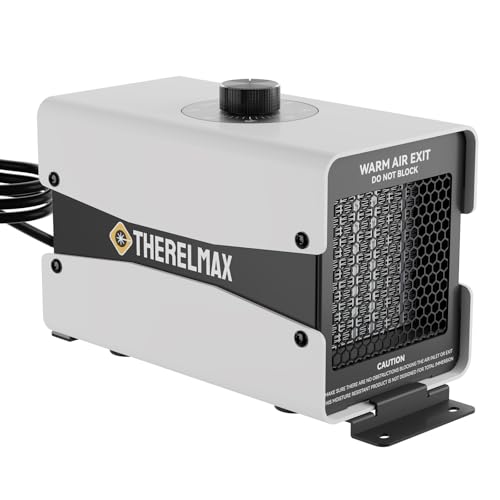
Best for boats that need a bit more warmth than a 400W unit can deliver, or during longer winter storage periods. The built-in adjustable thermostat gives users control over the bilge temperature, enhancing flexibility across different vessel layouts and usages. The 3-second fast heating helps prevent freezing of critical components. Choose this if you want a balance of power, control, and compact size. Limitation: thermostat performance may require periodic recalibration depending on ambient conditions. Best for: mid-sized boats, greenhouses, and small workshops on board that demand reliable heat with adjustable control.
Boat Engine Compartment Heater — 800W (Xtreme Heaters)

Best for larger engine rooms or boats requiring robust heating to prevent freezing during deep winter storage. The 800W version shares the same durable build as the 400W models, including a self-regulating PTC element and a waterproof fan. It offers strong performance with a higher heat output, making it a clear choice for bigger bilges or cabins that trap more cold air. Limitation: higher wattage means increased power draw and potential electrical load considerations. Best for: larger vessels, extended winter storage, or environments where quicker temperature recovery is important.
Boat Engine Compartment Heater — 400W (Haoguo)

Best for compact engine compartments that require steady, automatic heat with simple setup. Haoguo features a self-regulating PTC element and a 40CFM waterproof fan to promote even air distribution. The thermostat range (40°F to 50°F / 4.4°C to 10°C) helps maintain a safe space for crucial components. Limitation: slower heat delivery in very large bilges due to modest wattage. Best for: small to mid-sized boats, cabins, and pump houses where space and power are constrained.
Binmaton Boat Engine Compartment Heater — 700W (Binmaton)
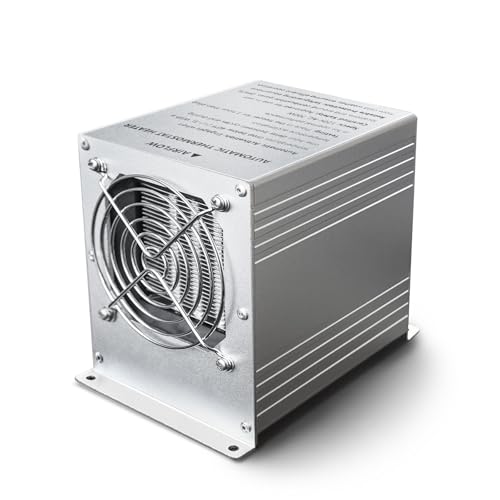
Best for boats in harsher climates that demand strong, reliable heat and redundancy. The 700W model uses dual thermostats, dual fans, and dual self-regulating components, offering extra protection if one path fails. Its IPX7 waterproof design suits damp environments like bilges and greenhouses, providing robust performance in challenging conditions. Caution: dual-system setup may be more complex to install and wire. Best for: larger or more exposed vessels where maximum protection against freezing is essential.
Buying Guide
What size heater do I need? Consider the bilge or engine room volume, insulation quality, and typical winter temperatures. Larger spaces generally need higher-wattage models (500W–800W) for reliable heat maintenance without excessive cycling.
How important is a thermostat? A built-in adjustable thermostat simplifies operation and reduces energy waste. Prefer models with a fixed start temperature around 40°F and a shutoff near 55°F for consistent protection.
What about self-regulating elements? Self-regulating PTC tech helps prevent overheating and provides safer, more predictable performance across variable conditions. This feature is highly recommended for marine use.
How critical is waterproofing? Marine environments are humid and damp. Look for IP ratings or waterproof fans to withstand bilge conditions and spray exposure.
Are multiple heating modules beneficial? Dual- or multi-component systems offer redundancy, which is valuable in very cold climates or in vessels that require continuous operation during storage.
Frequently Asked Questions
- What is the typical operating temperature range for marine engine heaters?
Most units regulate around 40°F to 55°F, with some models offering broader ranges up to the mid-80s depending on the thermostat. - Can these heaters be installed in any orientation?
Many models are designed to be mounted in various positions, including upside down, but always follow the manufacturer’s installation guidelines. - Will a 500W heater heat a large boat bilge?
It depends on space, insulation, and air volume. For larger spaces, consider 700–800W or dual-system setups. - Do these heaters require professional electrical work?
Electrical work should comply with marine standards and local codes. When in doubt, consult a licensed marine electrician. - Is a waterproof fan necessary in humid environments?
Yes. A waterproof fan helps ensure reliability and longevity in bilges and damp spaces.