Best Fast Electric Trolling Motors for Quick Moving and Precision Positioning
Looking for the fastest electric trolling motor to move quickly and quietly across the water? This guide highlights top-performing transom-mounted and bow-mount options that deliver strong thrust, reliable power, and practical features for different boats. Best for saltwater anglers, small boats, kayaks, and larger craft seeking better control in wind and current. Below, five models stand out for speed, efficiency, and user-friendly design. A quick buyer’s table at the top helps compare key specs at a glance.
| Product | Thrust | Shaft | Best For |
|---|---|---|---|
| Newport NV-Series 62lb Thrust | 62 lb | 36″ | Larger boats, heavier loads |
| Minn Kota Endura C2 50 lb | 50 lb | 36″ | Mid-sized freshwater boats |
| Minn Kota Endura C2 40 lb | 40 lb | 36″ | Balanced power for smaller boats |
| Newport NV-Series 55lb Thrust | 55 lb | 30″ | Saltwater and versatile use |
| Newport NV-Series 36lb Thrust | 36 lb | 30″ | Lightweight, portable setups |
Newport NV-Series 62lb Thrust Trolling Motor

The Newport NV-Series 62lb Thrust is designed for larger boats and heavier loads. It provides strong forward propulsion and reliable handling in wind and currents. The 36-inch shaft helps with deeper mounting and better leverage in rough water. This model is best for saltwater or brackish conditions where power and endurance matter most. Choose this if you frequently fish bigger boats or operate in challenging water with moderate to strong wind. A potential limitation is bulkier weight and longer shaft, which may affect mounting space and maneuverability on very small craft.
Newport NV-Series 55lb Thrust Transom Motor
The 55lb NV-Series model balances power and efficiency with a 30-inch shaft and 5 LED battery meter. It is well suited for smaller to mid-sized boats used in saltwater and freshwater environments. With 8 speeds (5 forward, 3 reverse), anglers gain ample control for trolling, slow cruising, and precise positioning. Best for boaters who want high thrust without excessive motor height or weight. A note: performance can vary with boat size, water conditions, and battery type.
Minn Kota Endura C2 50 Lb Transom Motor
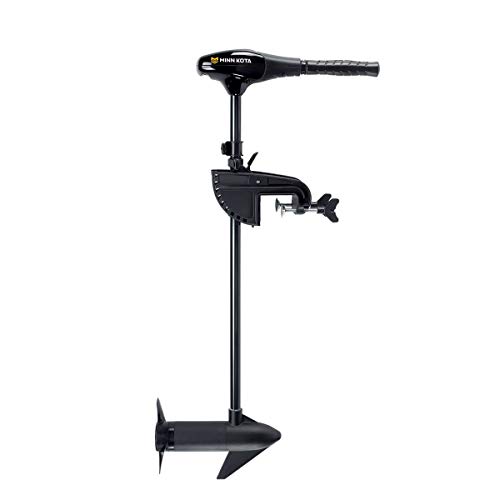
The Endura C2 50 lb model is built for all-day fishing with a 6-inch telescoping tiller for comfortable control and a push-to-test battery meter. It uses a reinforced composite construction to resist UV exposure, warping, and flexing. The Power Prop optimized for heavy vegetation improves thrust through thick cover. This option is best for freshwater fishing where reliability, durability, and easy handling are priorities. Consider lighter models if you mostly fish in calm water or have a smaller boat.
Minn Kota Endura C2 40 Lb Transom Motor
The Endura C2 40 lb offers a lighter alternative with essential features for easy control on smaller boats. The 6-inch telescoping tiller ensures comfortable handling, while the 10-position lever lock provides secure angle adjustment. It’s best for anglers prioritizing portability and straightforward setup in freshwater scenarios. If you need more power for bigger boats, choose a higher-thrust model.
Buying Guide
What makes a trolling motor fast and reliable? Look at thrust, shaft length, mounting type, and power efficiency. For larger boats or salty conditions, higher thrust (55–62 lb) with a longer shaft (30–36″) helps maintain control in wind and current. For smaller vessels, 30–36″ shafts with 30–55 lb thrust often deliver sufficient speed and maneuverability without added weight.
- Boat size and load: Heavier craft benefit from higher thrust. Lighter boats can perform well with moderate thrust and efficient propulsion.
- Water conditions: Saltwater models typically require corrosion resistance and durable hardware. Ocean-going anglers may favor larger shafts and more robust propellers.
- Battery and power: Ensure your battery capacity matches runtime expectations. Models with LED meters help monitor power during longer days on the water.
- Control features: Tiller length, lever locks, and GPS options impact handling and convenience. Bow-mount GPS features add position-stability in challenging conditions.
- Maintenance: Reinforced composite or aluminum components affect durability. UV resistance helps in sunny environments.
Frequently Asked Questions
What is the difference between transom-mount and bow-mount trolling motors?
Transom-mounts attach to the stern and are typically simpler and lighter for smaller boats. Bow-mounts attach at the front, offering better line-of-sight control, hands-free steering with GPS models, and sometimes greater thrust. Choose based on boat type and preferred control style.
Is higher thrust always better?
Higher thrust provides stronger acceleration and improved performance in winds and currents, but it also increases weight and battery usage. For small boats or calm waters, moderate thrust is often sufficient.
Do trolling motors work in saltwater?
Yes, many trolling motors are designed for saltwater use. Look for corrosion-resistant hardware and stainless components. Some models are labeled specifically for saltwater to ensure durability in harsh conditions.
What shaft length should I choose?
Shaf t length should align with the mounting height and boat deck level. A longer shaft helps keep the propeller deeper and reduces cavitation in rough water. If in doubt, measure from mounting point to the waterline when the boat is loaded.
Which features improve fishing efficiency?
GPS Spot-Lock and autopilot features help maintain position without manual steering. A battery indicator keeps you aware of power. A quiet operation profile reduces noise that could spook fish.
Buying considerations and a quick comparison help buyers select a model that matches their boat size, water type, and fishing style. The five featured models cover a range of needs from large saltwater boats to compact freshwater setups, with attention to thrust, shaft length, and control features.