Best 2 Inch Bilge Blower Options for Small Spaces and Boats
Direct answer: for compact bilge and venting tasks, a 2 inch bilge blower offers a compact, low-profile solution with adequate airflow. This guide highlights five suitable 2 inch and near-2 inch inline blowers, explaining who they’re best for, why they were selected, and where to use them. Ideal buyers include boat owners needing engine bay ventilation, hydroponic setups requiring discreet airflow, and small spaces like bathrooms or lockers where a compact, quiet unit matters.
Summary table of selected products:
| Product | Best For | Key Benefit | Limitations |
|---|---|---|---|
| 2 Inch Inline Duct Fan (Generic) | Small bathrooms, kitchens, offices | Compact 2″ diameter; low power; lightweight | Basic features; limited materials data |
| 2″ 50Mm In-line Duct Fan Marine Bilge (MODBE) | Marine bilges, greenhouses, grow tents | Durable ABS body; copper motor; 36 m³/h | Smaller airflow vs larger models |
| Attwood 1733-4 Blower Bilge (3″) | Engine compartments, heads, bilges | Five-blade design for high lift; inline integration | 3″ size; not a true 2″ option |
| Yaegoo Marine 3″ In-Line Bilge Blower | Engine compartments, galleys, bilges | DC 12V; 130 CFM; low current draw | 3″ size; higher airflow than 2″ units |
| SEAFLO 3″ In-Line Bilge Blower 145 CFM | Boat engine bays, bilges, closets | Quiet operation; ISO 8846; 4-year warranty | 3″ size; not strictly 2″ |
2 Inch Inline Duct Fan, 12V DC Bathroom Exhaust Fan Kitchen

Best for small spaces where a discreet, low-power blower is sufficient. This unit runs on 12V DC, 6W, and delivers about 36 m³/h (22 CFM) with a compact 2″ diameter. The body uses ABS plastic with IP44 protection, offering basic corrosion resistance for indoor or covered areas. Best for: compact restrooms, small kitchens, or office nooks where subtle airflow is acceptable. Caution: airflow is modest; consider higher capacity models for larger spaces.
2″ 50Mm In-line Duct Fan Marine Bilge Air Blower MODBE
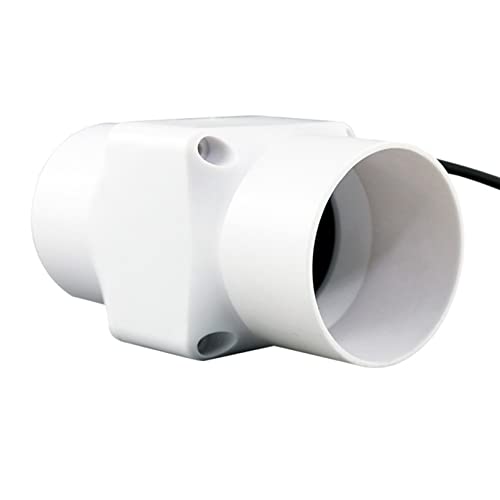
Best for small marine bilge spaces or greenhouse setups requiring compact airflow. This 2″ unit also lists 36 m³/h (22 CFM) capacity and a 50 mm take-over, with a lightweight 450 g ABS shell. It uses a pure copper outer rotor brushless motor for steady operation. Choose this if you need a compact, low-noise blower with marine-grade intent. Caution: 2″ airflow is still limited; verify it matches your space ventilation needs.
Attwood 1733-4 Blower Bilge 3″ Water Resistant

Best for larger bilge spaces or areas that require higher airflow. The 3″ inline design with a five-blade fan maximizes airflow speed, improving ventilation in engine compartments and heads. Selected for its higher lift coefficient and robust inline integration. Caution: not a true 2″ product; consider if your installation can accommodate a 3″ intake.
Yaegoo Marine Boat 3″ In-Line Bilge Blower

Best for engine compartments and bilges where reliable airflow is needed at medium to high volumes. The Yaegoo unit operates on 12V DC with 130 CFM and a 2.5A draw. It is designed for durable MOT handling and provides effective ventilation for small spaces. Caution: 3″ size; check available space and ducting compatibility before installation.
SEAFLO 3″ In-Line Bilge Blower Fan

Best for higher airflow needs in bilge and enclosed spaces without excessive noise. The 3″ SEAFLO features 145 CFM at 12V with a maximum 3.0A draw and a 5-blade design for efficiency. It comes with ISO 8846, CE, RoHS certifications and a 4-year warranty. Caution: larger size requires compatible ducting and mounting space.
Buying Guide
What air flow do I need for a 2 inch blower?
Airflow is measured in CFM or m³/h. For compact spaces like small bathrooms, storage cubbies, or tight engine bays, 22–36 CFM (36–60 m³/h) is often sufficient. For larger bilge compartments, you may require 100+ CFM. Always estimate the space volume and target air changes per hour to determine the needed CFM.
What about power and noise?
2 inch units typically run on 12V DC with low wattage. Noise levels usually stay under 40 dB for quiet operation. If noise is a priority, look for models advertising low dB ratings and consider placement away from seating or sleeping areas.
Material and durability considerations
ABS plastic housings are common and offer corrosion resistance in damp areas. Marine applications may benefit from IP ratings, sealed motors, and robust mounting options. If the blower will be exposed to salt air, choose a unit with corrosion-resistant coatings and higher environmental protection.
Installation notes
Check duct diameter compatibility (2″ vs 3″). Some units are designed for inline mounting with mounting feet; others require flange or screw-in mounts. Ensure ducting length and bends remain within the blower’s specified resistance to maintain airflow.
Warranty and support
Many marine blowers include multi-year warranties. A longer warranty can provide assurance for critical ventilation in engine compartments or living spaces. Verify the warranty terms and what they cover before purchasing.
Multiple perspectives: when to choose 2″ vs 3″
Choose 2″ blowers for compact, discreet ventilation where space is limited. Opt for 3″ units when you need higher airflow to ventilate larger bilges or engine bays. If installation space allows, a 3″ model may deliver better overall performance with similar power draw.
Quick comparison tips
- 2″ blowers are lighter and easier to install in tight spaces.
- 3″ blowers move more air but require bigger ducts and mounting space.
- Look for reinforced housings and sealed motors for marine use.
- Consider warranty length and replacement part availability.
FAQ
Q: Is a 2″ blower enough for a small bilge? A: For small bilge compartments, a 2″ unit can be adequate if airflow needs are modest. For larger spaces, prefer a 3″ option or a higher-CFM model.
Q: Do these blowers require special power supplies? A: Most are 12V DC and designed for direct connection to vehicle or boat electrical systems.
Q: Can I install a 2″ blower in a greenhouse? A: Yes, provided the airflow requirement matches the space size and ducting is compatible.
Q: Are marine-rated blowers necessary for inland use? A: Not strictly necessary, but marine-rated units offer greater resistance to humidity and corrosion, which can be beneficial in damp environments.
Q: How do I determine the right duct size? A: Match the duct size to the blower inlet/outlet specifications (2″ vs 3″). Longer ducts and more bends reduce effective airflow, so plan accordingly.