Best Boat Fuel Gauge Options for Accurate Tank Readings
If you’re searching for a reliable fuel gauge for your boat, you want accuracy, durability, and easy installation. This guide highlights five strong choices that fit common 52mm (2″) gauge setups and support multiple signal resistances. Best for marine dashboards, personal watercraft, and small to mid-size boats, these gauges help you avoid running out of fuel. The options range from rugged stainless steel to backlit LEDs for night visibility, with varying backlight and mounting features to fit different dash styles.
| Product | Brand | Best For |
|---|---|---|
| Sierra 57902P Fuel Gauge | Sierra | Classic dashboards needing a 12 VDC gauge with a robust mineral-glass lens. |
| 100TECH Marine Fuel Gauge (White) | 100TECH | Flexible compatibility with multiple sender options and clear backlight choices. |
| BLLYOGU 2″ Fuel Level Gauge | BLLYOGU | Low-profile, replacement gauge for diesel or gasoline tanks with backlight. |
| Sucicago 2″ Marine Fuel Gauge | Sucicago | Versatile and adjustable for various 240-33 to 0-190 ohm senders. |
| RUPSE 8″ Fuel Sender Unit | RUPSE | Heavy-duty sending unit with stainless steel exterior and robust sealing. |
Sierra 57902P Fuel Gauge – Amega 2″

The Sierra 57902P is a 2″ gauge designed for 12 VDC systems with a glass, scratch-resistant curved lens and a near-flush bezel. It features a black dial, red graduations, white numerals, and a vivid white pointer staff for clear readings at a glance. This gauge suits classic dashboards that prioritize legibility over advanced features. It’s best for boaters who want a simple, reliable indicator without backlight illumination.
Best for: Boats with traditional dashes and straightforward fuel monitoring. The data points are easy to read in daylight, and the rugged glass lens preserves clarity in marine environments.
Limitation: No explicit backlight option is noted, which may reduce readability at night or in low-light conditions.
100TECH Boat Fuel Gauge (White)

100TECH’s marine gauge is designed for flexible installation with multiple signal inputs and a broad operating range. It supports several common resistance values (240-33 ohm, 0-190 ohm, 240-30 ohm, 0-180 ohm, 10-180 ohm) and works within 9–32 V DC. The gauge is positioned as easy to install and calibrate, with a 52 mm diameter mounting and an E-F indication range. LED backlight options improve visibility on dim dashboards.
Best for: Boaters needing broad compatibility with various senders and simple setup. This gauge is well-suited for those who want a straightforward, adaptable replacement on mixed-fleet installations.
Limitation: Backlight features exist, but the exact color options or brightness levels may vary by unit and installation.
BLLYOGU 2″ Fuel Level Gauge

The BLLYOGU 2″ fuel level gauge is a 12V indicator with a white LED backlight for clear nighttime readings. It emphasizes smooth needle movement and precise measurements, making it a strong replacement option when a factory gauge fails. This model suits custom dash projects where a clean, unobtrusive display is preferred.
Best for: DIY dashboard builders and replacement projects where backlit readability matters and the original part failed.
Limitation: The data emphasizes replacement suitability; ensure the sender compatibility with your current fuel system before purchase.
Sucicago Marine Fuel Gauge (E-1/2-F)

Sucicago offers a 2″ marine fuel gauge compatible with several resistance values (240-33 ohm, 0-190 ohm, 240-30 ohm, 0-180 ohm, 10-180 ohm). It features an adjustable backlight and a robust sleeve for marine environments. The device is designed as a versatile aftermarket gauge that helps monitor gas or fuel in boats or vehicles.
Best for: Boaters seeking a versatile gauge that can adapt to different sender types, especially when upgrading or replacing older units.
Limitation: Always confirm the resistance range matches your sender to avoid reading errors under load or rough seas.
2″ White Signal Selectable Fuel Gauge
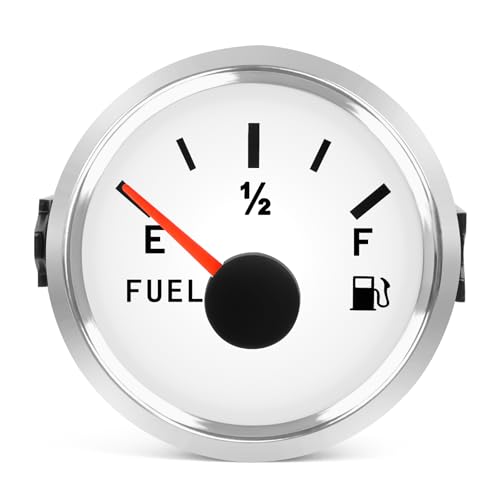
The HEETHYCOOL gauge stands out for automatic signal matching. It self-detects to five common resistances, enabling plug-and-play compatibility across boats, cars, trucks, RVs, and motorcycles. It offers a choice of three finishes to match dashboards and supports modern ease-of-use expectations with purple wire simulations. It’s a strong pick for flexible installations and dashboard customization.
Best for: Dashboards requiring an intelligent, auto-matching gauge with dashboard-finish options for a custom look.
Limitation: The purple-wire simulation note is a practical reminder to follow wiring diagrams carefully during setup to ensure accurate readings.
RUPSE Fuel Sender Unit with Gauge
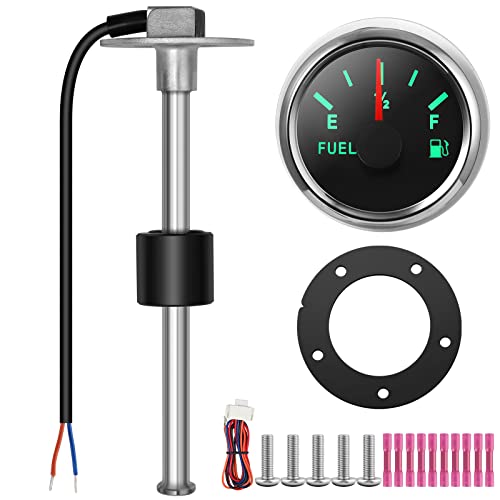
RUPSE sells an 8″ (200 mm) stainless steel fuel sender assembly designed for durable marine use. The unit combines a robust exterior with high-precision reed switches for stable output and accurate measurement. It’s resistant to corrosion and designed to handle liquids used in boats and other vehicles. The kit includes mounting hardware and a gasket for sealed installation.
Best for: Boats and RVs needing a heavy-duty sending unit for long-term reliability and rugged environments.
Limitation: This option emphasizes the sending unit and gauge integration; verify compatibility with your tank size and mounting pattern before installing.
Buying Guide: Key Considerations for Boat Fuel Gauges
- Signal compatibility: Check the sender’s resistance values (for example, 240-33 ohm, 0-190 ohm, 240-30 ohm, 0-180 ohm, 10-180 ohm) and ensure the gauge matches your system.
- Display readability: Consider backlighting, dial contrast, and lens material. White LED backlights aid night visibility, while glass or scratch-resistant lenses withstand marine exposure.
- Mounting and size: Most 2″ (52 mm) gauges fit common dashboard cutouts. Confirm the mounting pattern (SAE 5-hole is common) and bezel style to match your dash.
- Durability: Stainless steel housings, IP ratings, and waterproofing improve longevity in saltwater environments. Look for corrosion resistance and fog-resistant lenses.
- Installation complexity: Some gauges are plug-and-play with auto-sensing signals, while others require manual calibration. Choose based on your confidence with electrical work.
- Backlight options: If you operate at night, a backlit gauge or multi-color backlight can improve legibility and dashboard aesthetics.
- Replacement vs. upgrade: If replacing a failing gauge, verify the new unit matches the sender and tank geometry to avoid fit issues.
FAQ
- What is a boat fuel gauge’s standard size? Most common gauges are 2″ (52 mm) in diameter, designed for standard dash cutouts.
- Do all gauges support multiple sender resistances? Many do, including models that list several resistance ranges (for example, 240-33 ohm, 0-190 ohm, etc.).
- Is backlighting essential for marine gauges? It improves readability at night, especially in dim cockpits, but is not strictly required for daylight use.
- Can I install a universal gauge with my current sender? Yes, if the resistance values and mounting fit your system; verify compatibility before installation.
- What should I do if readings bounce under rough seas? Look for gauges with smoother needle movement and vibration tolerance, or verify installation integrity and sender compatibility.
- Is a stainless steel sending unit necessary? For saltwater boats, stainless steel and IP-rated components improve durability and corrosion resistance.